U-M’s Zhen Xu, co-inventor of histotripsy, named one of Time’s 100 most influential health leaders
Histotripsy provides a non-invasive treatment option for liver cancer, with the potential to treat many more tumor types.

Histotripsy provides a non-invasive treatment option for liver cancer, with the potential to treat many more tumor types.
Experts
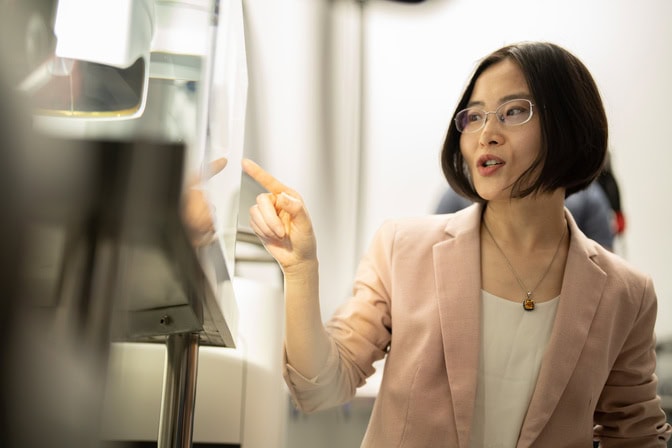
Co-inventor of the non-invasive, tumor-eliminating treatment called histotripsy, University of Michigan Engineering professor Zhen Xu, was named among the Time 100 Most Influential Health Leaders for 2026.
Xu, the Li Ka Shing Professor of Biomedical Engineering, is also a co-founder of HistoSonics, the company that has commercialized histotripsy and helped promote its use around the world.
“As the global order has shifted, these titans, innovators, leaders, pioneers and catalysts have pushed new ideas—from gene therapies to regulatory agencies—ahead to build healthier populations around the world,” Time’s statement reads.
Histotripsy is a precision, non-invasive medical tool that leaves surrounding tissue undamaged, unlike chemotherapy and radiation. This technique directs targeted ultrasound waves at tumors, generating clouds of tiny bubbles. When they collapse, the bubbles break up the tumor cells, turning them into a harmless liquid.
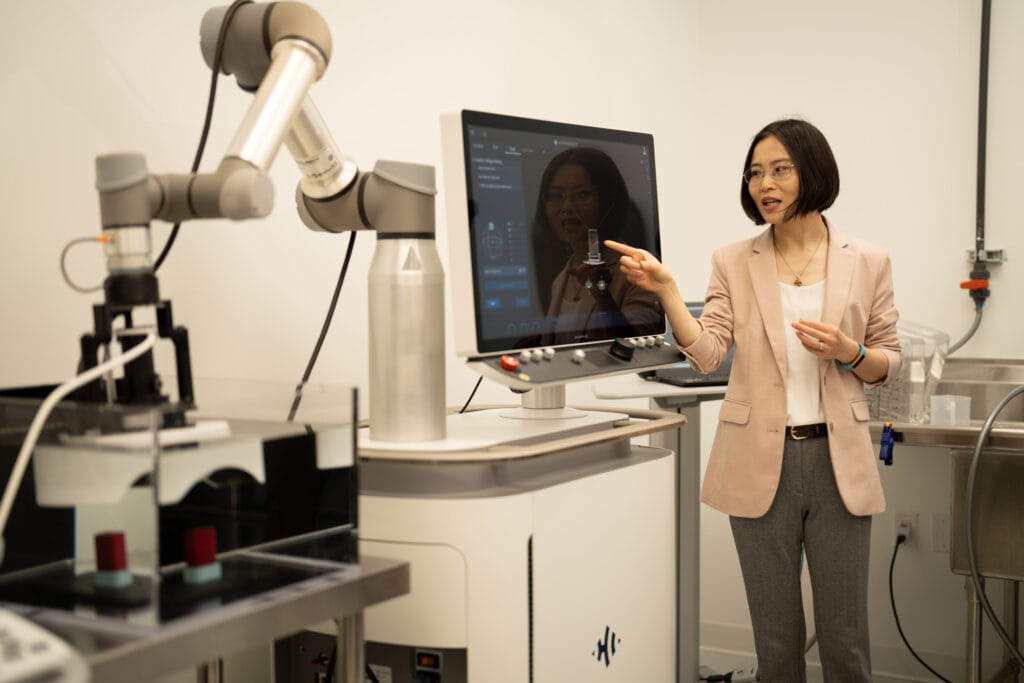
“I am excited to see histotripsy being used to help thousands of patients by treating their liver tumors with no incision, no toxicity, and minimal or no pain,” Xu said. “My team at the University of Michigan is continuing research on scientific and technical advances to expand histotripsy to benefit more patients around the world.
“I really look forward to seeing non-invasive, histotripsy treatment in many tumor types, including renal, pancreatic, breast, prostate, thyroid and brain tumors. It may also be beneficial in treating neurological diseases such as stroke and epilepsy, and cardiovascular diseases such as thrombosis and atrial fibrillation.”
Approved by the FDA in 2024, histotripsy has already successfully treated thousands of liver cancer patients around the world using HistoSonics’ Edison device. Currently, 100 Edison systems are installed in medical facilities worldwide—in the U.S., the United Kingdom, Hong Kong and the United Arab Emirates.
Nearly 3,000 patients have received histotripsy treatments so far. Trials are underway to enable the use of the technology for kidney tumors, and a study regarding pancreatic tumors is underway in Spain.
Xu is also a fellow of the National Academy of Inventors (NAI), the Institute of Electrical and Electronics Engineers (IEEE), and American Institute of Medicine and Bioengineering (AIMBE).

Xu’s journey to turning histotripsy into an FDA-approved cancer treatment began in the early 2000s, when she worked extensively with the late U-M professor Charles Cain—considered the “father of histotripsy.” Together, they developed ultrasound technologies that could kill cancer cells. In 2009, Cain, Xu and a handful of other U-M engineers and doctors founded HistoSonics.
In August, a syndicate of globally-recognized private and public investors acquired HistoSonics for $2.25 billion.