Harvesting critical metals from industrial wastewater
Two projects co-led by University of Michigan engineers are among 12 supported by the NSF-funded Regional Innovation Engine, Great Lakes RENEW.

Two projects co-led by University of Michigan engineers are among 12 supported by the NSF-funded Regional Innovation Engine, Great Lakes RENEW.

Michigan Engineering is reinventing U.S. manufacturing for resilience and scale
Two teams co-led by University of Michigan Engineering have been selected to develop technologies for cleaning up industrial wastewater, harvesting valuable metals.
The funding comes from the National Science Foundation through Great Lakes RENEW, an NSF Regional Innovation Engine led by Chicago-based water innovation hub Current.
Cleaning up water from industrial processes reduces pollution and can capture expensive materials that would otherwise go to waste, but selectively removing materials from water is challenging.
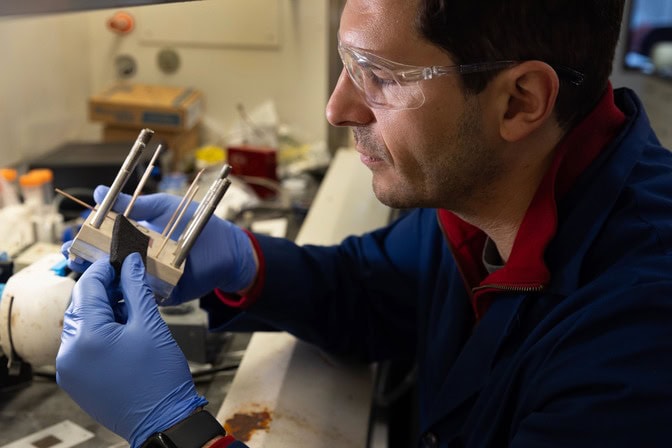
One project, a collaboration with the University of Illinois, aims to recover platinum and similar metals from industrial wastewater. The researchers’ system could harvest metals that are normally thrown away in the mining, chemical manufacturing and electronics recycling industries, providing valuable materials for the automotive industry and modern energy systems, such as fuel cells and technology for making hydrogen fuel.
The other, in collaboration with Purdue University, targets recovering lithium that escapes into wastewater during electric vehicle battery recycling and also removing other pollutants. The project intends to advance technology innovation at the water-energy-climate nexus through hands-on education, industry partnerships and translational research.
Both grants run for two years. The platinum project is funded with $500,000, and the grant for the lithium project is $497,000.
The platinum project will develop specialized membranes and advanced materials that can harness electricity to selectively recover and purify platinum and similar metals from wastewater. Industry partners will help the researchers identify relevant mining, recycling and industrial wastewater streams for designing and testing prototypes. The partners include Glencore, which has mining interests in Minnesota and extensive metal recycling operations, and Honeywell UOP, an Illinois company that manufactures industrial catalysts.
The lithium project will use an electrochemical process to recoup lithium from industrial wastewater while removing hazardous materials at the same time. The project will also establish a new Regional Engagement Board and Critical Minerals Seminar Series that bring together leaders from industry, academia, utilities and national laboratories to co-develop solutions for sustainable mineral refining and recovery.
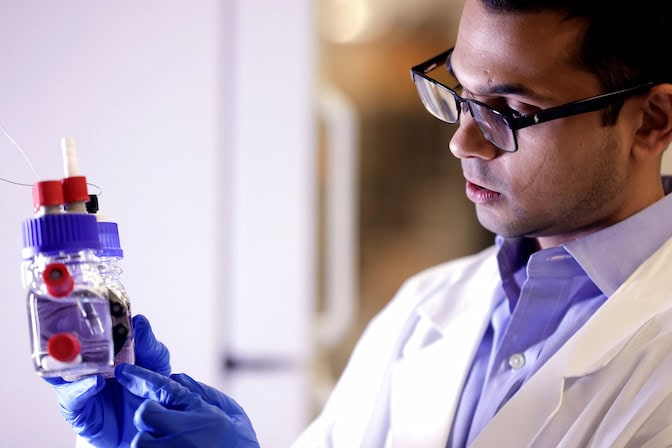
Jovan Kamcev, U-M associate professor of chemical engineering and macromolecular science and engineering, is co-lead of the platinum project with Xiao Su, professor of chemical and biomolecular engineering at the University of Illinois.
“By developing new membrane and electrochemical technologies to recover platinum-group metals from mining and industrial wastewaters, we hope to make better use of these resources, reduce waste and strengthen critical mineral supply chains in the Great Lakes region,” Kamcev said. “Mining has played an important role in Michigan’s history and continues to be a major industry throughout the Great Lakes region. I’m excited to be part of this project that aims to turn industrial wastewater into a valuable source of critical minerals.”
Joshua Jack, U-M assistant professor of civil and environmental engineering, is co-lead of the lithium project with Rebecca Ciez, assistant professor of mechanical engineering at Purdue University. Ciez is also an assistant professor of sustainability engineering and environmental engineering.
“Critical mineral recovery is one of the most important and urgent challenges at the water-energy-climate nexus,” Jack said. “Through this project, we seek to develop innovative technologies that transform industrial waste streams into clean water and high-purity minerals that can fuel the clean energy transition.
“Beyond technology development, we aim to build lasting regional partnerships and equip the next generation of engineers with the skills needed to lead in emerging water and critical mineral processing industries. Overall, we anticipate these efforts will advance U-M’s leadership in research, education and public service while inspiring a culture of environmental stewardship, innovation and climate action across the Great Lakes Region and beyond.”