Keeping Michigan’s waterfronts working from Grand Haven: Elizabeth Wilkinson
University of Michigan Engineering alum maintains 18 Lake Michigan harbors on Michigan’s west coast.
STORY AND PHOTOS BY:
Summary
- Elizabeth Wilkinson is operations manager in the U.S. Army Corps of Engineers’ Grand Haven office, where she oversees maintenance of 18 harbors on Michigan’s west coast from St. James on Beaver Island all the way south to St. Joseph.
- Not only does her work keep Lake Michigan harbors safe for recreational boating, it protects critical transportation routes that annually move hundreds of millions of dollars in commodities that support the state’s economy, including coal that fuels northern Michigan power plants.
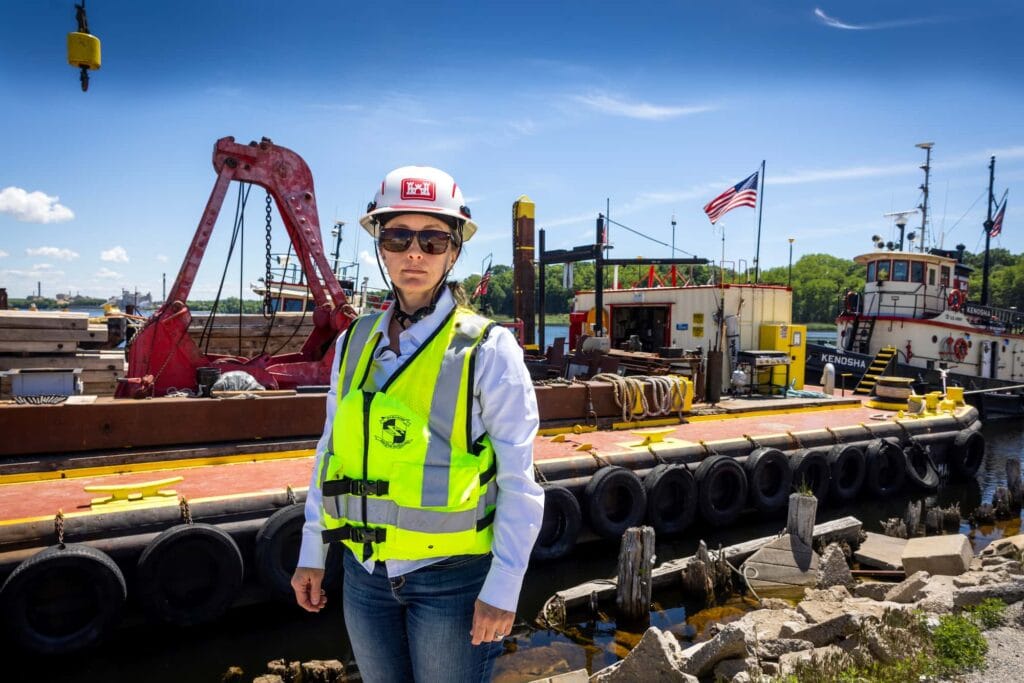
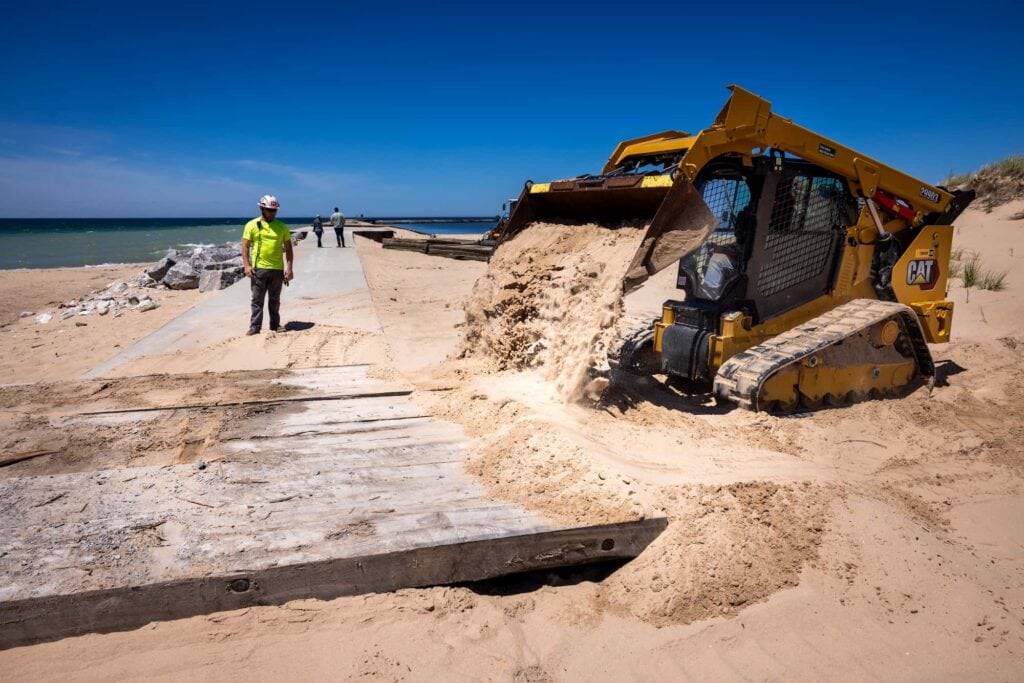
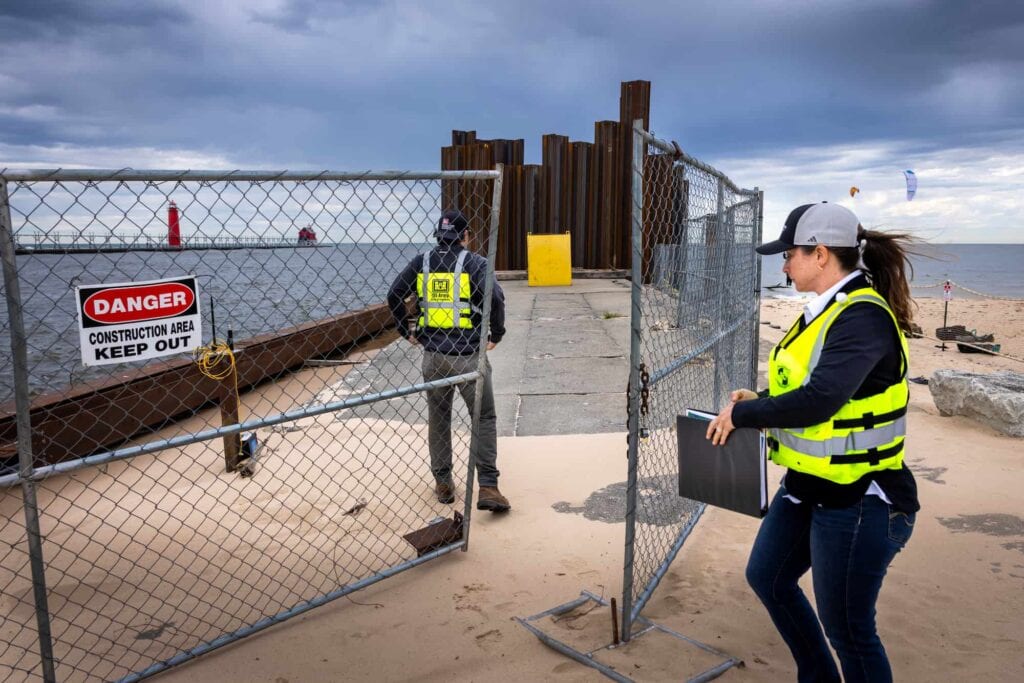
Elizabeth Wilkinson (BSE CEE ’02) walks onto a Lake Michigan beach in Manistee just as a bulldozer lowers its blade, shaping sand into a temporary bridge that connects the beach to an offshore pier.
The bridge will allow a forklift to reach the pier and remove heavy wooden mats that helped distribute the weight of a crane during construction. The crane placed 3,000 tons of stone along the structure to protect Manistee Harbor from wave damage.
“It’s amazing what the waves can do—and not in a good way,” Wilkinson said.
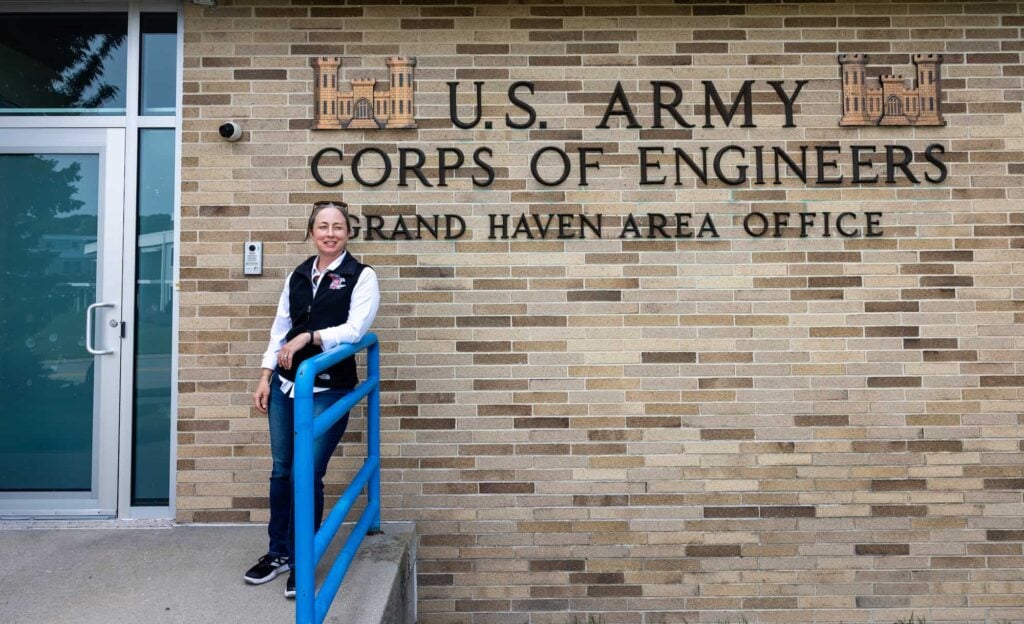
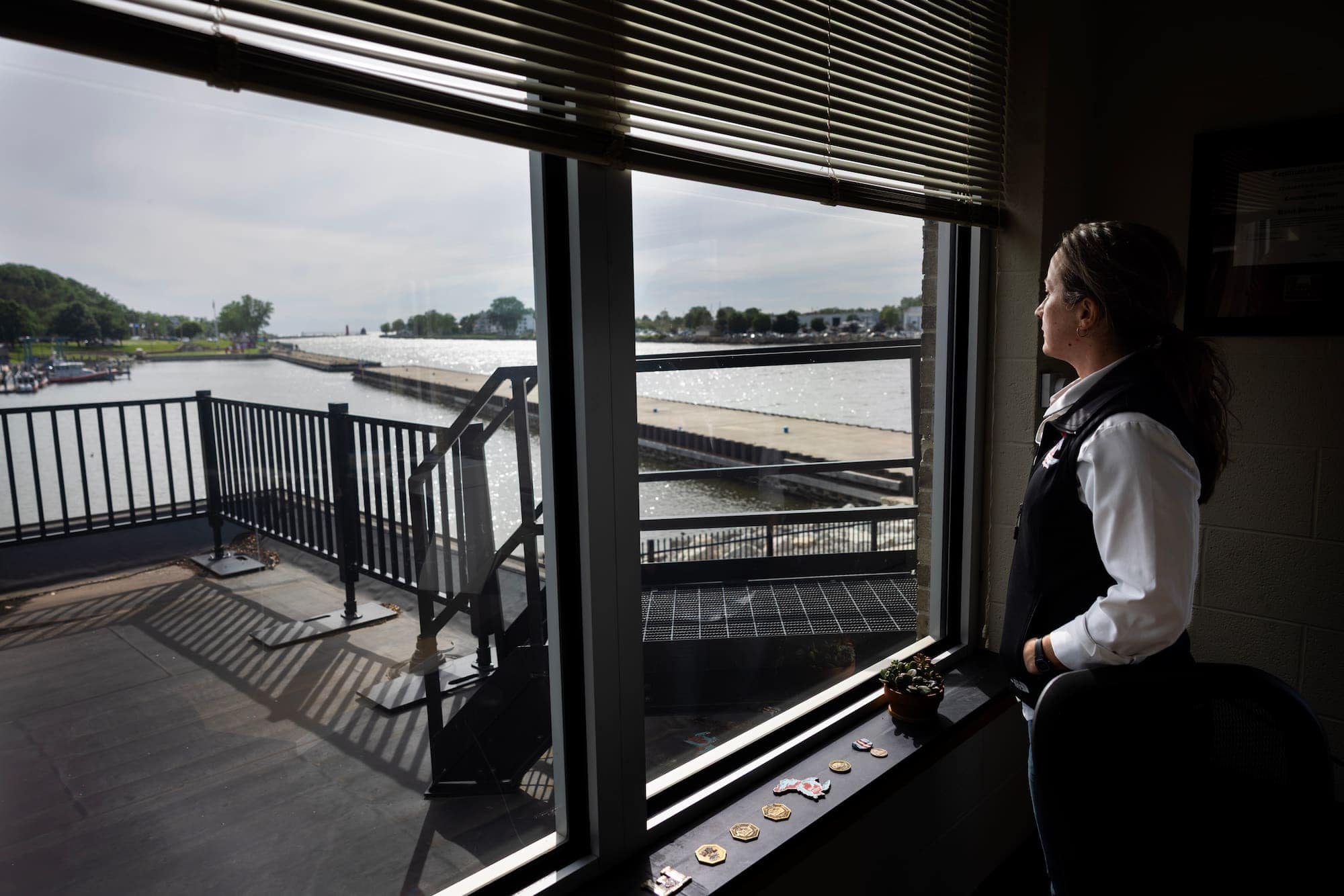
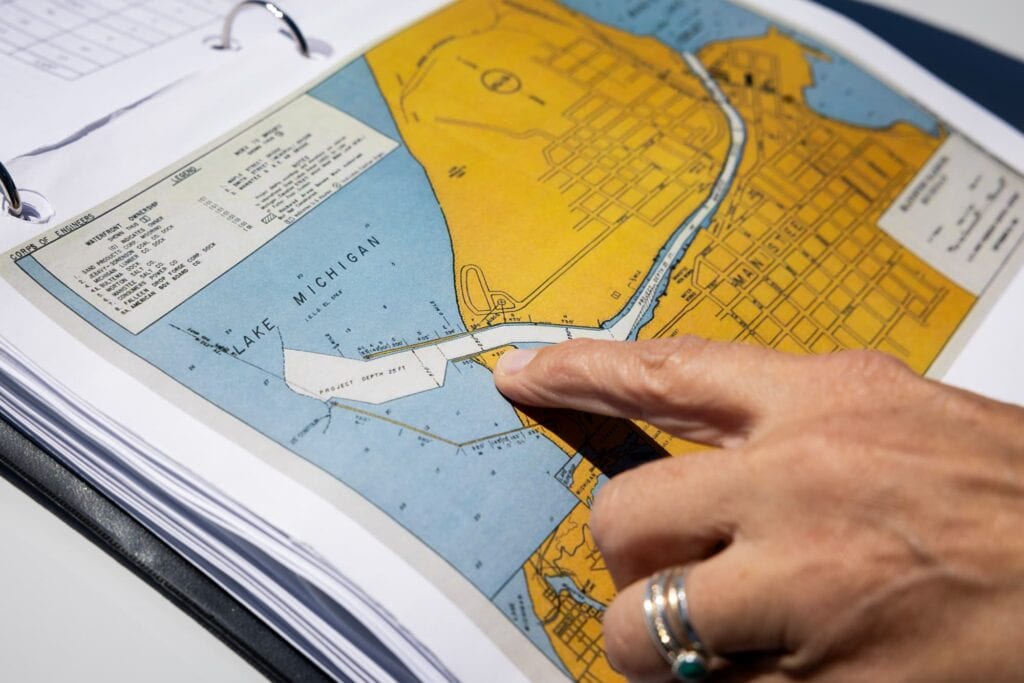
Based in Grand Haven, Mich., Wilkinson is an operations manager for the U.S. Army Corps of Engineers (USACE). She is responsible for maintaining 18 harbors along Michigan’s west coast, from St. James on Beaver Island all the way south to St. Joseph.
These harbors are critical conduits that support the state’s economy in a host of different ways. Six are commercial facilities that handle bulk materials like limestone, aggregate, sand, coal, cement, and salt—resources that enable construction, manufacturing and infrastructure projects across Michigan. The harbors at Grand Haven and Manistee provide the most practical way to deliver coal to the municipal power plant and Filer City Generating Station, respectively, because neither facility has adequate rail access. The Grand Haven power plant provides electricity for more than 13,500 customers.
The remaining harbors are recreational facilities that sustain boating, charter fishing, tourism and the small businesses that depend on the state’s shoreline. The state’s outdoor recreation economy contributes 15 billion dollars annually and supports nearly 125,000 jobs, with much of that activity tied to access to the Great Lakes.
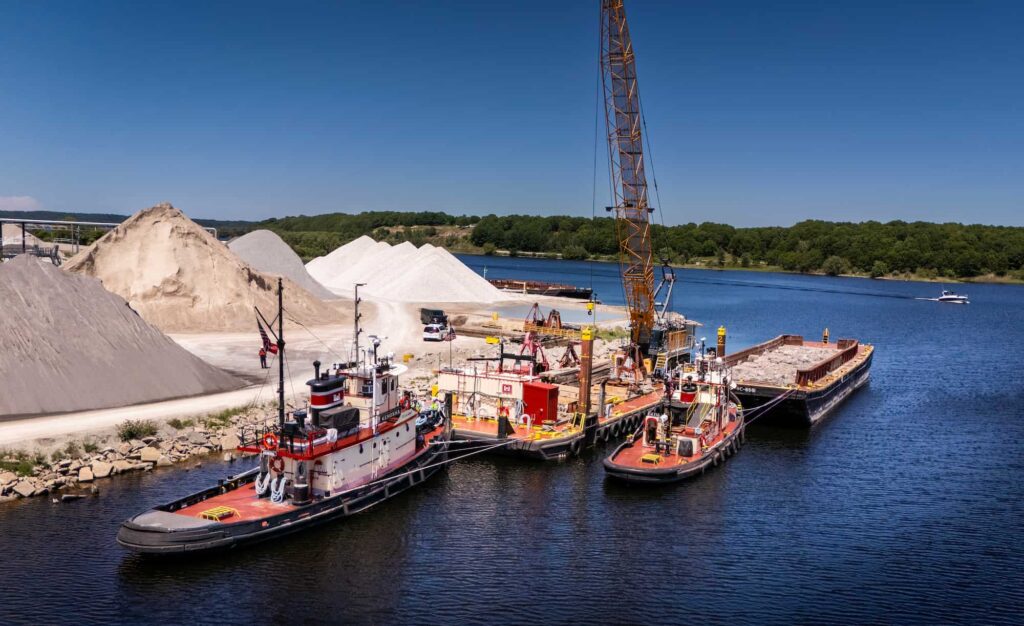
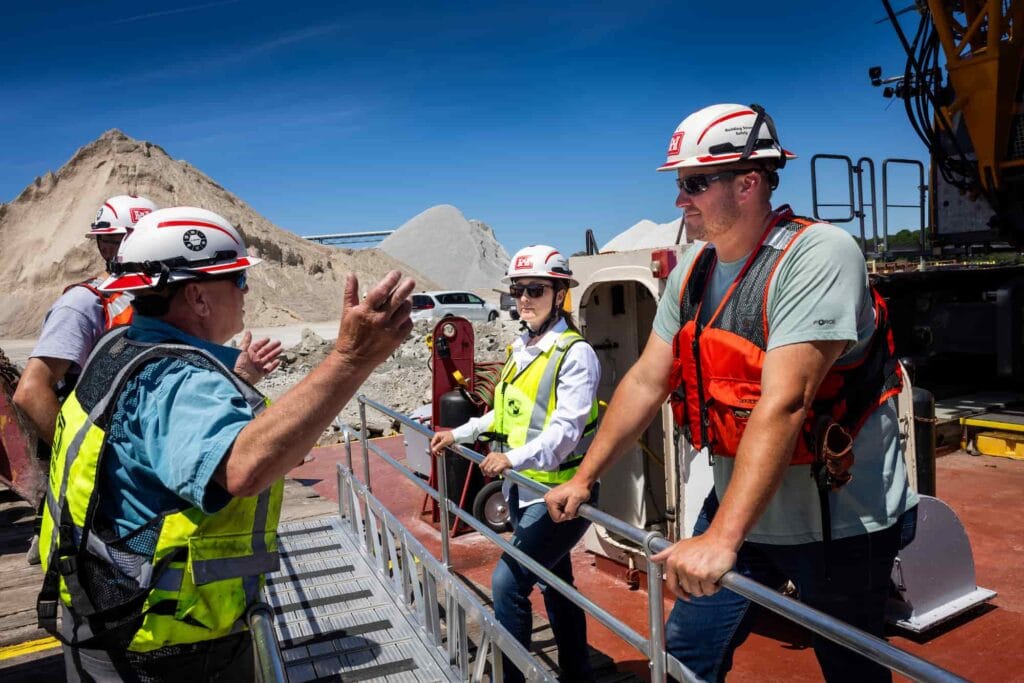
The stone placement work Wilkinson is inspecting today is part of a $2 million resiliency project led by USACE, which also installed new wooden bumpers along 1,800 feet of the pier in Manistee to absorb impacts from waves and vessels. USACE regularly dredges Manistee Harbor and repairs its waterfront infrastructure to maintain the port’s significant shipping capacity.
Maintaining Lake Michigan harbors is a constant challenge. Waves, currents, storms and ice reshape the coastline every year, moving sand into navigation channels and damaging the piers, breakwaters and other structures that protect waterfront communities.
The vigilance, dredging and technology that keeps harbors open
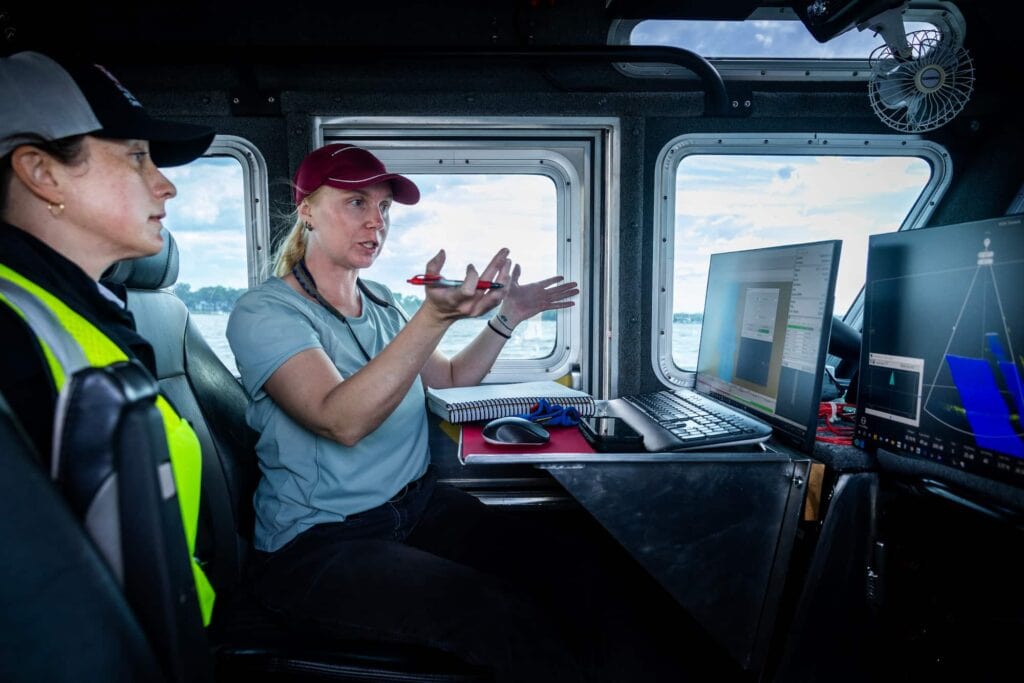
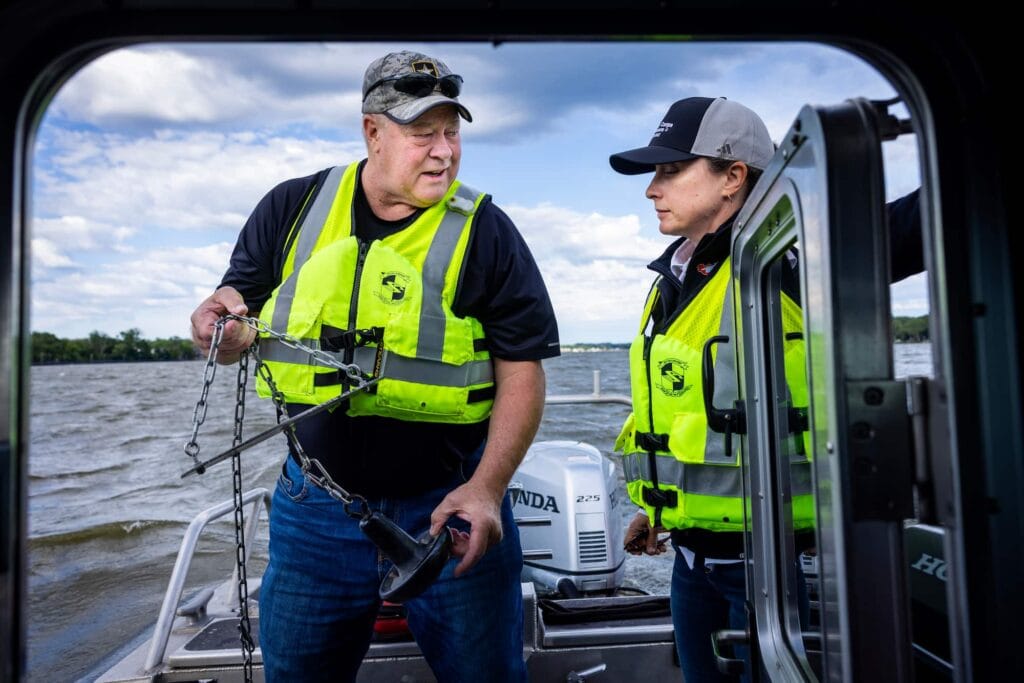
Every spring, Wilkinson’s team surveys all 18 federal harbors in the western part of the state to assess how much work the coming year will require. “It’s our dramatic reveal,” she said.
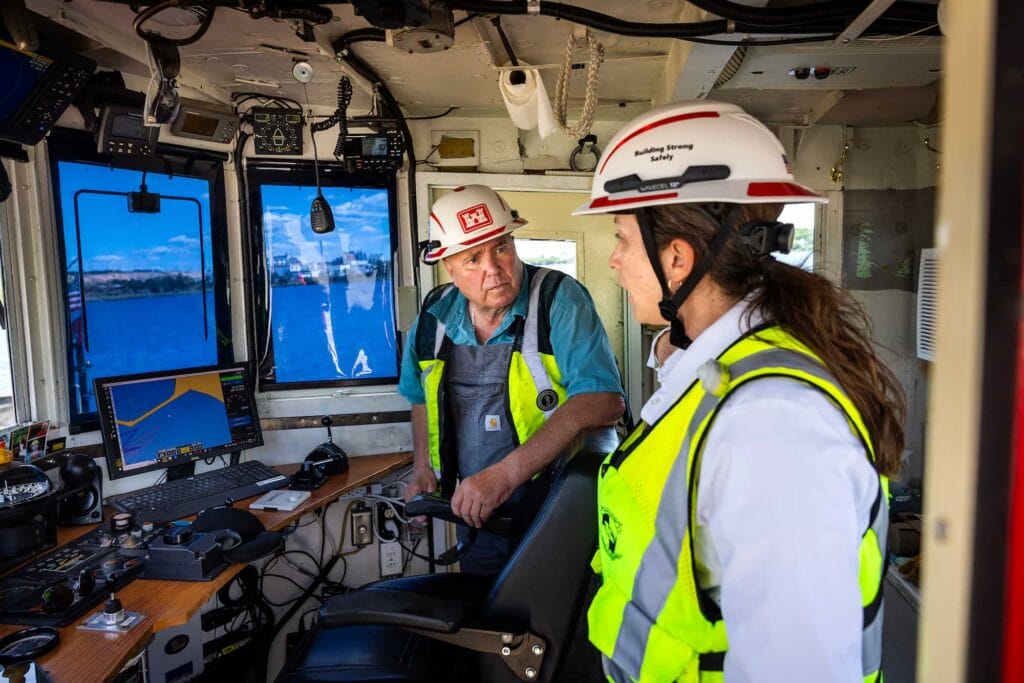
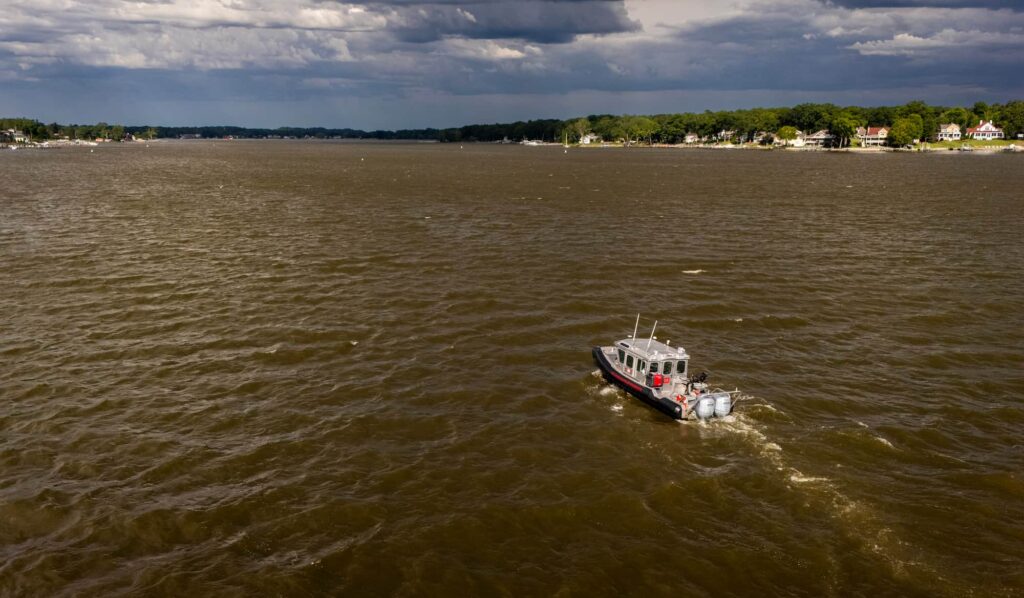
On June 16, 2026, Wilkinson visited Lake Macatawa near Holland, Mich. and boarded a USACE survey vessel. As the boat moved along a zig-zag path known as a “lawnmower pattern,” the crew lowered sonar equipment into the water to measure the depth of the navigation channel, map underwater conditions and identify obstacles that could impede boat traffic.
After the surveys are complete, Wilkinson’s team will hire local contractors to dredge or repair harbor channels based on the data collected. For Wilkinson, keeping these harbors open means protecting the connection between Michigan’s communities, economy and the Great Lakes. She is personally invested in the work.
“I kind of pretend like they’re my harbors,” she said.
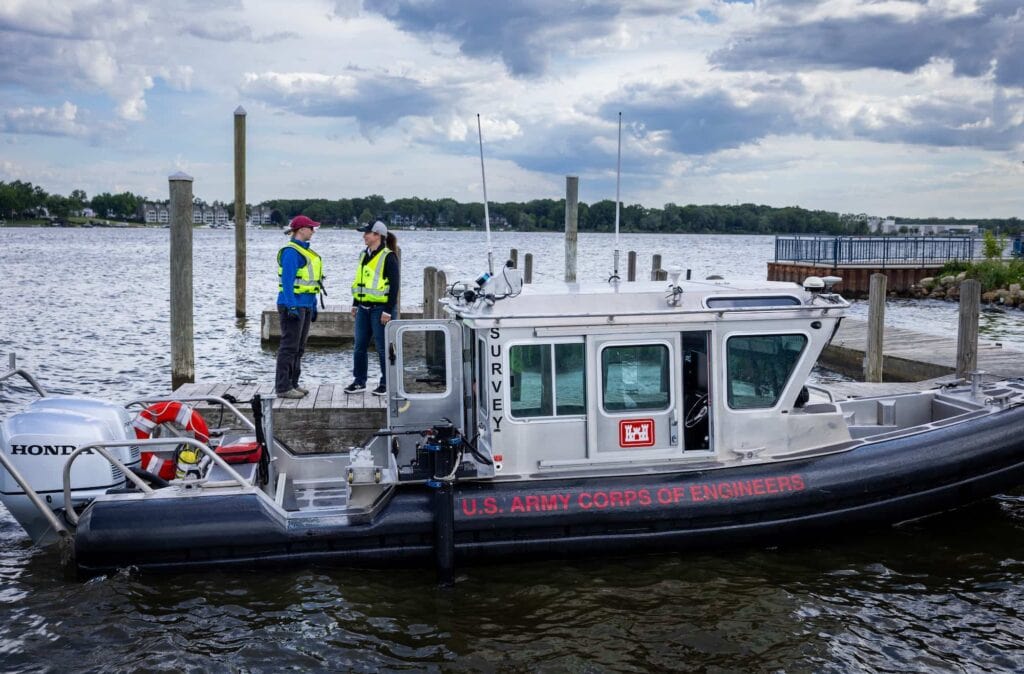
Addressing harbor challenges requires collaboration in addition to engineering expertise. Wilkinson works with city managers, public works directors, Coast Guard representatives and local stakeholders to understand each community’s needs.
“I advocate for what the local community is telling me their needs are,” she says. “Then we work through our programs internally to try to have those needs met.”
In 2026, Wilkinson is focused on harbors in Grand Haven, Holland and Manistee that ship and receive over 1.5 million tons of cargo annually, sustain nearly $97M in combined business revenue and close to 400 direct, indirect, and induced jobs in the transportation sector alone.
Working in the most beautiful place on Earth
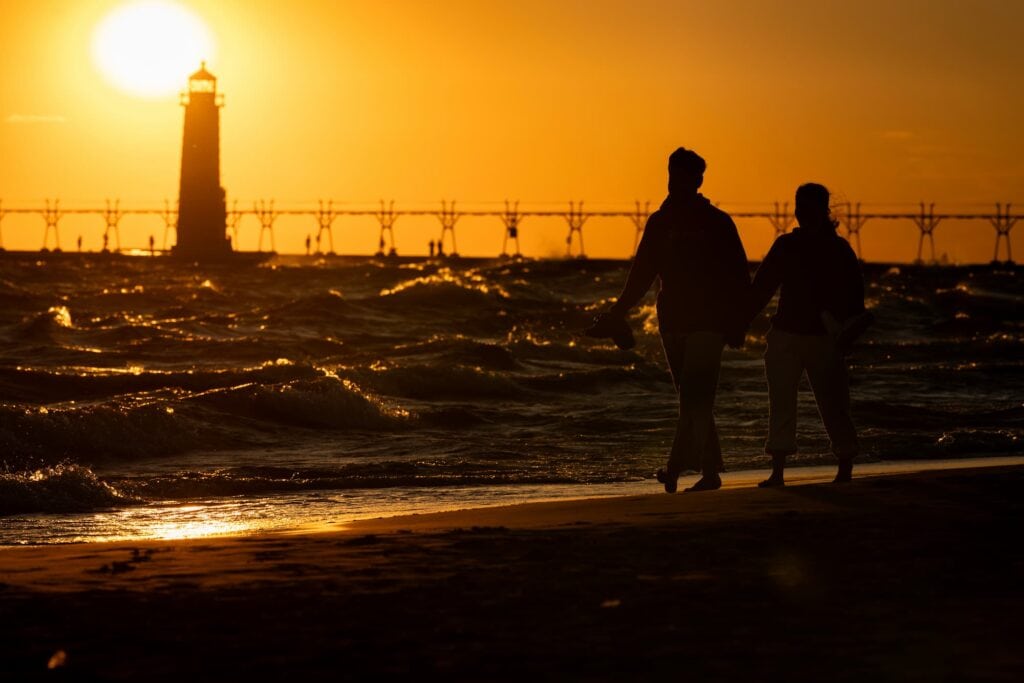
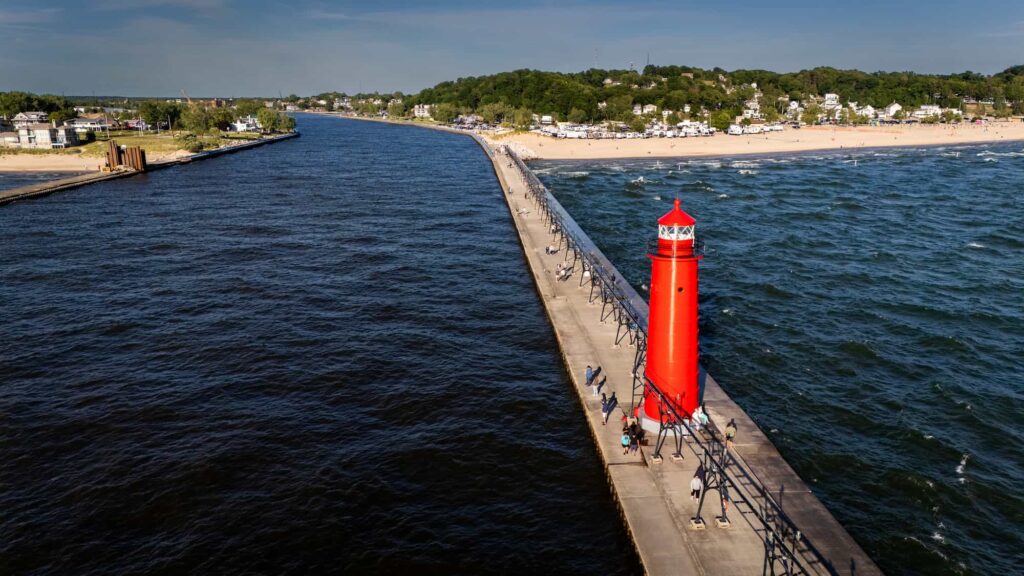
Wilkinson’s connection to Lake Michigan began long before she became an engineer. Growing up in Edwardsburg, Mich., she spent summers at the lake, going to the beach with friends and developing a fascination with Lake Michigan that never faded.
“I still think it’s the most beautiful place on earth,” she said.
The daughter of an engineer, Wilkinson did not plan to study engineering when she arrived at the University of Michigan. But on campus, she discovered that she enjoyed technical problem-solving and math. She transferred into civil and environmental engineering, where she found her passion in construction and guiding projects to life. “I like seeing things happen in the field and working through the problems that come up all the time,” she said.
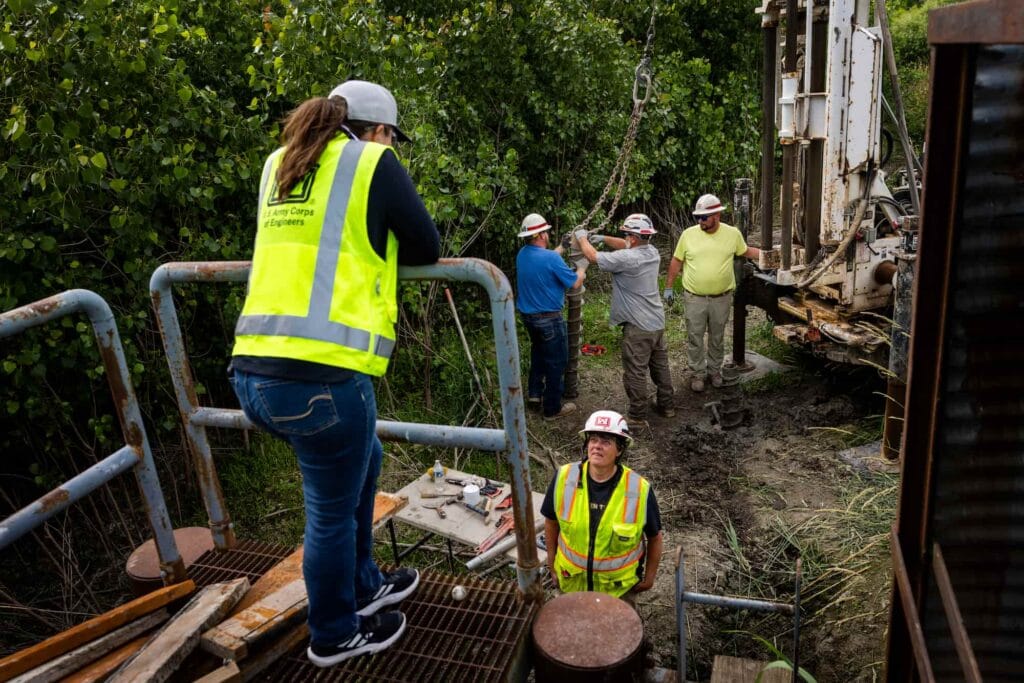
Wilkinson’s Michigan Engineering education taught her how to break down complex problems into manageable pieces and find solutions in uncertain situations—skills that have guided her USACE career, from construction management in Chicago and Detroit to hurricane response projects in the South and even a four-month assignment rebuilding infrastructure destroyed during the 2003 invasion of Iraq.
U-M also helped her build confidence. Through the university’s women’s rugby club, she found a community of strong women and learned she was capable of more than she realized. Today, that confidence shapes her leadership style. Just as important, she remains focused on the communities her work serves.
“I really love being able to support the communities in West Michigan,” she says. “These are small harbor communities that are really passionate about the lake and recreation on the lake.”
The harbors Wilkinson protects are gateways to industry, recreation and memories created along the shoreline. In many ways, her work has brought her full circle: caring for the same lake that inspired her as a child.