New flu vaccine protects mice against multiple strains
Studies in mice suggest a new vaccine, made using baker’s yeast, could work with fewer booster shots and without predicting the dominant flu strains each season.

Studies in mice suggest a new vaccine, made using baker’s yeast, could work with fewer booster shots and without predicting the dominant flu strains each season.

Michigan Engineering is advancing
critical technologies for a healthier world
Fei Wen: With enough effort and research, we believe that you might just need one shot.
Narrator: Engineers at University of Michigan Engineering are developing a universal vaccine that allows the immune system to recognize and fight mutated strains of the flue virus, which can mean less shorts and better protection. They are doing it by turning the yeast you use to bake your bread, into tiny particles that contain a part of the flu virus that is less prone to mutation.
Fei Wen: Our goal is to really develop a broadly protective flu vaccine, protecting you from multiple different strains so you don’t have to get a flu shot every season, but maybe every few years. Narrator: vaccines today, which typically involve growing the virus in chicken eggs, are developed to target a piece of the virus the body most strongly recognizes. The problem is it often mutates. So that shot you got in the fall may no longer protect you against the new mutated flu strain.
Fei Wen: The current vaccine efficacy can change quite wildly from year to year, ranging anywhere from 10% to 60%. That is one of the main reasons why we want to engineer influenza or flu vaccines to be more broadly protective. That actually requires us to target more conserved region on the influenza virus itself.
Narrator: These conserved pieces of the virus don’t mutate as often, and are the same across many strains, holding the key to a universal vaccine. But because only parts of them are exposed and there are not many of them, the body’s immune system is not great at recognizing them.
To solve this, Fei Wen and her team genetically engineered the yeast to produce tiny particles covered with these conserved proteins, helping the body to create antibodies that recognize more strains than current vaccines. Test using the particles in mice showed 100% protecting across three different strains of the flu virus. And because yeast multiples quickly, they can act like tiny vaccine factories, making it cheaper and faster to develop a vaccine compared to using chicken eggs.
Fei Wen: The chicken egg based vaccine production takes about six months or so. So by the time the vaccine is produced, the strain might have already evolved. Imagine, you know, instead, you can reduce it down to one month.
Narrator: This could allow you to respond to mutations and change the vaccine before a lot of pwoplw get sick. Next, the researchers are working on testing how long the immune memory last and are licensing the vaccine for commercialization. Getting one step closer to clinical trials and fewer shots.
[End of video]
A new, nanoparticle vaccine could one day grant patients immunity to the flu with fewer trips to the doctor and without health officials correctly guessing which flu strains will become dominant each year.
Mice given the vaccine, developed at University of Michigan Engineering, were successfully protected against three different strains of flu, according to a study presented today at the American Chemical Society’s Fall 2026 conference. The team achieved the broader protection by targeting a virus protein that mutates more slowly than the main proteins our bodies recognize on inactivated flu viruses. Current flu vaccines must include a mix of three or four flu variants to achieve the same level of protection, and even then, they are only 30-60% effective.
“Our goal is to develop a broadly protective and more effective flu vaccine, so you don’t have to get a flu shot every season,” said Fei Wen, a professor of chemical engineering and the corresponding author of the study, which was partially funded by a National Science Foundation CAREER Award. “Eventually, with enough effort and research, we believe that you might need one shot to be protected for life.”
When we get flu shots, our immune systems confront deactivated flu viruses injected into our arms. The main protein they detect is hemagglutinin, which makes up 80% of the virus’s surface. But the immunity is temporary because hemagglutinin is prone to mutation, with 19 versions currently in circulation and new variants emerging every few years.
Because of the variability in hemagglutinin, the World Health Organization and the Centers for Disease Control and Prevention monitor which strains are spreading, so vaccine manufacturers can include them in the latest vaccines. But if a new strain emerges, the vaccines may not work as expected. In 2025, a new flu variant, called subclade K, emerged that contributed to one of the United States’ more severe flu seasons in recent years. Over 320,000 flu patients were admitted to the hospital and more than 10,000 died, according to CDC data. The swine flu pandemic of 2009 was also caused by a new flu variant.
Instead of leaving our immune systems to choose which proteins to react to on an inactivated virus, the new vaccine provides one option: the M2 protein. This flu protein is less likely to mutate because changes can make it harder for the virus to replicate. M2 is very similar across influenza A viruses, including seasonal flu, swine flu and bird flu. However, our immune systems don’t naturally target M2 because there is much more hemagglutinin on viruses.
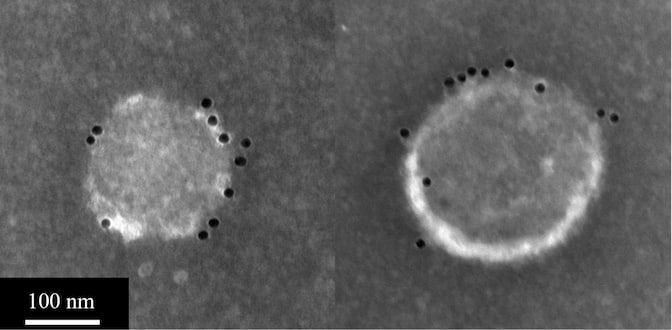
The new vaccine is made of particles that are roughly the same shape and size as flu viruses but are covered in M2 protein.
These virus-like particles are made using baker’s yeast. The researchers genetically modified ordinary yeast to make large amounts of the M2 protein. After incubating the yeast in a nutrient-rich liquid, the researchers treated the microbes with mild chemicals to gently remove their rigid cell walls. When the outer wall is removed, the yeast will bud off the virus-like particles, which the researchers collect.
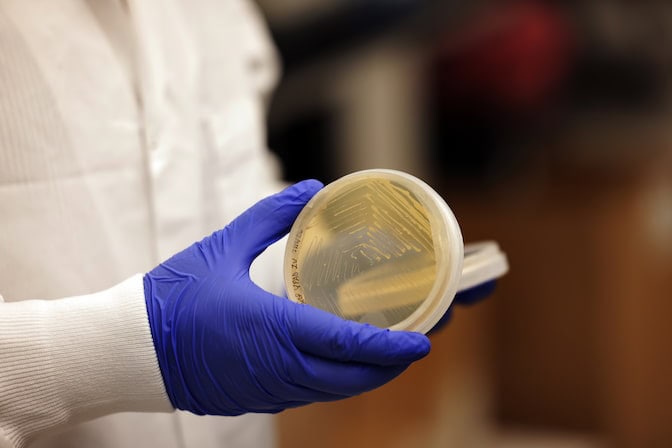
With their new manufacturing method, the researchers can produce a large amount of flu vaccine in a month. In contrast, conventional flu vaccines made in chicken eggs require six months.
“If a new M2 strain does emerge out of nowhere, we’ll be able to quickly edit the vaccine,” said Trang Hoang, U-M doctoral student in chemical engineering and first author of the study. “Our method could improve pandemic response time.”
The team has licensed their technology to Esperovax, with the help of Innovation Partnerships, to develop an oral vaccine. But there is still a lot of work to be done before it’s ready for people. The researchers’ next step is to measure how long the M2-vaccinated mice remain immune to flu.
U-M has a financial interest in Esperovax.