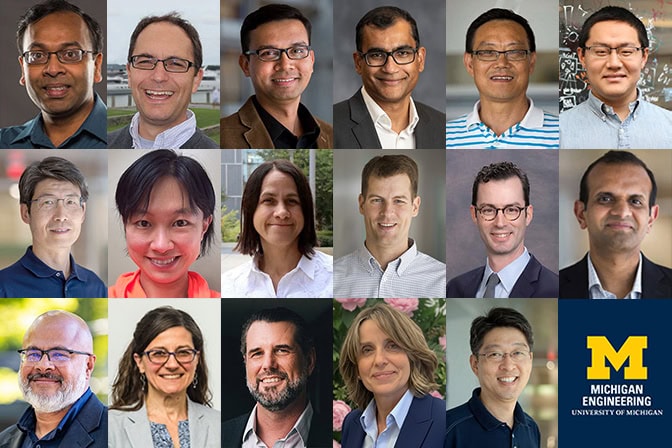
Seventeen faculty earn named professorships in Spring-Fall 2025
From minimally invasive surgery to computational prediction, Michigan Engineering faculty are delivering knowledge and solutions that serve society.

From minimally invasive surgery to computational prediction, Michigan Engineering faculty are delivering knowledge and solutions that serve society.
University of Michigan Engineering faculty create both foundational knowledge and practical technologies to move society forward and serve our state and national interests. Named professorships are an important way that Michigan Engineering and the University honor these distinguished faculty members for their outstanding contributions in research, teaching and service. From Spring-Fall 2025, the following faculty members received this honor.
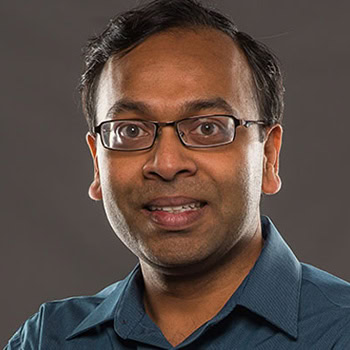
Joseph E. Shigley Collegiate Professor of Engineering
Shorya Awtar is a leader in mechanical design, precision engineering, human-centric design, mechatronic systems and robotics. His specific research and development topics have included medical devices for minimally invasive surgery, precision motion stages for semiconductor metrology, and motion sickness mitigation in autonomous vehicles. He has founded multiple startups to translate his research and innovations to societal impact. Among his many accolades, Awtar is a member of the National Academy of Engineering.
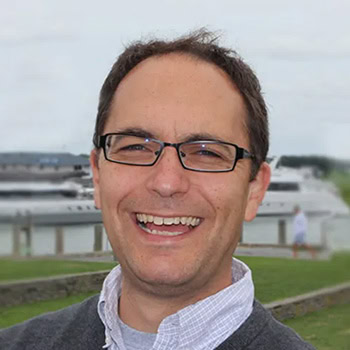
Toyota Professor of Artificial Intelligence
Jason Corso’s research includes high-level computer vision and its relationship to human language, robotics and data science. He primarily focuses on problems in video understanding such as video segmentation, activity recognition, and video-to-text. His long-term goal is a comprehensive and robust methodology of automatically mining, quantifying, and generalizing information in large sets of projective and volumetric images and video.
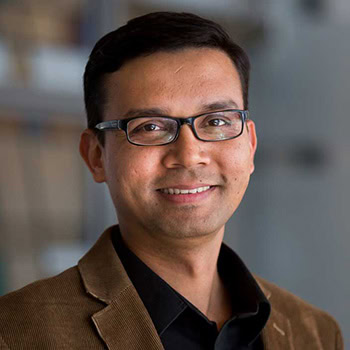
Chen-Luan Faculty Development Professor of Electrical and Computer Engineering
Parag Deotare is a pioneering researcher in optoexcitonics and its application to next-generation device development and hardware security. His research focuses on understanding the energy dynamics within and between nanoscale systems and leveraging them for the development of next-generation semiconductor and quantum technologies.
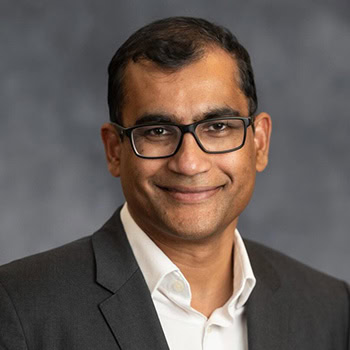
Arthur B. Modine Professor of Engineering
Recognized for his pioneering contributions to computational science and engineering, Karthik Duraisamy has helped advance computational prediction in complex, real-world physical systems. His research supports advances in rotorcraft, wind energy, aircraft engines, liquid-fueled rockets, hypersonic systems, and more recently, in nuclear reactors and fusion energy applications.
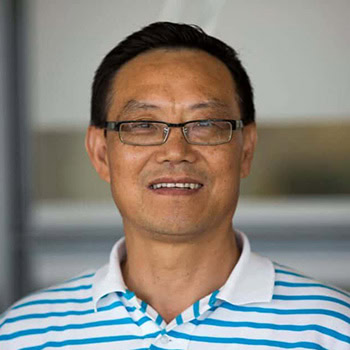
James Duderstadt Collegiate Professor of Nuclear Engineering
Fei Gao is internationally recognized for his pioneering work in multiscale modeling and for advancing the fundamental understanding of ion-solid interactions and radiation effects in reactor materials, as well as interfacial and nanostructure evolution of semiconductors and radiation detector materials. His research encompasses a broad range of topics, including the degradation of cladding materials, swift heavy ion damage, and the behavior of ceramics used in nuclear waste forms, nuclear fuels, and structural materials in fission and fusion reactor environments.
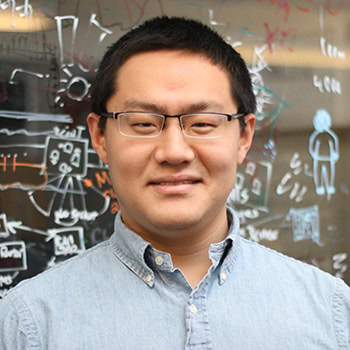
Morris Wellman Faculty Development Assistant Professor of Computer Science and Engineering
Anhong Guo’s research focuses on developing personal assistive technology, empowering people with disabilities through innovative, human-centered AI. His group is pioneering new programming approaches that enable blind and low-vision individuals to design and prototype personalized solutions for day-to-day challenges.
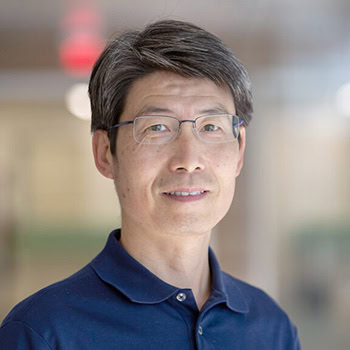
Emmett Leith Collegiate Professor of Electrical Engineering and Computer Science
A worldwide leader in nanoimprinting, nanophotonics, and nanomanufacturing, Jay Guo has made significant contributions to a wide variety of areas. His research has led to advances in flexible organic solar cells, OLEDs, augmented reality glasses, ultrasound detection and more.
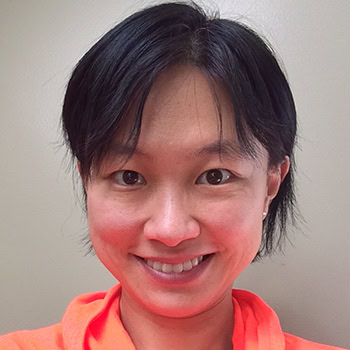
Farnam Jahanian Collegiate Professor of Computer Science and Engineering
Z. Morley Mao is recognized for her exceptional contributions in the area of network systems, mobile and distributed systems, and security. Her work has tackled complex challenges including securing connected and automated vehicles, protecting against adversarial machine learning threats, and enhancing the security of mobile and cloud computing networks.
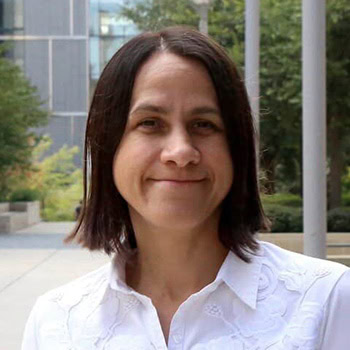
James and Judith Street Professor of Chemical Engineering
Delia Milliron has established a distinguished research program in nanocrystal-based materials, with particular emphasis on energy-saving electrochromic windows and clean energy technologies. Her pioneering work at the intersection of nanoscience, materials chemistry, and energy technology has led to key advances in the synthesis and application of tunable metal oxide nanocrystals.
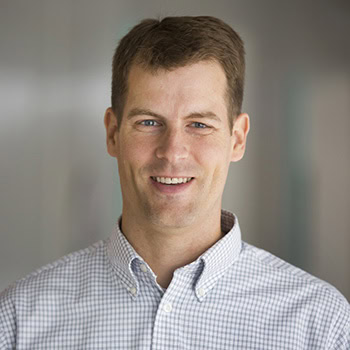
Arthur W. Burks Collegiate Professor of Computer Science and Engineering
Christopher Peikert’s pioneering research in quantum-secure and lattice-based cryptography has been instrumental in advancing cryptographic techniques that are both efficient and resistant to various attacks. His contributions have led to the establishing of post-quantum cryptography standards that are in widespread use today.
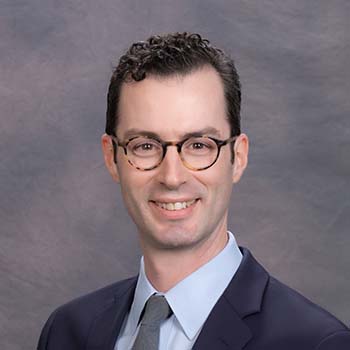
Charles and Elizabeth Schrock Faculty Development Professorship
Raiman leads the Materials in High Temperatures and Extreme Environments (MiHTEE) Laboratory, where his team explores how materials behave under demanding conditions, particularly for nuclear environments. His research interests include materials in extreme environments, corrosion in molten salts, irradiation assisted stress corrosion cracking, high-temperature corrosion, radiation effects in materials, environmentally assisted cracking, advanced manufacturing, and mechanical behavior of materials.
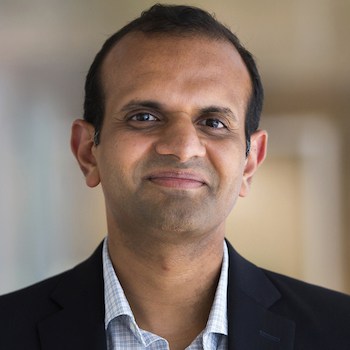
James Arthur Nicholls Collegiate Professor of Engineering
Venkat Raman is a leader in the field of computational models for turbulent and high-speed reacting flows. He focuses on the development of computational models for turbulent reacting flows with application to aircraft and scramjet engines, stationary power generation, and synthesis of novel materials. Raman heads the Advanced Propulsion Concepts Lab, and is Director of the newly formed Center for Prediction, Reasoning and Intelligence for Multiphysics Exploration (C-PRIME).
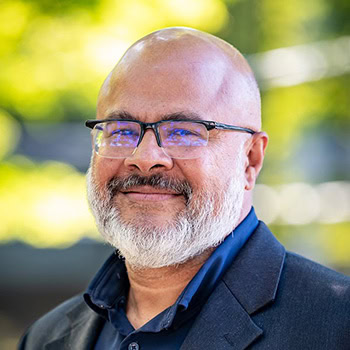
Katta G. Murty Collegiate Professor of Industrial and Operations Engineering
Uday Shanbhag’s research focuses on developing analytical and computational methods for optimization, variational and game-theoretic problems involving nonsmoothness, nonconvexity, stochasticity and hierarchy. His work has been applied to power systems and markets, with recent advances impacting statistical learning.
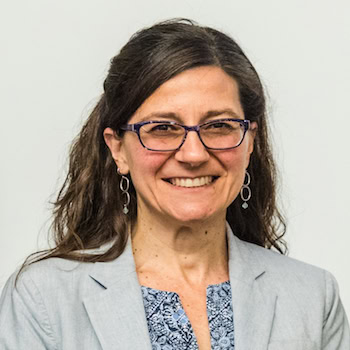
Huei Peng Distinguished University Professor of Mechanical Engineering
Anna Stefanopoulou has been dedicated to studying the control of internal combustion engines (ICE), batteries and fuel cells. Stefanopoulou currently leads the Powertrain Control Lab and co-leads the Battery Control Group, where she and her team work to improve the cost, safety, and lifetime of batteries using a combination of experiments, physics-based modeling, control theory and data analytics.
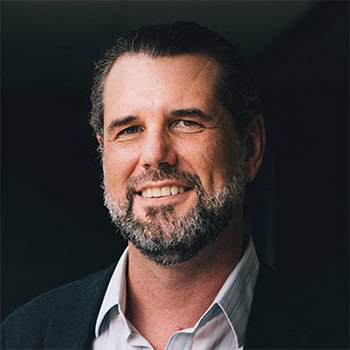
Vennema Professor of Chemical Engineering
Thomas Truskett’s research is at the nexus of molecular thermodynamics, statistical mechanics, and materials science. Over the past two decades, his work has advanced our understanding of condensed matter systems, ranging from therapeutic protein solutions to colloidal assemblies. His research group develops statistical mechanical theory and computer simulation techniques to interpret and guide experimental studies addressing engineering challenges in materials, chemical, and biomedical engineering.
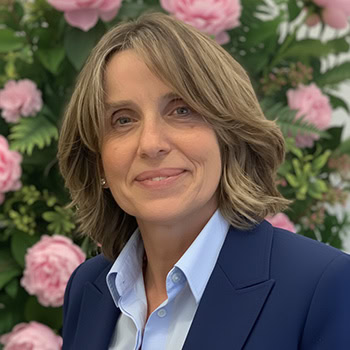
Dennis Assanis Collegiate Professor
Angela Violi’s research pioneers the use of multiscale modeling and machine learning to solve complex problems at the intersection of nanotechnology, biology, and environmental science. As the leader of the Violi Lab, she and her team develop and apply advanced computational methods to understand and predict the behavior of molecules and materials from the quantum scale to the cellular level. Her work has foundational applications in two critical areas: elucidating the formation of nanoparticles in combustion and the environment, and designing novel nanomaterials for biomedical applications, such as new antimicrobials.
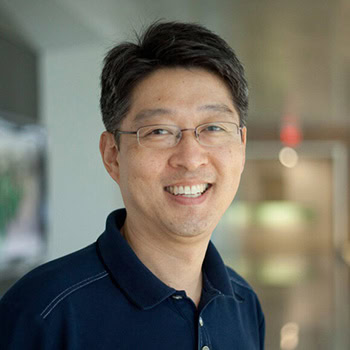
William G. Dow Collegiate Professor of Electrical Engineering and Computer Science
Euisik Yoon has done pioneering research in microelectromechanical systems (MEMS) for various applications, including integrated sensors, RF MEMS, Optical MEMS and BioMEMS. His primary areas of focus have been optogenetic neural probes for brain research and microfluidic biochips to aid the treatment of cancer patients. He provided unique opportunities for both graduate and undergraduate students to participate in the research and led major international programs to spread his neural probe technology.
Read more about Yoon’s professorship