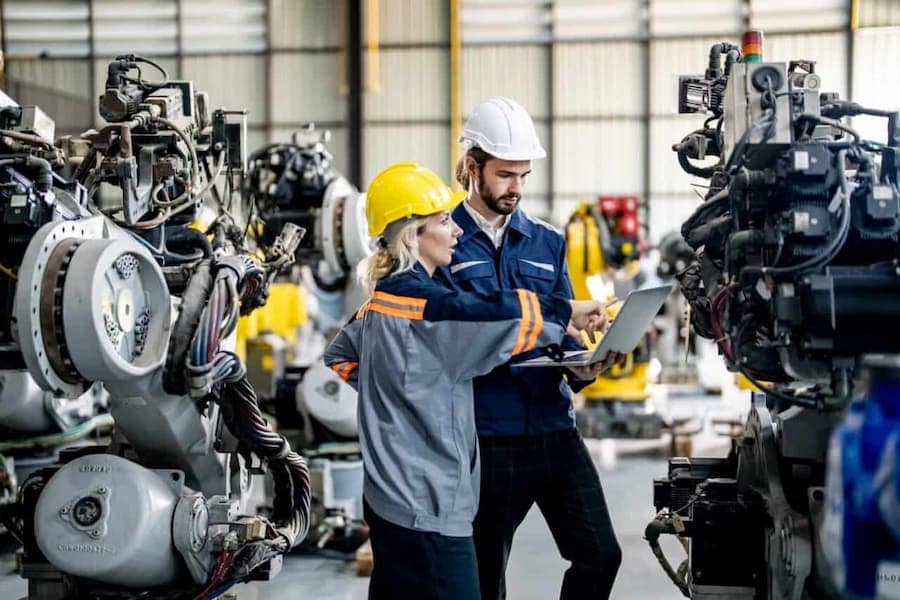
Helping AI recognize human intent and recover from mistakes
Researchers are helping AI better recognize human intent and recover from misunderstandings, improving safety, efficiency and trust.

Researchers are helping AI better recognize human intent and recover from misunderstandings, improving safety, efficiency and trust.
University of Michigan Engineering researchers are developing ways for artificial intelligence systems to recognize when they misunderstand people and recover before those breakdowns cause safety risks or costly delays.
Michigan Engineering is reinventing U.S. manufacturing for resilience and scale
The project is led by Manhua Wang, assistant professor of industrial and operations engineering, in collaboration with Felix Warneken, professor of psychology. Their work focuses on “social-cognitive” errors—cases in which AI misinterprets a person’s goals, knowledge, physical or emotional state, or preferences.
The team will study how these misunderstandings affect human-AI collaboration and identify strategies that use voice-enabled agents to restore effective teamwork. The first focus will be on in-vehicle intelligent agents, simulating the high-stakes, cognitively demanding interactions common in advanced manufacturing.
The findings could improve AI interactions in workplaces, vehicles, health care and consumer technologies by reducing frustration, preventing safety-critical mistakes and strengthening trust.
The project received seed funding from U-M’s Bold Challenges initiative.
This is an AI-generated, human-verified summary of the article U-M researchers improve human-AI teamwork in manufacturing by Jessalyn Tamez