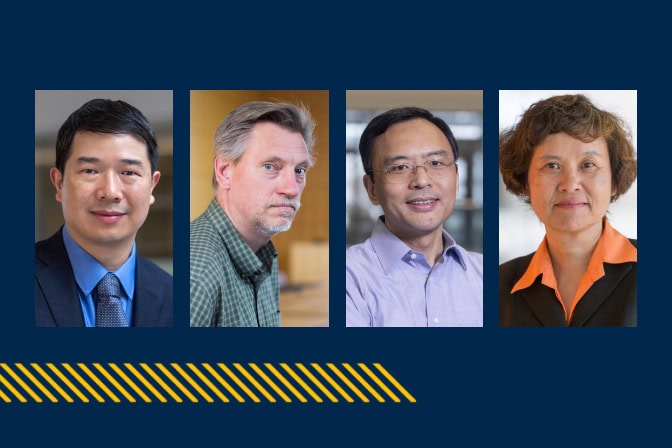
AAAS welcomes four new fellows from University of Michigan Engineering
The honorees are recognized for contributions to human biology, fundamental physics, next-generation computing hardware and advanced vehicle control.

The honorees are recognized for contributions to human biology, fundamental physics, next-generation computing hardware and advanced vehicle control.
The American Association for the Advancement of Science (AAAS) has named four University of Michigan Engineering professors as fellows. Their achievements span human developmental biology, laser plasma physics, brain-like computing hardware and advanced vehicle control on both water and land.
The professors are among 449 scientists and engineers from across the nation, “who have been recognized for their scientifically and socially distinguished achievements” in the 2025 class, according to AAAS.
“Congratulations to the new AAAS fellows. Together, they highlight the breadth of engineering research excellence at the University of Michigan, in both technology and basic science,” said Karen A. Thole, the Robert J. Vlasic Dean of Engineering and a professor of mechanical and aerospace engineering.
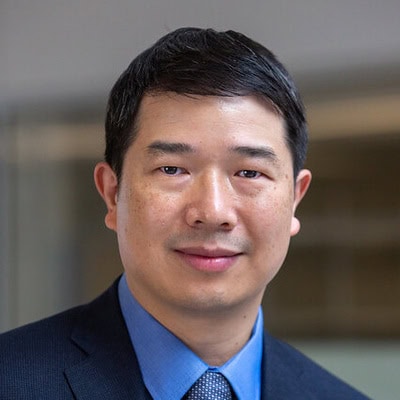
Jianping Fu, professor of mechanical engineering, is honored, “for distinguished contributions to the field of stem cell bioengineering, particularly using human pluripotent stem cells to build advanced embryo and organ models and study human development.”
His team achieved a major breakthrough by modeling implantation using stem-cell-based models of early human embryos, prompting the cells to differentiate in ways that more closely mirror normal human development. He is now using these models to deepen our fundamental understanding of human development. More recently, his work has incorporated advanced computational approaches, including AI tools, to simulate early developmental processes.
“I’m excited about the opportunities for bioengineering to advance fundamental human developmental biology and enable related translational applications,” Fu said. “I’m also deeply grateful for my wonderful collaborators and mentors, and honored to work with my talented trainees—whose creativity, rigor, and dedication have been central to our impact. This progress is truly a team effort.”
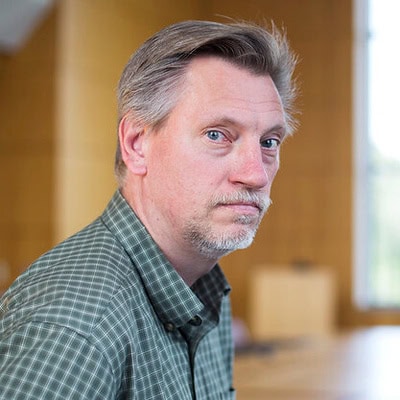
Karl Krushelnick, Henry J. Gomberg Collegiate Professor of Engineering, professor of nuclear engineering and radiological sciences, is recognized, “for research in high-intensity laser-plasma interactions, ultrafast optics, and laser-driven particle acceleration, advancing applications in fusion energy and high-field physics.”
Krushelnick is a long-time leader in laser plasma physics, serving as head of the Gérard Mourou Center for Ultrafast Optical Science (CUOS) at U-M since 2011. He oversaw upgrades to HERCULES, which was once the most intense laser in the world, and now CUOS is home to ZEUS, the top U.S. facility for experiments at the cutting edge of laser technology.
“It is quite an honor to be named a Fellow of AAAS—and this is due in large part to the exceptional group of students and faculty colleagues at the University of Michigan whom I have worked with over the past 20 years,” said Krushelnick.
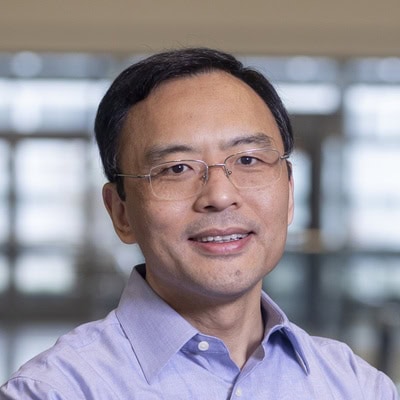
Wei Lu, James R. Mellor Professor of Engineering and a professor of electrical and computer engineering, is elected, “for distinguished contributions to the field of solid-state electronics, particularly for the development of resistive random-access memory devices and neuromorphic computing and in-memory computing systems.”
Lu’s work has helped turn electrical devices such as memristors from conceptual ideas into commercially viable technologies, while also advancing brain-inspired electronic circuits that naturally support neural-network-based computing, which dominates in emerging fields like artificial intelligence.
“I am deeply honored and humbled to receive this recognition. For what little I have achieved, I cannot thank my collaborators, students, and postdocs enough—they have provided the inspiration and carried out the hard work that made it possible. I look forward to continuing this exciting journey and contributing to AAAS’s mission of advancing science, engineering and innovation throughout the world for the benefit of all,” said Lu.
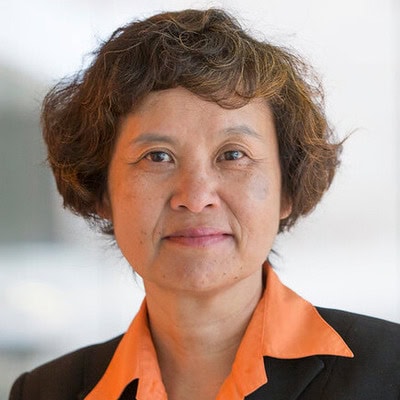
Jing Sun, Michael G. Parsons Collegiate Professor of Naval Architecture and Marine Engineering, is honored, “for distinguished contributions to the field of adaptive, nonlinear and hybrid control with applications to automotive and marine engineering.”
Sun has developed adaptive control algorithms that allow automobiles and marine-energy turbines to maintain optimal performance despite changes to the environment or system, like a thermostat that can handle more than just temperature. Her algorithms use sensor data to detect and anticipate changes to key parameters, such as turbine speed or coolant temperature, then enact system-level changes that correct or prevent degraded performance.
Before coming to U-M, Sun developed powertrain control algorithms at the Ford Research Laboratory that control engine emissions and optimize fuel efficiency in hybrid vehicles. At U-M, she designed control algorithms for underwater marine-energy turbines to adapt to changes in current speed, and worked with Ford engineers and U-M colleagues to develop algorithms that manage power and heat in automated and connected vehicles. Her textbook on adaptive control has over 9000 citations.
“I’ve been back and forth between industry and academia, so I consider myself more of an engineer than a scientist. I’m very grateful that the scientific community recognized the value of my work,” said Sun.
Derek Smith contributed to this story.