
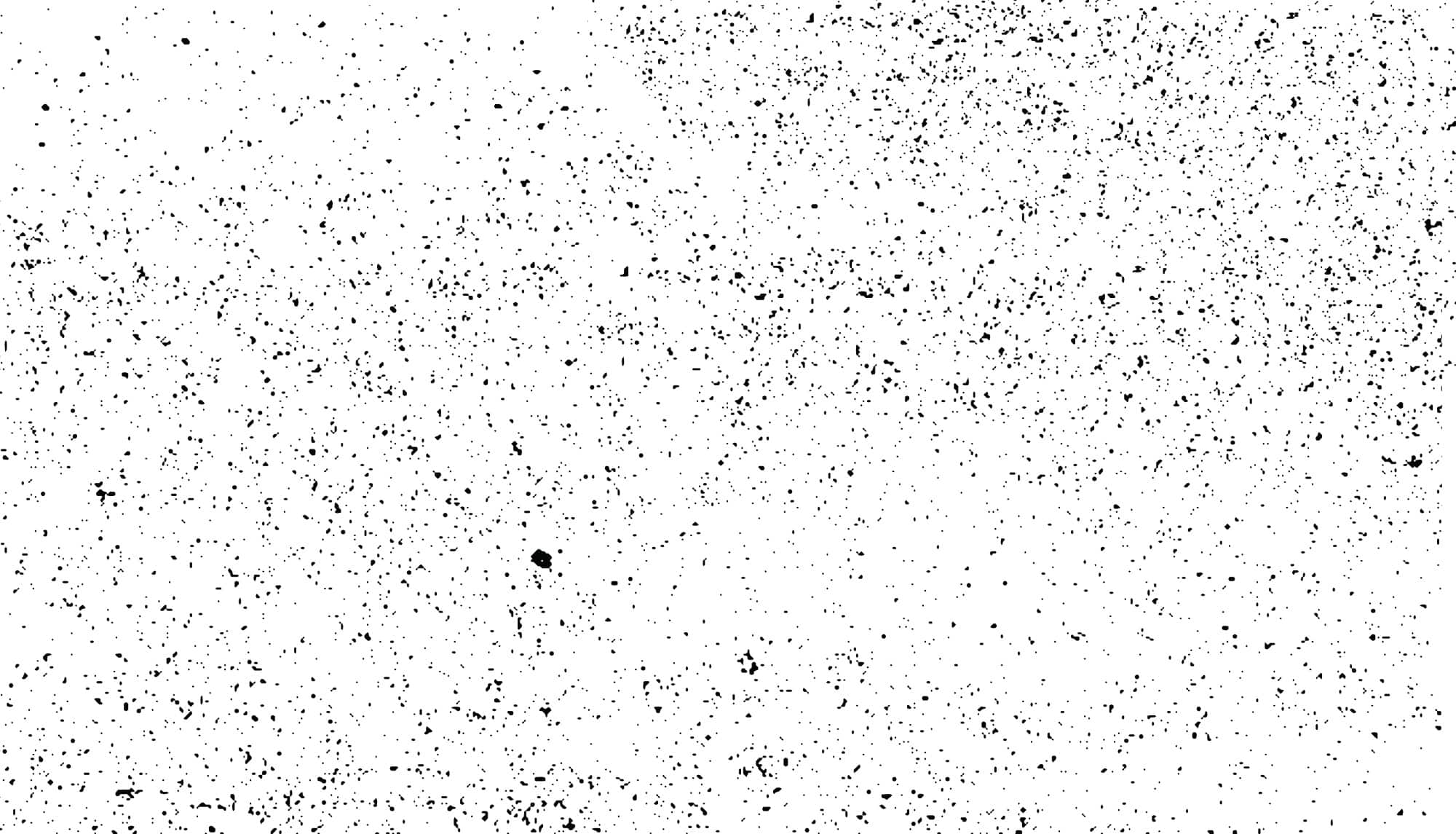

Feb. 28, 2024 was a tense day for the satellite operators at the Johns Hopkins Applied Physics Lab as they watched one of their spacecraft head toward possible disaster.
The operators had received a warning from the United States Space Force that their TIMED satellite—a NASA mission that had been studying Earth’s atmosphere for 23 years—was on a potential collision course with a dead Russian satellite. Neither spacecraft was equipped with active propulsion systems, so the mission team could only watch, wait and hope. Luck happened to be on their side that day; the satellites skirted past each other, less than 33 feet apart.
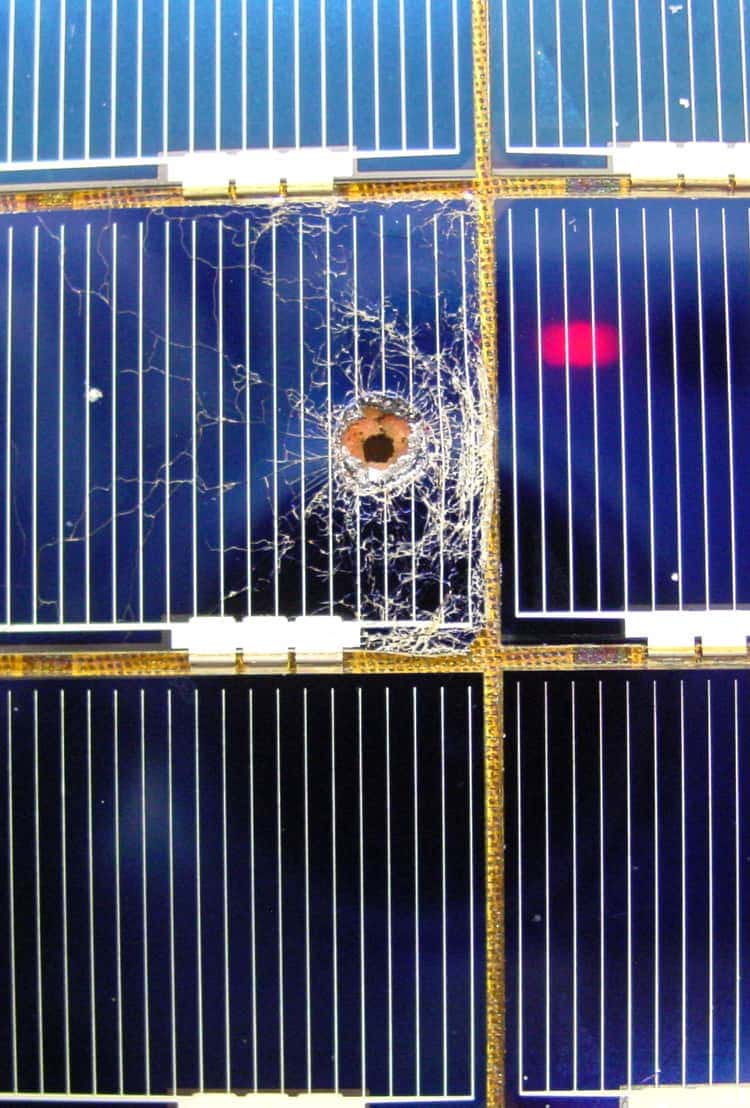
Other missions haven’t been so lucky. In 2024, a satellite from telecommunications provider IntelSat broke apart after what was likely a space junk collision, cutting service to customers in Europe, Africa and parts of Asia. The same year, astronauts on the International Space Station had to shelter in place when a defunct Russian satellite broke apart nearby. And in 2022, U.S. astronaut Frank Rubio had to extend his mission on the International Space Station after space debris punched a hole in the spacecraft that was scheduled to take him home.
The risk of satellite collisions is growing as space gets more crowded, with more than 12,000 active satellites orbiting Earth, as well as debris like spent rocket casings, dead satellites and broken bits of equipment.
The number of active satellites is expected to grow in the coming years as launches become more affordable. Starlink alone aims to launch a constellation of more than 40,000 satellites into orbit, not to mention the large constellations that will underpin broadband internet projects from both Amazon and China. NASA received approximately 20,000 collision warnings every month in the first half of 2025, a four-fold increase since 2020.
“With the commercialization of space, we have more assets in orbit than ever before,” said Mojtaba Akhavan-Tafti, an associate research scientist in climate and space sciences and engineering at U-M. “In order for us to have space operations that are safe and last long enough to make economic sense for stakeholders, we have to provide an environment where the risk of being hit isn’t too high.”
As debris and satellites collide, they break into a larger and larger number of ever-smaller pieces, further increasing the risk of a collision. And because objects in the most common satellite orbits travel at approximately 17,000 miles per hour, a collision with even a tiny fragment can cause big damage.
This vicious cycle—named the Kessler Syndrome after the scientist who predicted it—could theoretically produce so much debris that satellites and astronauts could no longer reliably travel through space. The European Space Agency (ESA) found in its 2025 Space Environment Report that, even if new launches stopped immediately, collisions between existing objects would keep increasing the overall number of objects in Earth’s orbit for more than 200 years.
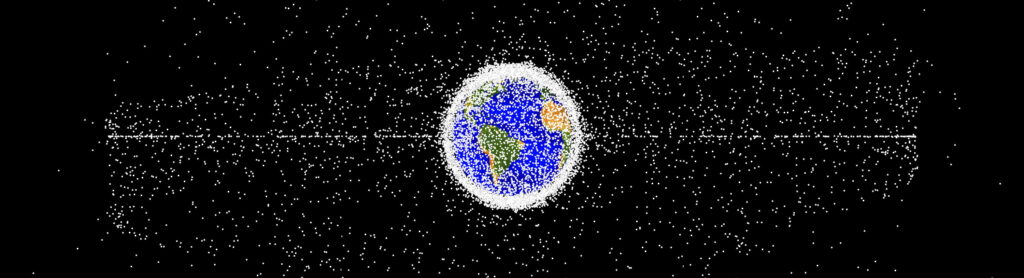
Some protections are already in place. Regulations require satellite operators to steer their equipment out of crowded orbits after their missions are complete, and the U.S. Space Force tracks in-orbit objects to help avoid collisions. The agency operates a network of six satellites and more than 30 ground-based telescopes and radar dishes to track man-made objects orbiting Earth. The system can help satellite operators and astronauts take evasive action when possible and time new satellite launches to avoid collisions.
“With the commercialization of space, we have more assets in orbit than ever before.”
But the current system is limited. Anything smaller than a softball–over 99.97% of space debris–is too small to be reliably tracked with the current system. ESA estimates that there are more than 141 million pieces of tiny, undetectable debris in orbit. And even large objects can become untraceable when their orbits abruptly shift during the geomagnetic storms known as “space weather.”

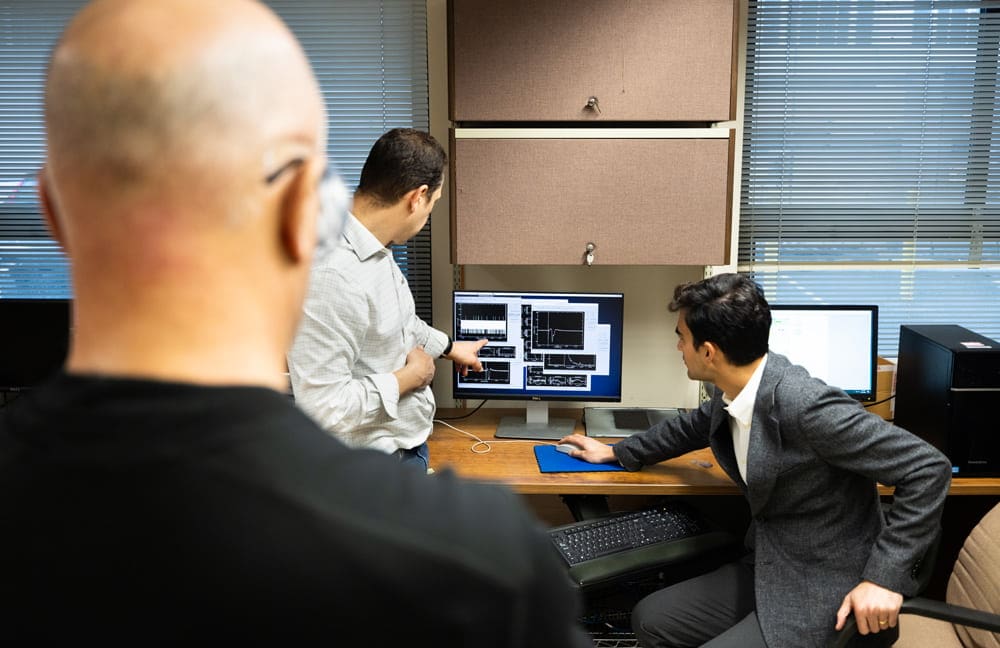
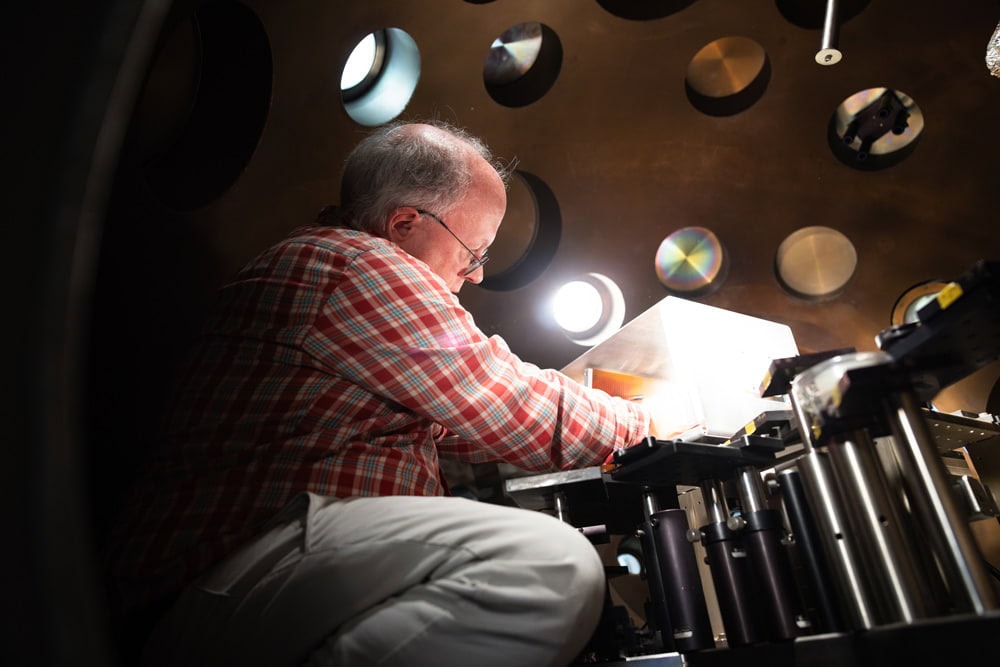
Researchers at U-M and elsewhere are working to keep space safe for future generations. They’re developing solutions that could enable tracking of microscopic fragments and designing forecasting tools that could more accurately track active satellites during space weather events.
But simply avoiding collisions won’t be enough to stop the escalating cycle of junk. ESA’s 2025 report found that active debris removal will be essential for keeping Earth’s orbit safe, and an alumni-led startup is working on technology that could do just that.
The following three-part video series presents an immersive look at the exponentially-worsening issue of space junk. Inside a U.S. Naval Research Lab, Michigan Engineering researchers lead a clever experiment to bring us one step closer to tracking this tiny debris.
Video Transcripts
Part 1 transcript:
Narrator: Space is getting crowded. Right now, there are close to 12,000 active satellites orbiting Earth. But it’s not just empty space between all that important tech. Floating amongst them is 8,700 metric tons of debris, both accidentally and intentionally left behind by past space missions. And it’s cruising at speeds of 17,000 mph, threatening to endanger astronauts and destroy the very satellites that modern life depends on.
Julian Labit: The Surveillance Network can detect objects in low-Earth orbit all the way up to geosynchronous orbit, that have a minimal size of ten centimeters cubed. Of the 47,700 objects currently that we’re tracking in space, about 39% or 18,800 are considered debris.
Narrator: That’s almost 20,000 objects the size of a softball or larger that we need to keep track of to prevent catastrophic collisions. But that’s less than 1% of the estimated total pieces of debris up there.
Mojtaba Akhavan-Tafti: The remaining 99% are the debris that we don’t even know where they are or how to track them.
Nilton Renno: The small debris can cause tremendous damage because of their high velocity. It’s like a rifle bullet colliding with a spacecraft.
Julian Labit: It is essentially an invisible hazard in space.
Narrator: In 2024, a satellite from telecommunications provider Intelsat broke apart after what was likely a space junk collision. And in 2022, astronaut Frank Rubio saw his stay on the ISS extended after small debris punched a hole in the craft that was scheduled to take him home.
NASA Broadcaster: It’s been a little over three months since this Soyuz vehicle began leaking coolant from its heat dissipating…
Julian Renno: The data that we provide is to inform spacecraft owner operators to maneuver out of the way if there’s a potential conjunction or collision, um, that is incoming.
Narrator: Because debris smaller than four inches has a smaller area and reflects less light, radar and optical telescopes used by agencies like Space Force have difficulty spotting them.
Julian Labit: We can’t maneuver or make decisions based on what we don’t know. And so it is potentially an accident just waiting to happen.
Narrator: And every collision in space creates more debris that can cause further havoc, fueling a chain reaction known as the Kessler syndrome. If business continues as usual, the amount of small debris will continue to multiply in orbit and could eventually threaten the sustainability of satellite launches and space travel.
Mojtaba Akhavan-Tafti: In order for us to have operations that are safe in space and can last a long time to make economic sense for stakeholders, we have to provide a very safe environment for them.
Part 2 transcript:
Narrator: Floating around Earth is an estimated 170 million pieces of undetectable small debris. If we don’t find ways to track these destructive debris, future collisions could cause a chain reaction, potentially filling up near-Earth orbits and threatening the sustainability of satellite launches and space travel.
Max Karasik: So today, we have visitors from the University of Michigan performing their experiments using the Nike Laser at the US Naval Research Laboratory. The University of Michigan is going to be using this platform for studying signatures that are generated when objects at this very high velocity collide with each other. You don’t see the start of it.
Mojtaba Akhavan-Tafti: It turns out that on Mars, there are these dust storms that cause superficial dust to just rise in orbit. And as they’re rising, these tiny little dust particles hit each other.
Nilton Renno: Basically, there is an exchange of charge in the collision. When the particles start moving away from each other, there is a spark. They produce electromagnetic signal.
Narrator: Professor Nilton Renno, a Mars expert at the University of Michigan who was part of the team that discovered liquid water on the red planet, originally discovered this dust collision phenomenon. As the Intelligence Advanced Research Projects Activity (IARPA) called for proposals for researchers to develop ways to track small debris, these Martian dust storms got him thinking: what if debris in space emit similar signals?
Nilton Renno: And then one day I realized, wow, debris collide with each other—very likely. How frequent they collide with each other? So I did a very crude order of magnitude calculation, and I was surprised. The number of collisions that I got is the order of one per second in certain orbit. And then when I realized that at those arbitrary speeds, the collision was going to generate this plasma plume that expands quickly, then I estimate just very simple. I like simple calculations. They are crude, but easy to understand. The basic physics show that the signal is tremendous. That’s the first time that I realized this is going to work.
Narrator: As IARPA continues to explore ways to track small debris, Renno and a team of Climate and Space engineers are putting this idea to the test. Using computer simulations developed by research assistant Yun Zhang, they’re able to visualize what signals are produced when small debris hits other small debris or larger known objects.
Yun Zhang: Based on our simulations, we found that the signal that was generated from the collisions can range from even optical to radio frequency. So it’s a broadband signal, and the optical emission mostly comes from the heating of these debris. The radio frequency will mostly come from the plasma that was generated during the collisions.
Narrator: To validate these simulations, the team needed to recreate space debris collisions in the lab. They fired a laser beam at a tiny piece of aluminum foil about one millimeter in size. The energy fired at the foil launched it into an aluminum plate at 22,000 mph, roughly the speed at which junk collides in space. A radio antenna and other sensors detected the electromagnetic signals emitted during the collision, and the entire experiment took place inside a large vacuum chamber to help mimic the vacuum of space.
Narrator: After a series of tests, they were able to detect the same radio and optical signals the simulations predicted.
Nilton Renno: I think in the proposal, you have to estimate how certain are you that this technique is going to work. I said 50%, and then the more we look at it, the stronger the signal appears to be. So that was a very nice surprise.
Narrator: These signals could be strong enough to be detected with the very same telescopes and antennas the Space Force uses, which could allow them, for the first time, to detect and track debris smaller than four inches.
Julian Labit: If there is data coming in that can see objects that are smaller, we can identify risks, hazards, and potential threats to spacecraft that are in space. So, I think it would be a great benefit to all global space users if such technology existed, to identify even the smallest speck of debris or smallest speck of object.
Part 3 transcript:
Narrator: Floating around Earth is an estimated 170 million pieces of undetectable small debris. If we don’t find ways to track these destructive debris, future collisions could cause a chain reaction, potentially filling up near-Earth orbits and threatening the sustainability of satellite launches and space travel.
Narrator: After successfully detecting the electromagnetic signals from debris collisions at the Naval Research Laboratory, the team plans to continue validating the results of the lab experiments and computer simulations by looking for the signals in real-world data. They plan to source that data from radio observatories such as NASA’s Deep Space Network and the Greenbank Radio Observatory.
Mojtaba Akhavan-Tafti: Deep Space Network has been simply observing the sky, looking for satellites to communicate with, and having, therefore, a dataset of all these signals that they received that they completely ignored for the past 50 years.
Narrator: Because scientists didn’t understand how space junk makes these radio signals, they likely were being ignored as radio noise. The team plans to feed the existing data into a machine learning algorithm that’ll be trained to pinpoint signatures similar to what they found in their computer models and lab experiments.
Mojtaba Akhavan-Tafti: So, we’re just helping our sponsor to increase the number of known objects in space so that they can go to their stakeholders, to companies and satellite operators, and etcetera, to let them know that, hey, “we have more debris that you need to watch out for,” and therefore make the space environment even safer for the future—operations.
NASA Mission Control: Three. Two. One.
Mojtaba Akhavan-Tafti: It’s only now, with the advancement of space commercialization, that we see that those existing solutions are not good enough. It makes me wonder what else is out there that, by connecting the dots and looking outside the box, would allow us to advance our understanding of space, but also advance our capabilities in space for future applications.
Pinpointing tiny junk
In December 2024, a group of U-M researchers gathered with scientists at the NIKE laser-target facility in Washington, D.C., part of the U.S. Naval Research Laboratory (NRL). They conducted the first lab test of a technique that could be used to detect microscopically small bits of space junk—about 200 times smaller than the width of a No. 2 pencil lead. The project was spearheaded by Nilton Renno, a professor of climate and space science and engineering and aerospace engineering
The idea grew from Renno’s previous research, in which he used radio signals produced by colliding sand grains to detect sandstorms on Mars. Computer simulations developed by Yun Zhang, an assistant research scientist on Renno’s team, suggest that space debris emit similar signals when they collide. It’s likely that they’re already being picked up by ground-based radio dishes, like the Deep Space Network that NASA uses to send commands to its spacecraft. Today, they’re ignored as background noise, but the team believes that they could be valuable clues that could help us track space junk.
The information could enable the Space Force to alert satellite companies and astronauts when certain parts of space become dangerously crowded with debris, and give scientists a better idea of how much junk is floating through space.
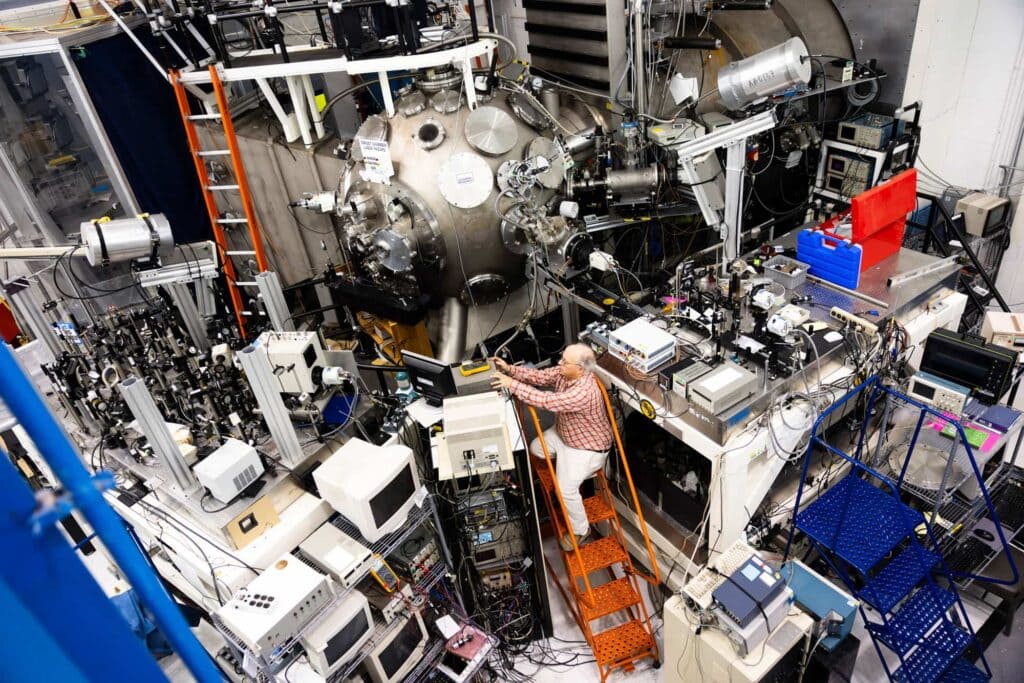
“We could theoretically detect the onset of the Kessler Syndrome by monitoring how the number of collisions and the electromagnetic pulses they create increase in real time, both around the whole planet and in specific orbits,” Renno said. “Right now, we have no idea how close we really are because we can’t see all of the debris and collisions in orbit.”
The December experiment aimed to put the computer simulations to the test by replicating a space junk collision in a lab. They used 56 ultraviolet laser beams to launch a tiny aluminum projectile into an aluminum plate at 22,000 miles per hour–roughly the same speed as bits of junk colliding in low-Earth orbits.
NRL lab technician Steve Terrell fired the lasers with a click of a button and the invisible beams entered through a window in the vacuum chamber, sending the pellet crashing into the aluminum plate. An array of sensors listened for electrical and radio signals produced during the collision.
COLLISION COURSE
Simulating space junk in the lab
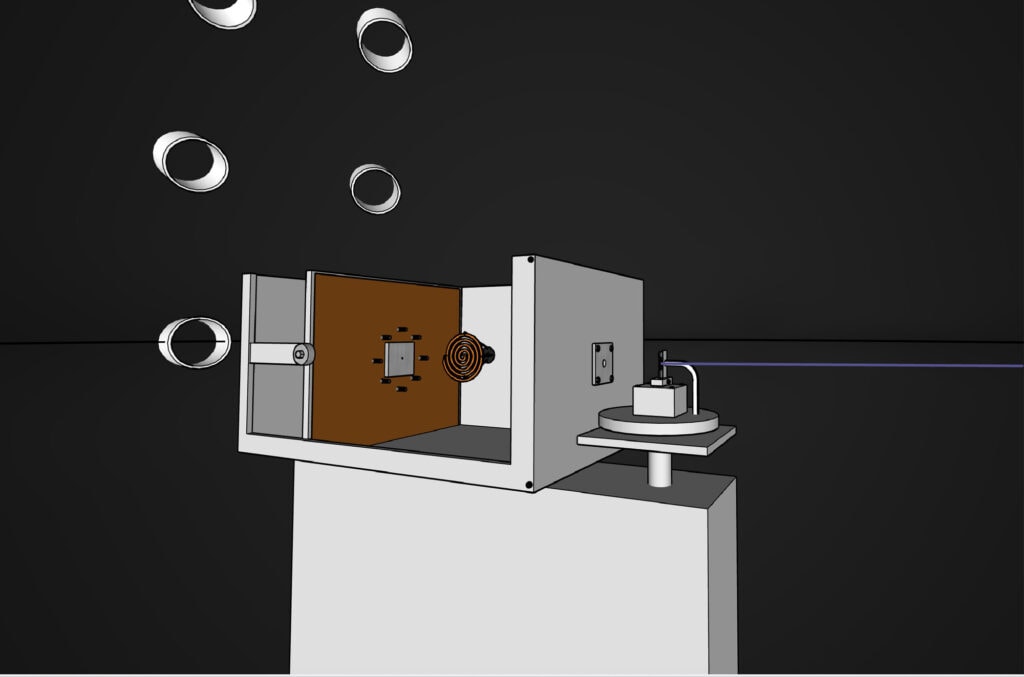
Computer simulations developed in the lab of Michigan Engineering researcher Nilton Renno suggest that tiny bits of space debris generate radio bursts and other electromagnetic pulses when they collide with each other. The team believes that these pulses could be used to track bits of space junk that would otherwise be too small to detect from the ground.
They tested their idea by mimicking a space junk collision at the U.S. Naval Research Lab’s NIKE laser-target facility in Washington, D.C. The facility used a high-energy, ultraviolet laser to launch projectiles at 17,000 miles per hour—the same speed that space junk flies around Earth.
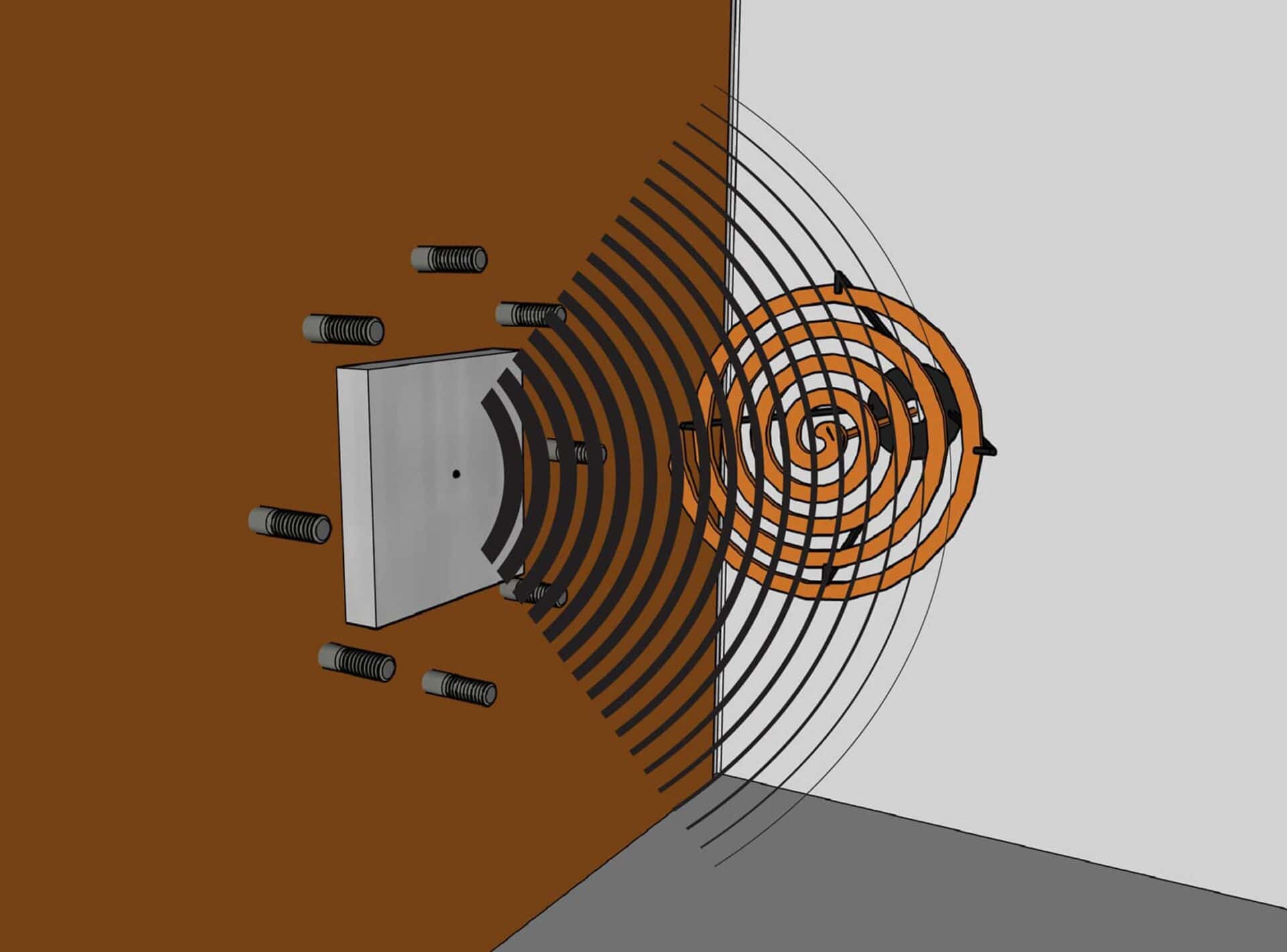
1. An array of 44 ultraviolet laser beams converge onto a rectangle of aluminum foil, compressing it into a projectile measuring 1/100 of an inch. It launches through a hole in the side of the impact chamber.
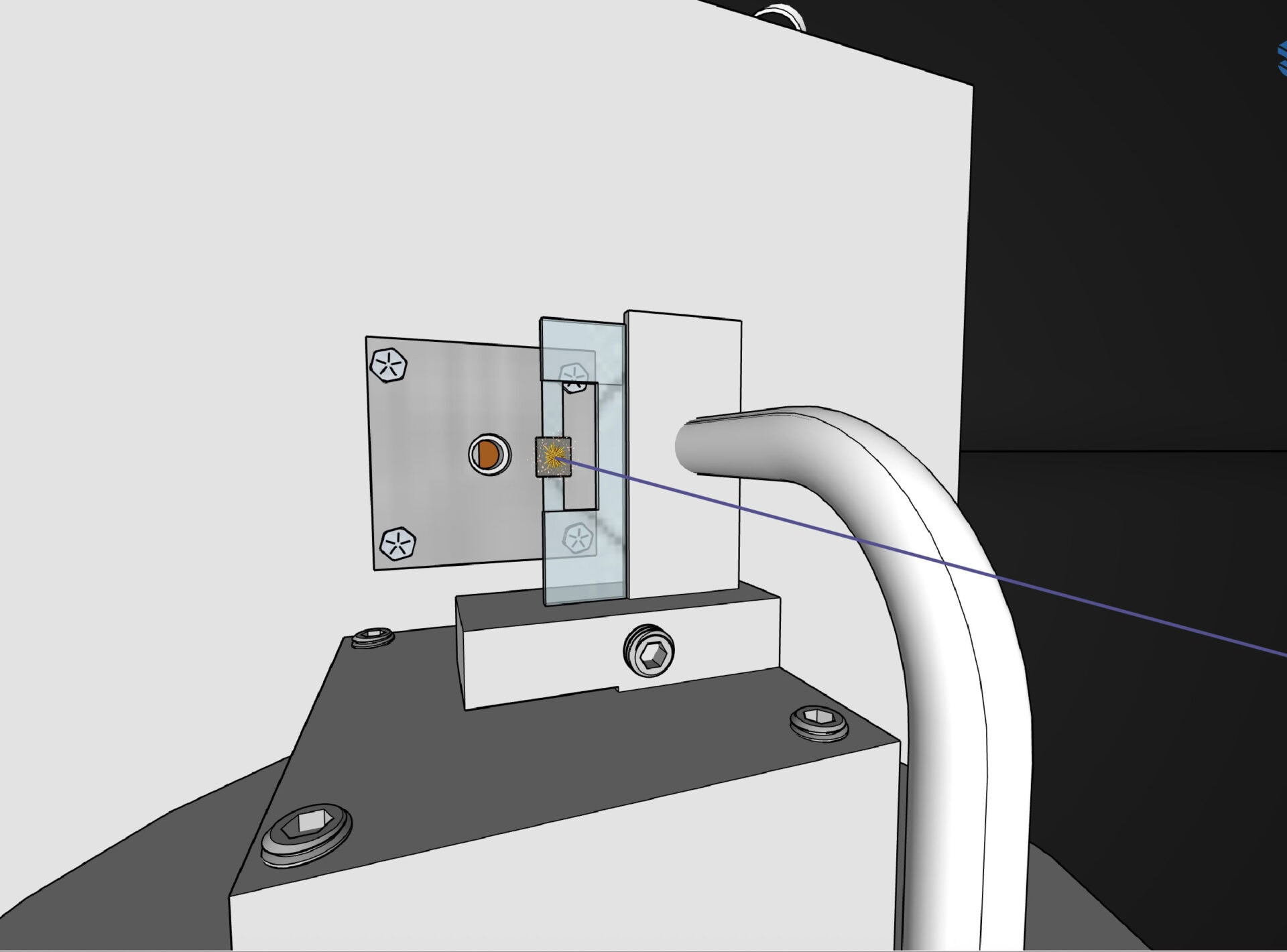
2. Inside the chamber, the projectile crashes into an aluminum target. Some of it is vaporized into plasma due to the heat of the impact.
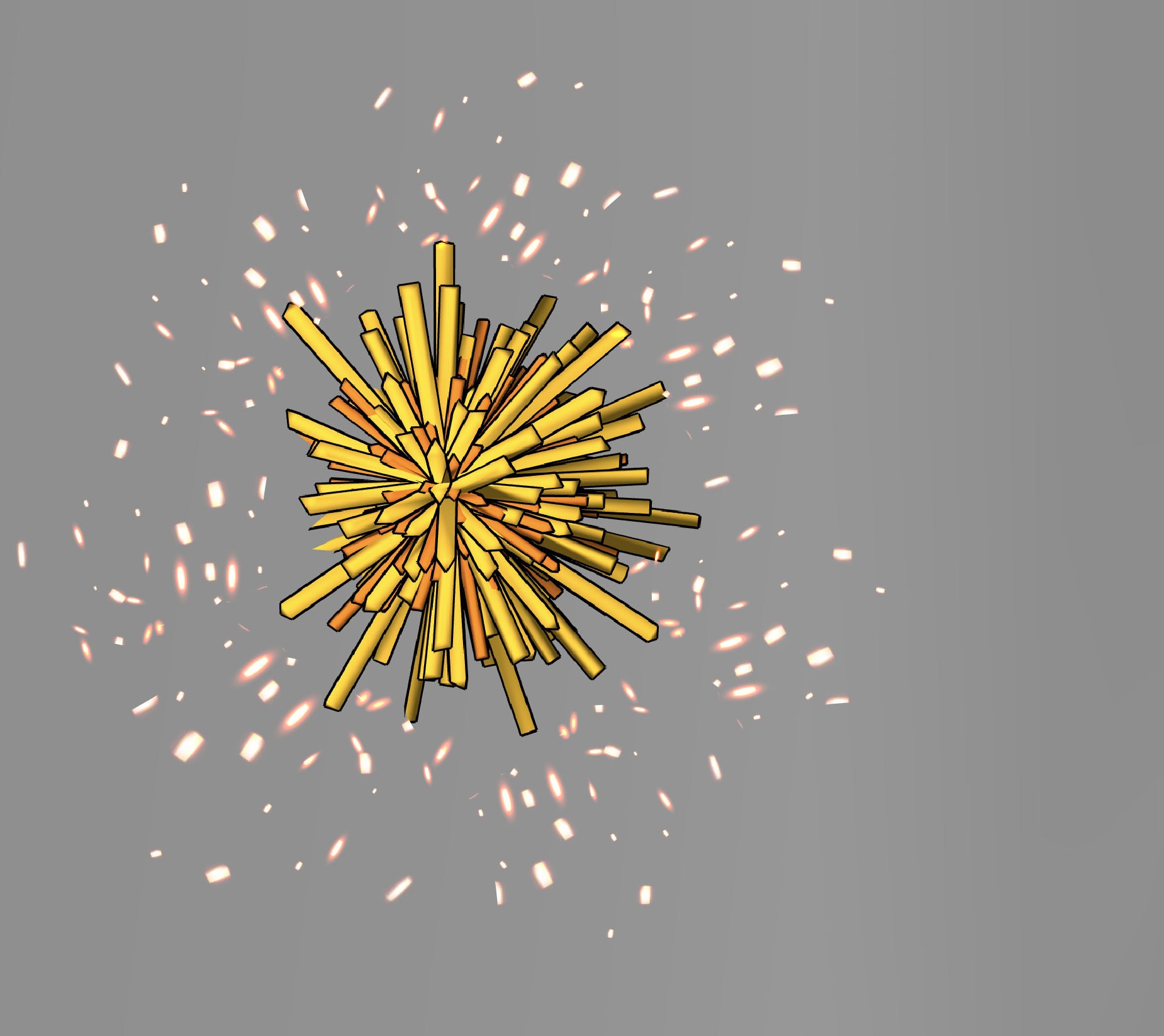
3. As the plasma expands and cools, it emits radio waves and electric signals, which are measured by the antenna and electromagnetic sensors.
After a series of launches, the news was good: the research team found the same radio signals predicted by their computer simulations, at approximately the same strength and duration.
“When I first submitted the project proposal, I had to estimate how certain I was that the technique was going to work,” said Renno. “I said we had a 50% chance. Everything is working out far better than I had expected.”
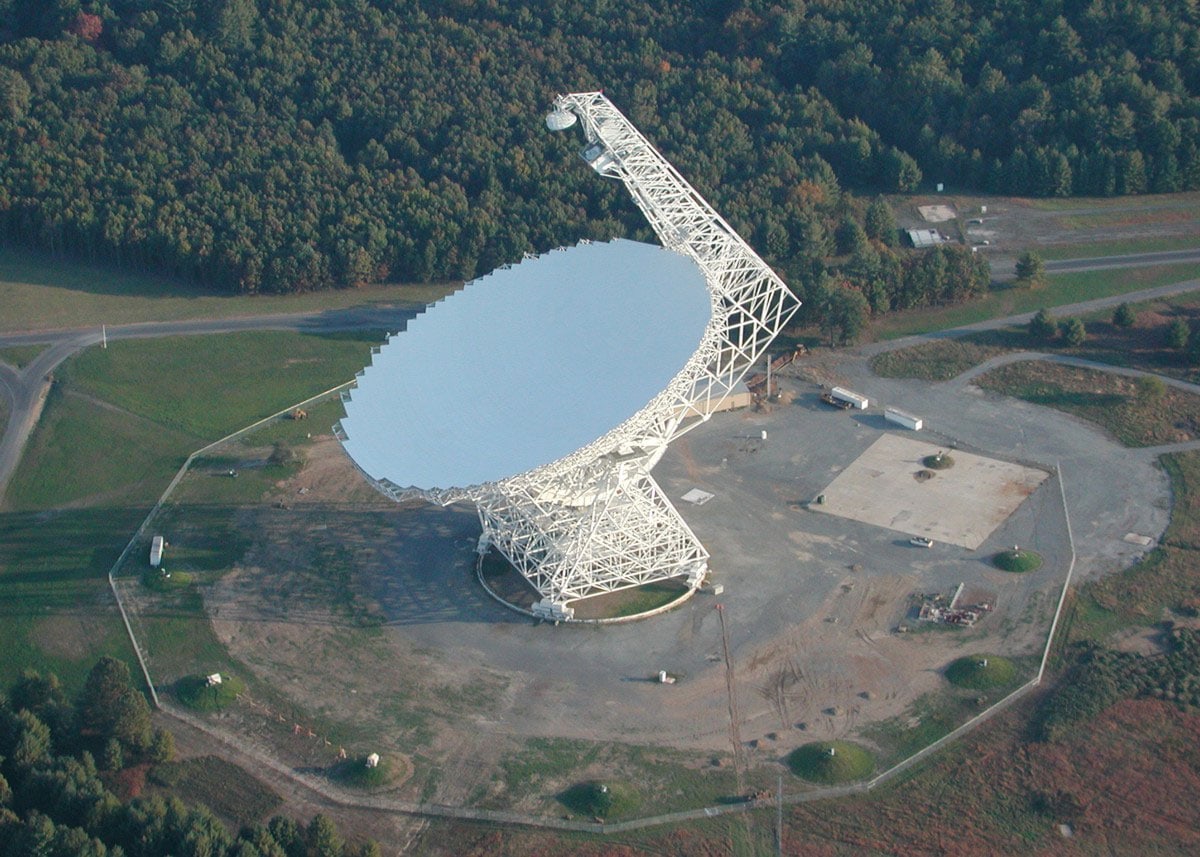
Next, the team plans to look for space junk signals in the real world using machine-learning and statistical models that can pinpoint the signals in the data collected by large dish antennas worldwide. They plan to source that data from NASA’s Deep Space Network. They have also begun looking for space junk signals in data collected by the Green Bank Radio Observatory, an array of seven radio dishes in West Virginia that includes the world’s largest fully steerable radio telescope.
A view beyond
A Hubble Space Telescope technician shares decades of breathtaking images.
More stories from
The Michigan Engineer magazine
Renno also plans to collect data from space, where signals are cleaner because they’re not subject to Earth-related interference such as lightning. The team is preparing to collect data using a satellite managed by Los Alamos National Laboratory that monitors for radio waves from nuclear explosions.
The preliminary results of the laser experiment are gratifying to Zhang. In her past work, she used photos from the Hubble Space Telescope to identify the elements inside comets, which contain some of the most pristine rocks in our solar system. They offer clues into what the rocky progenitors of our solar system’s planets might have looked like, and Zhang is eager to protect the equipment needed to learn the origins of our solar system.
“If we can make a way to monitor and predict where this tiny space debris is, we’ll be able to better safeguard our spacecraft,” Zhang said. “That is definitely the most rewarding part of the project.”
Satellites lost
Spotting small debris is only one of the challenges that go along with tracking objects in space. Most satellites fly in a low-Earth orbit that has a very thin atmosphere, and its drag and air currents can change objects’ trajectories. This is especially true when denser air is pushed up into satellite orbits during space weather events, when masses of electromagnetic plasma hurtle toward Earth.
The Space Force does its best to account for these variables, tracking active satellites by pinging them with radar at a single point in their trip around the earth, then extrapolating the trajectory they’re likely to follow during their next orbit. Data on atmospheric density is an essential ingredient in these calculations, which the Space Force then uses to warn operators of satellites and other spacecraft when there’s a danger of collision.
Today, the Space Force forecasts atmospheric conditions three days into the future using a model that combines historical data with current measurements of solar radiation and the Earth’s magnetic field. They then use that forecast to predict satellite orbits. But because none of the forecasts are informed by physical simulations of how the sun interacts with the atmosphere, the current system isn’t as accurate as it could be. That uncertainty leads to false positives that overwhelm satellite operators with more warnings than they can handle. A single satellite constellation might get multiple collision warnings every day, yet only need evasive action about once per month.
“If you don’t actually know where the debris and satellites are heading, you may move in the wrong direction. So satellite operators don’t want to move their equipment unless they’re really sure that there’s a very high probability of a collision,” said Tom Berger, a solar physicist at the University of Colorado Boulder.
Berger is the principal investigator of the Space Weather Operational Readiness Development (SWORD) Center, a NASA-funded center that aims to improve forecasts of Earth’s upper atmosphere. The team also includes three U-M professors: Tamas Gombosi, the Konstantin L. Gringauz Distinguished University Professor of Space Science, Rollin M. Gerstacker Professor of Engineering and professor of climate and space sciences and engineering; Aaron Ridley, an Arthur F. Thurnau Professor of Climate and Space Sciences and Engineering; and Tuija Pulkkinen, the George R. Carignan Collegiate Professor of Climate and Space Sciences and Engineering.
The SWORD Center is working to link two existing computer models that the National Oceanic and Atmospheric Administration (NOAA) uses to predict the impacts of geomagnetic storms on Earth. The first is the Space Weather Modeling Framework. Developed at U-M, it simulates the behavior of solar plasma between the sun and the edge of Earth’s atmosphere. The model enables NOAA to estimate the strength of geomagnetic storms 30 to 45 minutes in advance and warn stakeholders when a storm could interfere with the power grid.
The second model is the Whole Atmosphere Model-Ionosphere Plasmasphere Electrodynamics (WAM-IPE) model, which was developed by NOAA and the University of Colorado Boulder. It uses weather data to predict how activity within the Earth’s atmosphere will affect low-Earth orbit. The model enables NOAA to warn their stakeholders when solar eruptions could disrupt GPS and airline communication, as well as satellite orbits.
The SWORD researchers are confident that combining both models will improve forecasting of the upper atmospheric density for space traffic coordinators.
“We want to take the Space Weather Modeling Framework and directly connect it with WAM-IPE so that we have a single model that’s connecting the entire chain of processes from the sun through space into the atmosphere,” Pulkkinen said.
“If you don’t actually know where the debris and satellites are heading, you may move in the wrong direction.“
The SWORD Center also aims to develop methods to regularly correct their model’s forecasts by incorporating real-time measurements of the upper atmosphere’s density. A similar correction method allows terrestrial weather models to accurately predict the Earth’s weather up to seven days in advance. The SWORD Center’s model is scheduled to be complete by 2028.
The need for constantly updated data is particularly urgent during severe geomagnetic storms. A storm’s energy can cause changes in the upper atmosphere that scramble satellite orbits for days at a time. That was the case in October 2003 when two large masses of plasma erupted from the sun and slammed into Earth. Satellite operators lost sight of the majority of satellites for several days.
“When the Space Force is looking at the horizon, and the satellite is no longer where they expected it to be based on prior measurements, they have to go searching around for it,” Ridley said. “And that can happen to thousands of satellites simultaneously during a geomagnetic storm.”
The system that SWORD is developing could help space traffic coordinators keep better tabs on satellite positions, even when space weather throws the system into chaos. And the need for those tools will only grow more urgent as space traffic continues to increase.
“The only way we prevent the Kessler Syndrome is to predict satellite and debris movements as accurately as possible,” Berger said. “Space is getting pretty crowded. There’s a steady stream of new satellite launches every week. I’d say that we have less than a decade to get this right.”
Cleaning up space
The improvements to space debris and satellite tracking from Renno’s team and the SWORD Center are important steps that will help make space safer for satellites and astronauts. But even the best tracking can’t prevent bits of space junk from colliding. According to ESA’s 2025 space environment report, good space stewardship requires cleaning up existing space junk, as well as developing best practices to ensure future launches don’t pollute near-Earth space.
The United Nations Office of Outer Space Affairs, as well as the space agencies in the Inter-Agency Space Debris Coordination Committee, require satellites and other devices to de-orbit within 25 years after their mission ends. The U.S. and Europe have set their own stricter, five-year guideline.
Around half of the large objects in low-Earth orbit—those heavier than 2,200 pounds—naturally fall back into Earth’s atmosphere, where they burn up on re-entry. The other half must de-orbit by steering themselves back into Earth’s atmosphere or into higher-altitude “graveyard orbits” that aren’t widely used. But the de-orbiting standards aren’t legally binding. ESA reports that, within the last decade, operators only attempted to de-orbit 20% to 75% of the satellites that didn’t fall back to Earth’s atmosphere naturally, and a fraction of those attempts were successful. The agency has found that if the status quo doesn’t change, the number of collisions between satellites and junk are on track to exponentially increase over the coming century.
Earth’s orbits are filling up
Humans have been leaving objects in Earth’s orbit since the start of the space race. Each satellite or rocket body left behind becomes a liability. When they collide and break apart, the number of hazardous objects in orbit multiples, and even tiny paint chips can damage. Meanwhile, the number of commercial satellite launches continues to exponentially increase. Some experts worry Earth’s orbit will become too crowded to be used if the status quo continues.
Key dates
- 1961 – A U.S. rocket body becomes the first object to accidentally break up in orbit.
- 1968 – Two Soviet space weapons tests generate
more than 250 trackable bits of junk. - 1974 – Debris fragments make craters in the windows of a spacecraft ferrying astronauts to the Skylab space station.
- 1981 – An active Soviet military satellite explodes, likely becoming the first destroyed by untrackable junk.
- 1986 – A rocket body from ESA’s Ariane V16 launch explodes.
- 2007 – A Chinese weapons test generates more than 2,000 pieces of trackable debris.
- 2009 – An active telecom satellite collides with a dead satellite in the first accidental crash in space.
- 2021 – A Russian satellite weapons test generates over 1,500 trackable pieces of debris.
- 2024 – Recent data shows debris accumulating faster than ever.
Astroscale, a Tokyo-based aerospace company co-led by a U-M alum, is tackling the problem with new technology that could one day pluck dead satellites out of space. The company is developing satellites that can dock with debris and push it into graveyard orbits or the lower atmosphere. They’re also developing ways to extend the useful life of active satellites by repairing or refueling them in orbit.
“Typically, spacecraft are not designed to be touched at all after they are launched and operational in orbit,” said Mike Lindsay (’08 BS AERO, ’09 MSE CLaSP), Astroscale’s chief technology officer. “We want to see a paradigm shift where spacecraft can be serviced before they become clouds of very small space debris that are difficult to track and remove.”
“I’d say that we have less than a decade to get this right.”
Docking with a dead satellite or spent rocket tumbling through space isn’t an easy feat. To grab onto debris, a service satellite first has to loop around the dead satellite to look for a promising structure to hold onto. Then, it must precisely match the tumbling motion of the debris before moving in and latch on—all without accidentally colliding with the dead satellite and making more bits of junk.
Astroscale successfully demonstrated that its service satellites could perform both the tumbling and locking actions in two separate space missions.
The first mission, called ELSA-d, involved two satellites—an Astroscale service satellite, and another that modeled a dead satellite. The two objects were launched into space together, connected by a mechanical locking mechanism. After the mechanical connection was removed, the magnetic capture system on the service satellite successfully released then recaptured the faux space junk.

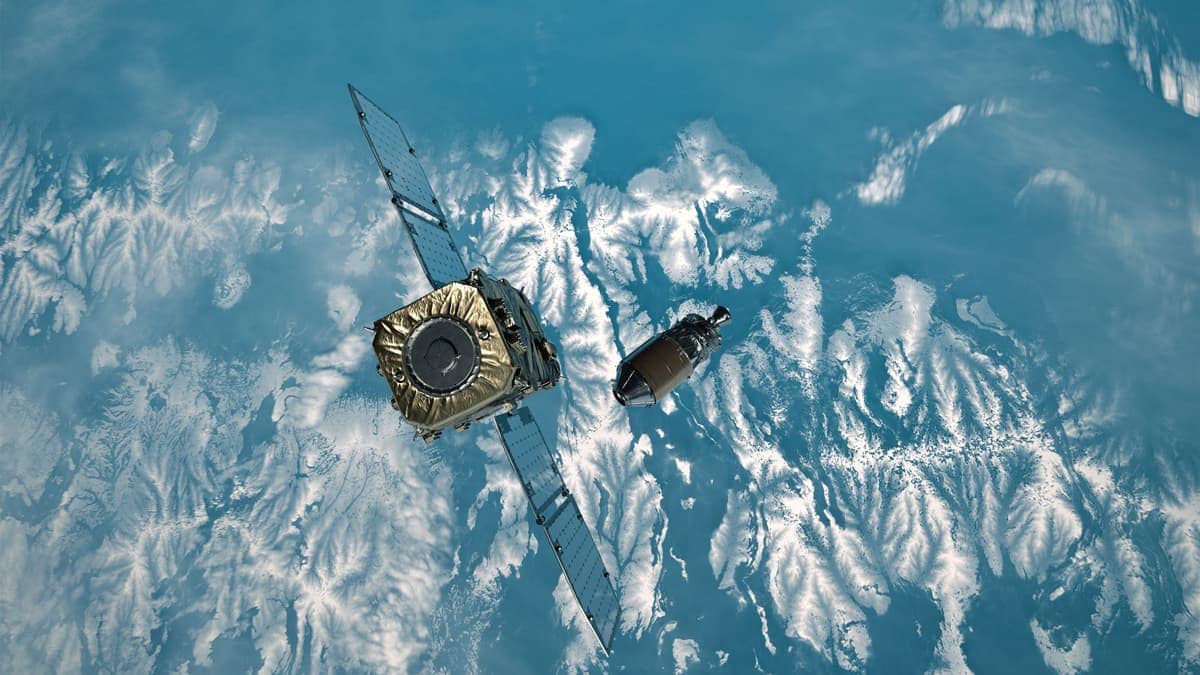
In the second mission, completed in February 2025, an Astroscale service satellite successfully approached a real piece of uncontrolled space junk–a Japanese rocket body that has been tumbling through space since 2009. During the mission, called ADRAS-J, the service satellite safely approached the rocket body and flew around it, matching its tumbling motion and maintaining a steady distance of 49 feet before backing away. The rocket body and satellite were both traveling at more than 17,000 miles per hour.
While Astroscale’s technology wins are promising, cleaning up real space junk will require them to develop a communications and legal infrastructure from scratch. Communicating with service satellites, for example, will require dedicated telecommunication frequencies that have not been allocated yet. Lindsay is working with the International Telecommunications Union, the United Nations’ digital technology agency, on a solution to establish effective communications channels for servicing satellites. He’s also working with others in the emerging satellite service industry, and the United Nations Office of Outer Space Affairs, to set best practices for servicing and cleanup missions. Setting standards for satellite docking could also ensure that tomorrow’s satellites are built to make service easier.
“Any type of satellite interaction that we can standardize helps the entire industry grow,” Lindsay said. “Space has no borders. It’s an international resource—everybody uses and benefits from it, so it’s very important for us to work together at an international level to take responsibility and come together to fund the remediation of space.”