
Algae in the air?
Story By
Photos By Marcin Szczepanski
The fishermen in western Lake Erie, near Toledo, Ohio, call it “the August Cough.”
The August Cough is one of several respiratory symptoms that tend to crop up in the area during the summer, when blooms of algae-like critters called cyanobacteria are at their peak. Some symptoms can be severe; in 2014, a seven-year-old girl had an asthma attack and was hospitalized immediately after swimming in a bloom.
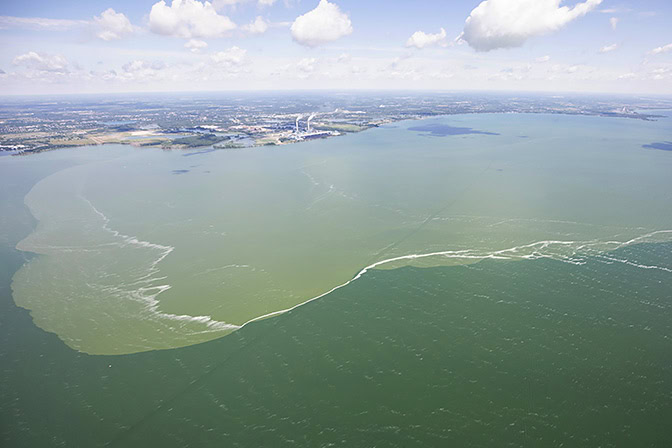
The blooms are fueled by excess farm runoff and liquid from manure lagoons on confined animal feeding operations that wash into the lake. The most severe blooms turn lake water into thick green slime that, in Lake Erie, can cover hundreds of square miles.
Video transcript
(On-screen text): Gathering Algae Air
Jennifer Seth:
I worry about the ability of future generations of people to be able to breathe clean air.
Narration:
Michigan Engineering graduate student Jennifer Seth studies potentially harmful algal bloom particles floating in the air above the Great Lakes.
Jennifer Seth:
We know the blooms are toxic and we know that it’s dangerous to come into contact with the blooms. But if the blooms and their associated toxins are being aerosolized, then there’s a potential there for there also to be an air quality problem.
We warn for like wildfire smoke, but do we need to do that when there’s a bloom as well? Like is there going to be air quality problems when there’s a bloom? And that’s something that nobody knows right now. So that’s what we’re trying to figure out.
Narration:
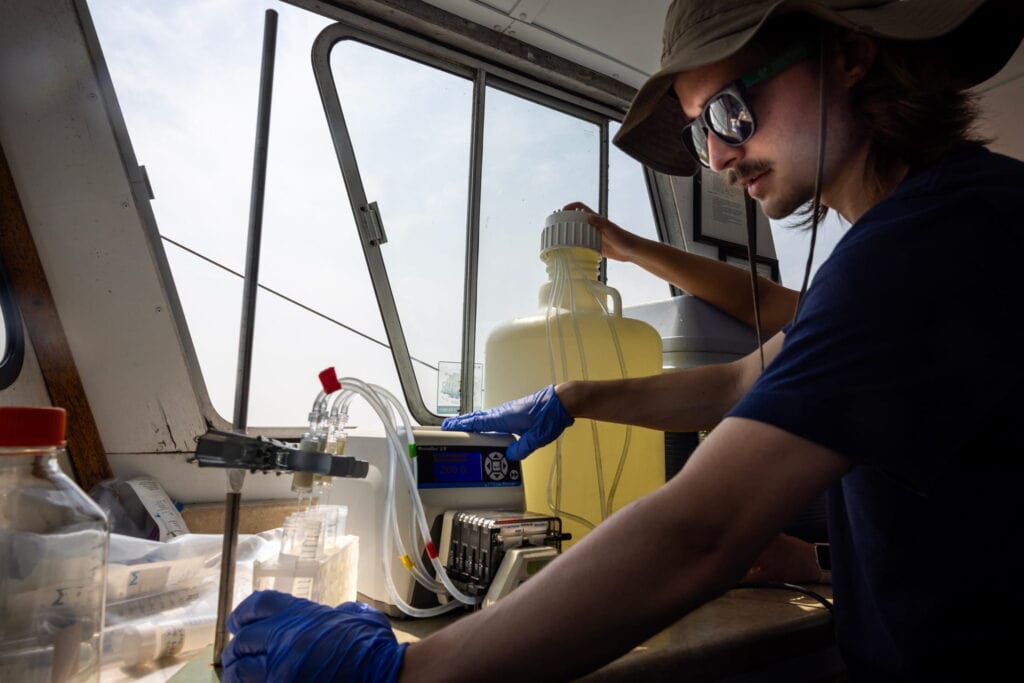
Seth joined students from local universities on a research trip where they captured Lake Erie water and air for analysis.
Jennifer Seth:
Basically, we’re collecting aerosol samples on the lake surface to see if we can see any harmful algal blooms in our air samples. There’s particles in the air around us that we can’t see. This thing is ingesting air and allowing us to look at those particles with a microscope. Like we could see them. So, we’re basically just depositing things on this plate to go look at it here. If that makes sense. Here’s our little particle sampler right there. Tiny little guy.
For people who have asthma especially, like this could be an irritant in the lungs. Microcystus, which is one of the toxins that these blooms produce. It is a hepatotoxin so it can act on the liver.
To me like that’s really important, safeguarding human health and also ecosystem health, because these these guys can also damage ecosystems as well. I think that’s part of why I’m invested in this. We want to preserve the Great Lakes for generations to come and also for people to enjoy and for lots of different species to thrive in its waters.
“It washes up right in front of our house, and it stinks,” said Mike Ferner, a former city council member in Toledo, Ohio, who has lived near the lake for 40 years. “It’s just disgusting.”
Cyanobacteria blooms can produce several toxins. One, called microcystin, is known to be dangerous to humans and animals when ingested. A bloom-derived neurotoxin called BMAA has been found in the brains of Alzheimer’s and ALS patients, although some scientists still debate its link to ALS. Evidence also suggests that Lake Erie’s blooms can produce saxitoxins, a group of chemicals behind paralytic shellfish poisoning on the East and West Coast.
The toxic cocktail inside blooms can make them unsafe to swim in, and in 2014, microcystin contaminated Toledo’s municipal water supply, leaving around 500,000 people in Ohio and Michigan without safe tap water for two days.

Communities around Lake Erie aren’t alone in their struggle with cyanobacteria. Toxic blooms have been sighted in all of the lower 48 states, Alaska and nearly every country on Earth.
So when Andy Ault, a University of Michigan chemistry professor, found that wind and waves can spray aerosols containing cyanobacterial toxins into the atmosphere, many in the area began to suspect that the blooms could be behind some of their respiratory problems.
“Andy’s work really underscored the potential risks and threat, and it was clear that this was something that we really needed to understand better,” said Greg Dick, a U-M professor of earth and environmental sciences and co-director of the Great Lakes Center for Fresh Waters and Human Health. A multi-instutional organization supported by the National Science Foundation and National Institutes of Health, the Center funds the project’s research.
How lake aerosols travel and the health effects of inhaling them are not well understood. A multidisciplinary team of researchers across the university—including Allison Steiner, U-M professor and department chair of climate and space sciences and engineering—is looking for answers to both questions.
“This could have a big impact on peoples’ lives, but we just don’t have the answers yet,” Steiner said. “Is this something that people should worry about when recreating on the lake, or even if you’re not on or in the water?”
Toxins in the air?
Steiner has over 20 years of experience studying the movement of natural aerosols—such as pollen and mold spores—and their impact on climate and human health. Some of her models have warned that climate change could spark more severe allergy seasons, and she has become a trusted source on allergy severity.
Now, she’s applying her skills to determine whether cyanobacterial aerosols could be harmful. She and Jennifer Seth, a doctoral student in climate and space sciences and engineering, are building predictive models of the toxin’s transport through the atmosphere. Their simulations will help predict how much toxin is aerosolized across Lake Erie at different times of the year, and where the aerosols will travel.
Seth envisions that the predictive models could one day be used to build air quality forecasts and warn people near the lake when conditions are poor—similar to air quality warnings issued for smog or wildfire smoke.
David Kennedy, a professor of medicine at the University of Toledo College of Medicine and Life Sciences and a co-director of the Great Lakes Center for Fresh Waters and Human Health, believes that in the long term, hard data about the aerosols could lend urgency and resources to the efforts to reduce runoff pollution in Lake Erie. In the near term, it could help the communities around the lake protect themselves from any threat the aerosols pose.
“We have an obligation to understand what’s actually going on in these people so we can treat them and help educate the public about prevention, if there are negative health effects,” he said.
The research being done on Lake Erie could ultimately help keep people across the globe safe from the effects of toxic algae blooms.
Tracking down the toxins
The data that will inform Steiner’s models is being gathered with an arsenal of on-the-ground tools, including an air-sucking trailer that Kennedy’s team tows through Toledo’s streets. The mobile lab sucks in large volumes of air, trapping any aerosols on filters.
The team collects aerosols from several locations near Lake Erie three times a week during the summer and more occasionally in the spring and winter. Back in the lab, the researchers determine whether the collected aerosols contain cyanobacterial toxins, which could help health officials estimate exposure. They also plan to deploy equipment that will allow them to count the number of collected aerosol droplets and particles and calculate the concentration of aerosols in the air.
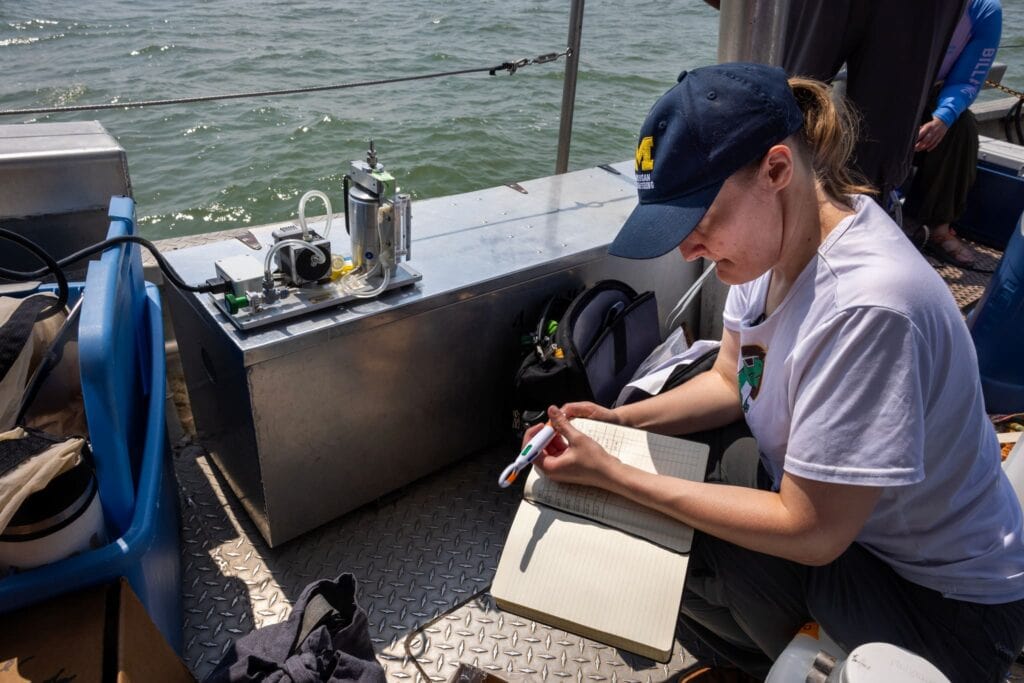
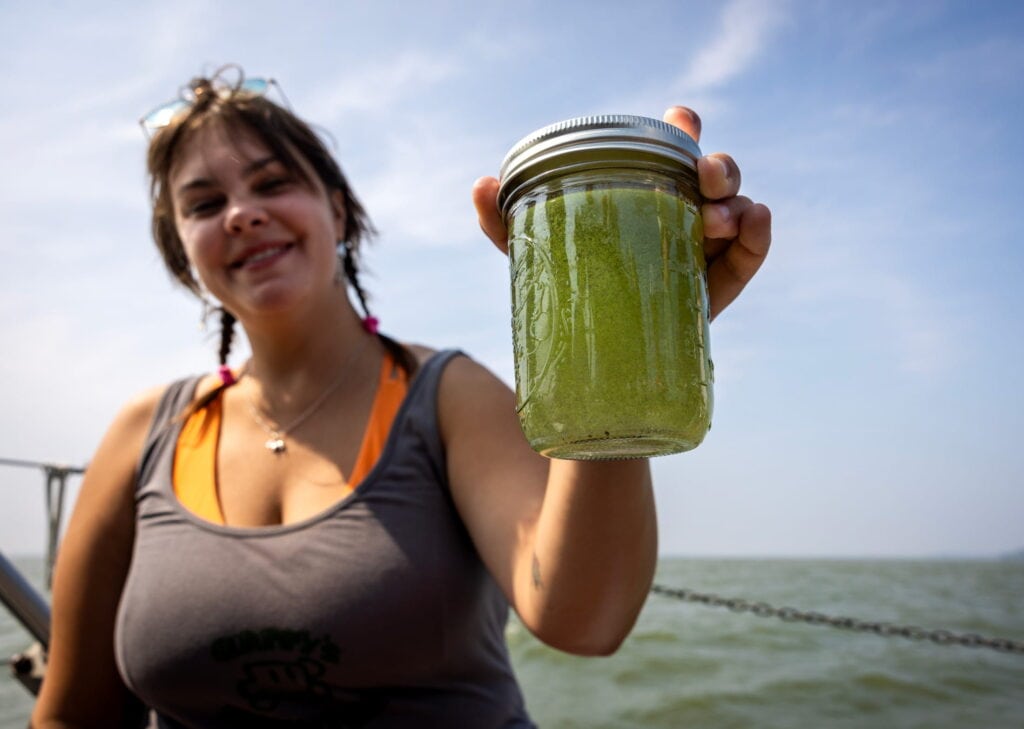
In addition, researchers from NOAA’s Great Lakes Environmental Research Lab and the Cooperative Institute for Great Lakes Research venture out onto Lake Erie during bloom season to collect lake water and measure its microcystin levels. With Dick’s help, they also extract bacterial matter and use genome sequencing to determine the types of cyanobacteria present.
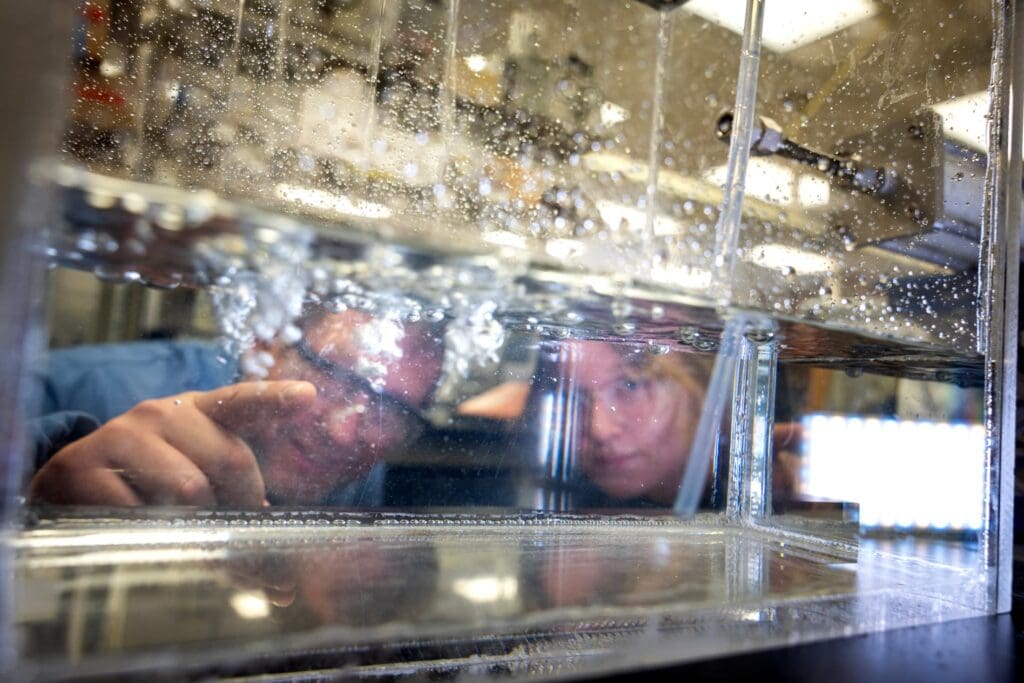
Ault and his doctoral student Grace Young also use the lake water to create aerosols in the lab. These aerosols enable the researchers to determine the size of the aerosols that contain toxins, which determines how far they can travel through the air and into lungs.
Measuring community health
The second piece of the puzzle is determining precisely how the aerosols in the environment affect health, and University of Toledo researchers are on the case. They have been tracking symptoms in volunteers from three Ohio counties near western Lake Erie since 2024. They plan to recruit 250 participants by the end of their five-year study.
Toledo residents Mike Ferner and Sue Carter were among the first volunteers. They visit the University of Toledo’s Ruppert Health Center twice each year, once during the height of the bloom season and again in the winter. They donate blood and urine, which University of Toledo researchers will check for changes to the immune system that suggest exposure to toxins. Participants also undergo a series of tests to measure lung strength and check for nitric oxide, of which elevated levels can be a marker of inflamed lungs.
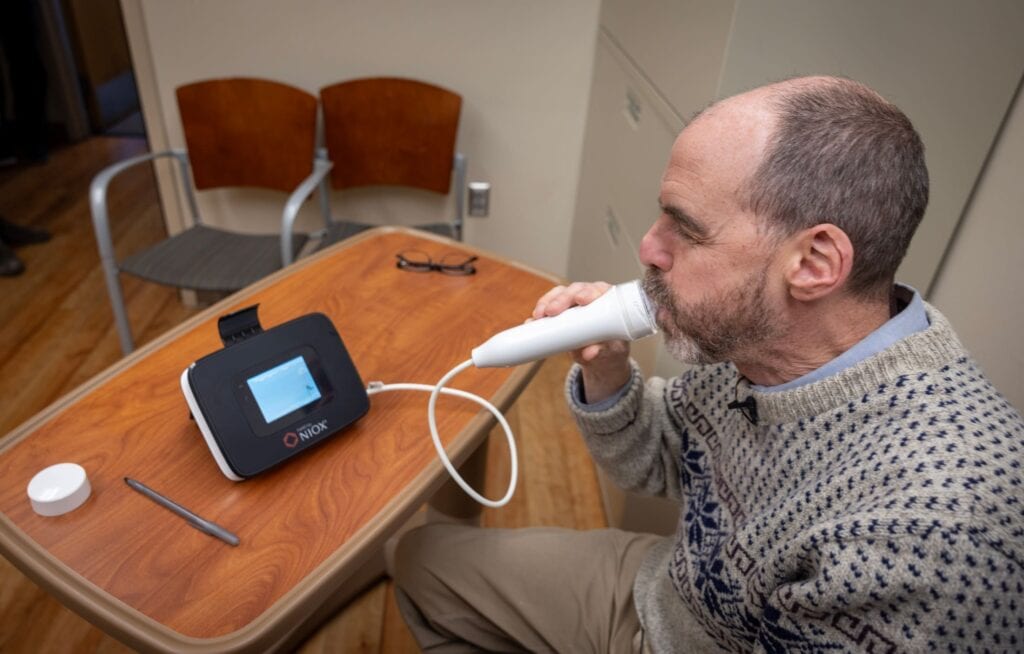
handheld breathing device connected to a monitor during a respiratory measurement test.
In addition, frozen samples of participants’ breath are shipped off to David Sherman, the Hans W. Vahlteich Professor of Medicinal Chemistry in U-M’s College of Pharmacy. His lab at the U-M Life Sciences Institute isolates and identifies which cyanobacterial toxins and other potentially harmful molecules are in patients’ breath and collected aerosols.
“There are probably over 300 different flavors of microcystin, and then there are a large number of other molecules that cyanobacteria spit out into the water that we can’t even call toxins, because we don’t know much about them,” Kennedy said.
Back at the University of Toledo, Kennedy’s team conducts preclinical studies to look for direct links between aerosolized toxins and disease. The researchers pump artificially aerosolized cyanobacterial toxins or field-collected aerosols into petri dishes containing donated human lung cells. They then look for signs of cellular damage or changes in gene activity that could signal disease. These experiments help reveal how airborne toxins may affect people, including those with pre-existing health conditions.
The research will help provide answers and protect communities near Lake Erie as the long process of reducing runoff pollution in the lake unfolds. The state and national governments still haven’t reached their pollution reduction goals, and cyanobacteria blooms remain a regular part of western Lake Erie 11 years after the Toledo water crisis.
“We know that this is going to go on for a long time,” Kennedy said. “We are laying the groundwork to help people in the interim, and once we understand the health problems, it could give more attention to cleaning up the lake.”