How Stephen Forrest shaped smartphones, flat-screens and the internet
His photodetectors underpin the internet. His OLEDs revolutionized smartphones and displays. His organic solar cells and heat-to-electricity tech could power the future.

His photodetectors underpin the internet. His OLEDs revolutionized smartphones and displays. His organic solar cells and heat-to-electricity tech could power the future.
–
Invents the first stable, long-range photodetector, which underpins modern telecommunications
–
Becomes a founding participant in Universal Display Corporation, developing the first full-color organic LEDs (OLEDs) that make today’s cellphones thinner, brighter and less power-hungry
–
Joins U-M faculty as the University’s vice president for research
–
Invents a manufacturing method for the first blue phosphorescent organic LEDs (PHOLEDs) with lifetimes potentially long enough for use in mobile and flat-panel displays
In the High Sierra mountains, around 10,000 feet up, there’s a silvery white light that differs from the buttery California sunshine below. It sears the granite rock faces, makes mirrors of the lakes and breaks open the world’s fragility and possibility.
Stephen Forrest first encountered that light as a young boy backpacking with his father and brother. Living in Los Angeles, the family often drove up to the mountain wilderness. It reminded his father of the Alps, where he used to ski with his family as a child.
“John Muir called them the Range of Light, and that’s for sure what they are,” Forrest said.
Light has been a fixture for Forrest throughout a career that has spanned more than 40 years. He has been a founding participant in six companies, registered 410 patents, published more than 690 academic papers and was elected into the National Academy of Engineering, the National Academy of Sciences and the American Academy of Arts and Sciences.
It’s likely that you carry a spark of that inspiration in your pocket—Forrest helped invent the organic LED display that makes your cellphone thinner, brighter and less power-hungry. If you’re reading this article online, it was brought to you by light—read by a photodetector that Forrest invented at Bell Labs back in the 1980s that’s used in virtually every fiber-optic network in the world.
Forrest joined U-M’s faculty in 2006 as the University’s vice president for research, a role he held until 2014. As vice president, he played a key role in U-M’s purchase of what is now the North Campus Research Complex from Pfizer, among other achievements. Today, Forrest is the Peter A. Franken Distinguished University Professor of Engineering, the Paul G. Goebel Professor of Engineering in electrical and computer engineering and a professor of materials science and engineering, as well as a professor of physics in the College of Literature, Science and the Arts.
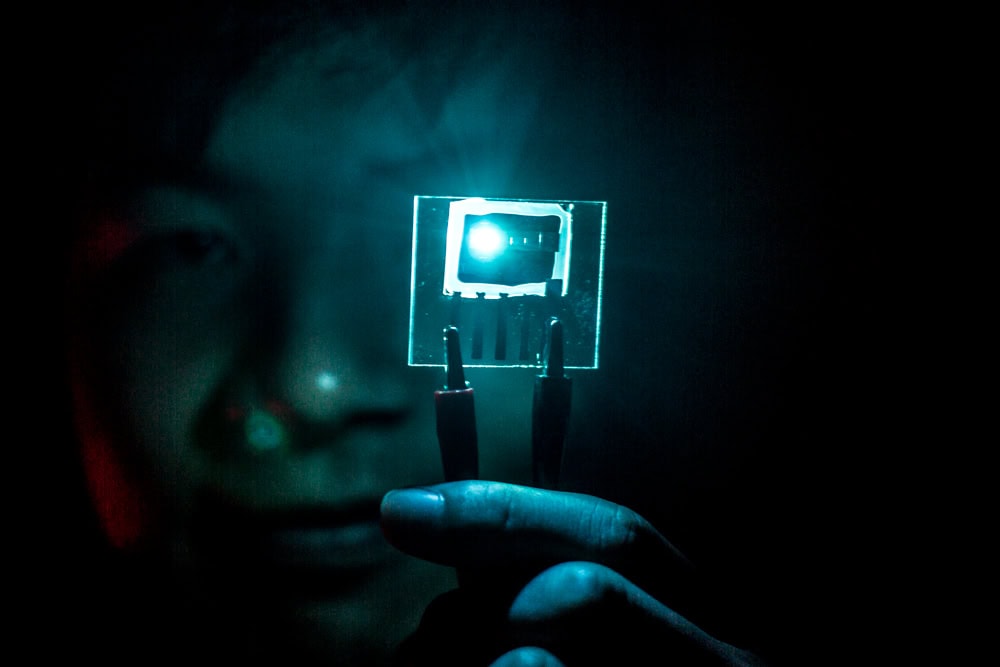
In 2025, two decades after joining the University, Forrest marked two landmark achievements. First, he led a U-M team that developed the first blue phosphorescent organic LEDs (PHOLEDs) stable enough to be used in electronic displays and lighting devices. An achievement that researchers have been chasing for two decades, the blue PHOLEDs are about 75% more efficient than the fluorescent OLEDs they’ll replace. Used alongside the red and green PHOLEDs invented by Forrest and his long-time collaborator, University of Southern California chemist Mark Thompson, the blue PHOLEDs are expected to become ubiquitous in cellphones, flat-panel displays and lighting devices, leading to longer battery life, greater energy efficiency and new kinds of displays and lighting products.
Second, he partnered with U-M professor of chemical engineering Andrej Lenert to co-found Heat2Power. Forrest’s sixth new company and his first new venture in nearly 25 years, Heat2Power’s technology could store excess energy from renewable power sources like wind and solar as heat, converting it back into electricity when it’s needed.
After nearly a half century of work at the intersection of university research and commercial innovation, Forrest has gained a unique insight into how the two worlds work together to shape modern life.
Forrest’s career has been marked by an uncanny ability to turn science into world-changing technology, using elemental forces to improve the lives of everyday people. Light becomes communication. Heat begets electricity. Carbon, the backbone element of life, completes the circle—turning light to electricity in an organic solar cell.
To understand how he does it, it helps to go back to a day in 1967, when a teenage Forrest was in his family’s garage, up to his elbows in the greasy mechanicals of a 1952 MG TD. His first car was something of a relic even then, with rear-hinged coach doors, running boards that swooped gracefully into fenders and a convertible top. But for Forrest, it was more than a car—it was a window into a new way of thinking.
“I took that engine apart bolt by bolt and then put it back together,” he said. “And when I was done, I didn’t have a whole lot of extra screws left over. But the point was, I got to see the workings of the entire system.”
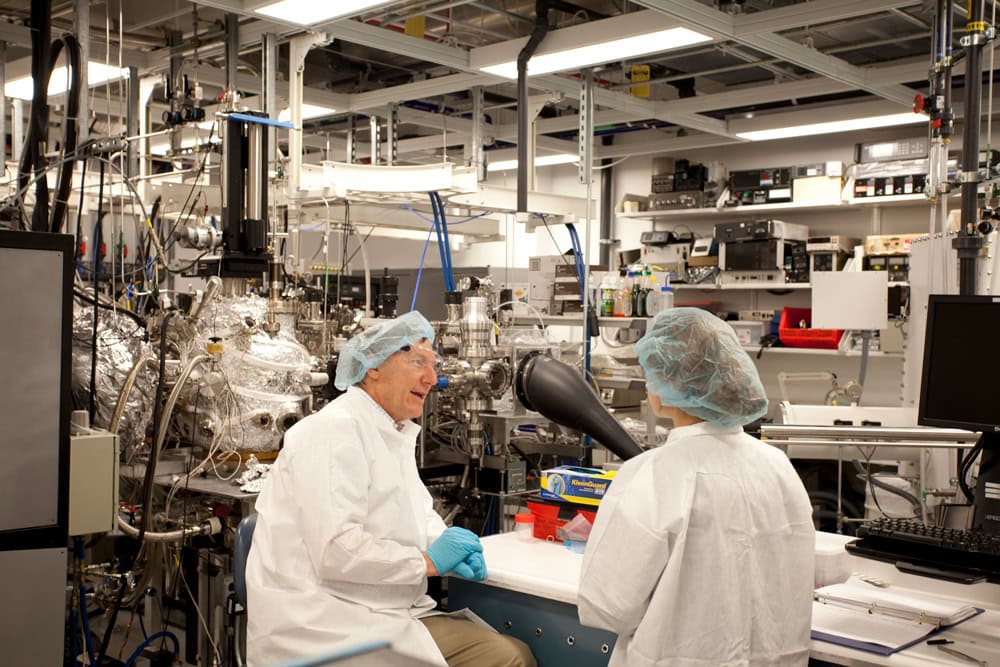
Forrest was fascinated by the idea that every part on the garage floor was a node in a system that ran from piston to engine to car to freeway to metropolis. Small to big. He spent hours cruising the Hollywood Freeway—at the MG’s top speed of 55-ish miles per hour. He sees his experience of 1960s Los Angeles car culture as the first inkling of the systems perspective that would power much of his career.
“It’s important to understand how what you’re doing fits into the larger system, and how whole systems fit together,” he said. “And when you live in that world of making things, you get a lot of opportunities to do that.”
Forrest first applied this understanding to electronics in the early days of Silicon Valley at a small firm that was struggling to transition from making vacuum tubes to solid-state electronics. After he discovered a way to make high-performance silicon diodes, the company gave him carte blanche to work on anything he chose. It was exhilarating—but also unsettling. When everything is possible, where does one start?
He decided to go back to school to level up his thinking.
“I went to graduate school to solve two problems for myself. I wanted to know ’What are the problems worth solving, and of those, what is the subset that has a solution?’” he said. “I was still a kid, but that’s what was in my head. And that’s exactly what I learned.”
Forrest earned a master’s degree and PhD in physics from U-M in 1974 and 1979.
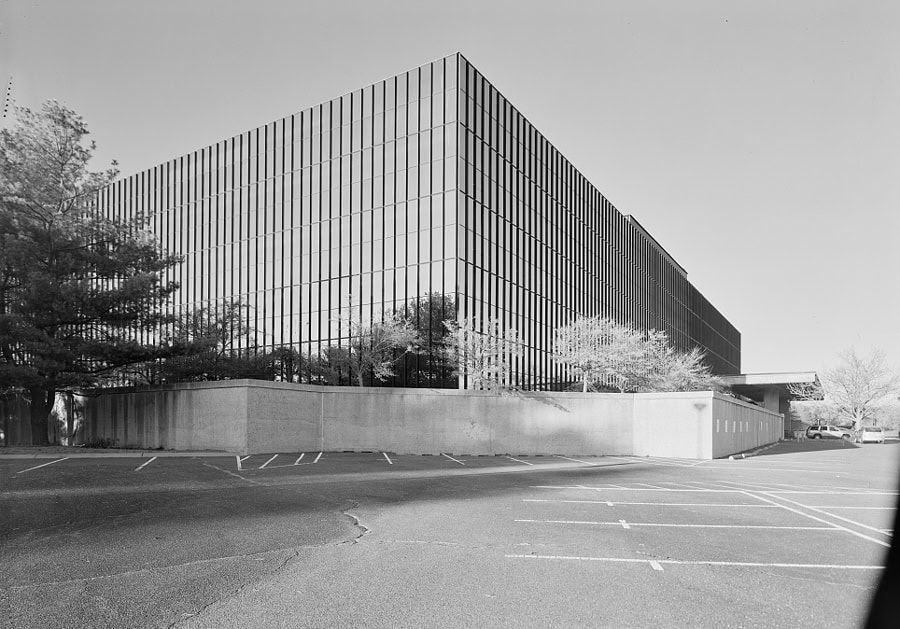
While LA car culture and U-M set Forrest on a path that would shape his—and our—future, a different chapter of his life had the biggest impact of all: the five years he spent as a scientist at Bell Labs.
On January 1, 1925 American Telephone and Telegraph (AT&T) and its equipment subsidiary, Western Electric, merged their research operations into Bell Labs, a stand-alone, semi-autonomous company. The newly independent lab grew into perhaps the greatest engine of scientific innovation that the world has ever known.
Among its many inventions are the transistor, the solar cell, modern fiber optics, cellular telephone networks, satellite communications and the UNIX operating system. Its researchers also discovered cosmic radiation that helped confirm the Big Bang theory of the universe’s origin.

“We were onto something new, which was these organic-on-semiconductor devices. We wrote paper after paper, and oh my god was it fun.”
For Forrest, who joined fresh out of graduate school in 1980, it was formative.
“It absolutely changed everything in my professional life and my outlook on science and engineering,” he said.
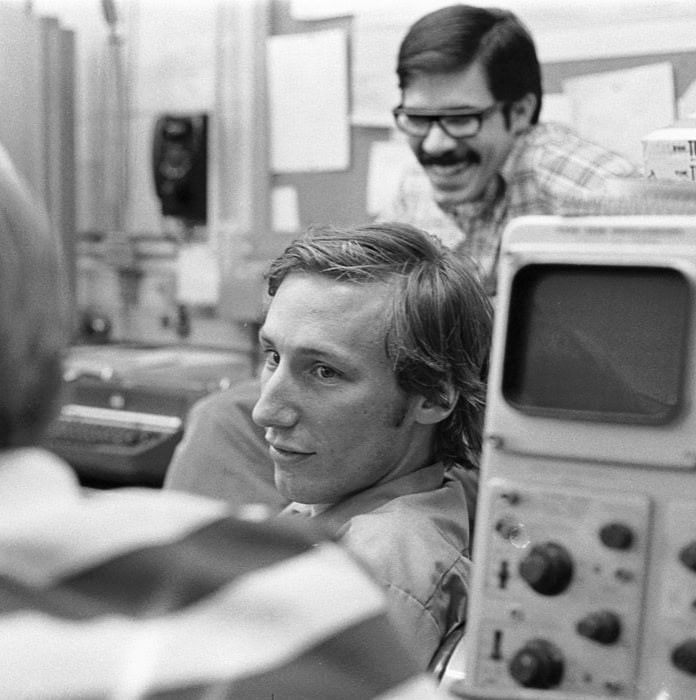
Forrest was soon put to work on photodetectors designed to pick up light signals in long-distance fiber optic cables and convert them to electrical signals. All the detectors developed so far had performed poorly beyond a certain range, and Forrest was tasked with finding out why.
He had a hunch that the problem was tunneling, a quantum phenomenon where particles like electrons pass through energy barriers that, according to classical mechanics, they do not have enough energy to penetrate. Essentially, electrons could be leaking through the material and adding noise, making real light signals harder to pick up.
Jump ahead:
“I set up my little low temperature physics lab at Bell, and I discovered, yes, it was tunneling and this is how you fix it.”
But he soon learned that solving the problem on paper wasn’t enough. Just like the pistons in his MG, his solution had to function as part of a larger system.
“So I started working with the guys who were making receivers. Forget about where the electrons and holes go, this is about resistors, capacitors and transistors. It was a whole different level of understanding about how things worked.”
That understanding led to the first stable photodetector that could pick up light signals travelling the vast distances of the Atlantic. “And of course, that changed the landscape for fiber optics quite fundamentally.”
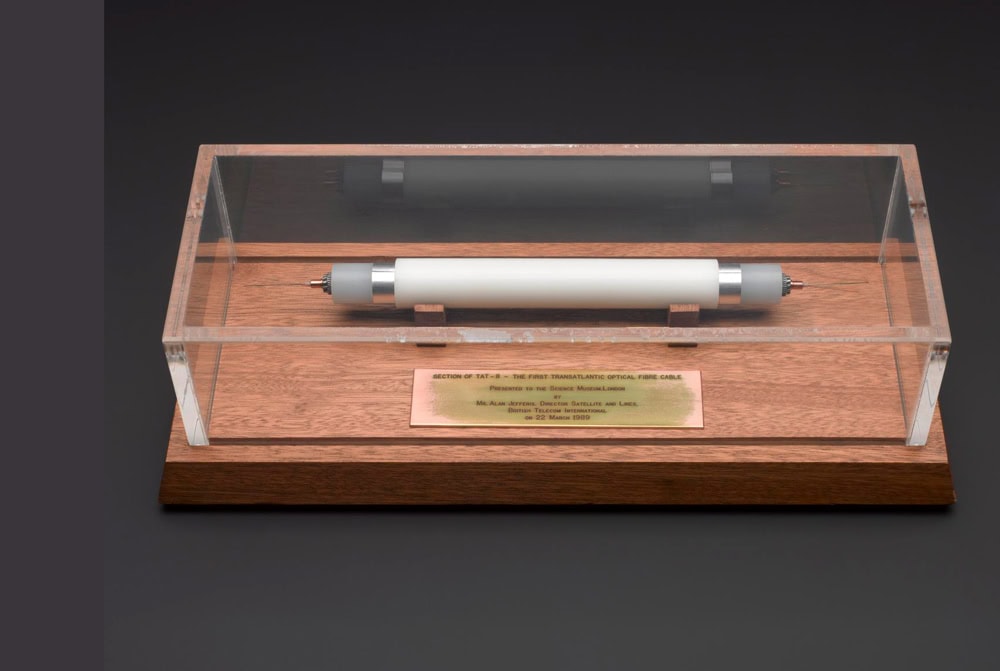
Forrest’s detectors were eventually lowered into the ocean as part of AT&T’s’ TAT-8, the first trans-Atlantic fiber optic cable, which went into service in 1988 with a capacity of 40,000 simultaneous telephone calls. The cable helped unify the telecommunications infrastructure of France, the United States and the U.K. and dramatically reduced the cost of calls and data transfer between the three countries.
Today, millions of the detectors serve as key internet relay points, using essentially the same technology that Forrest perfected at Bell Labs.
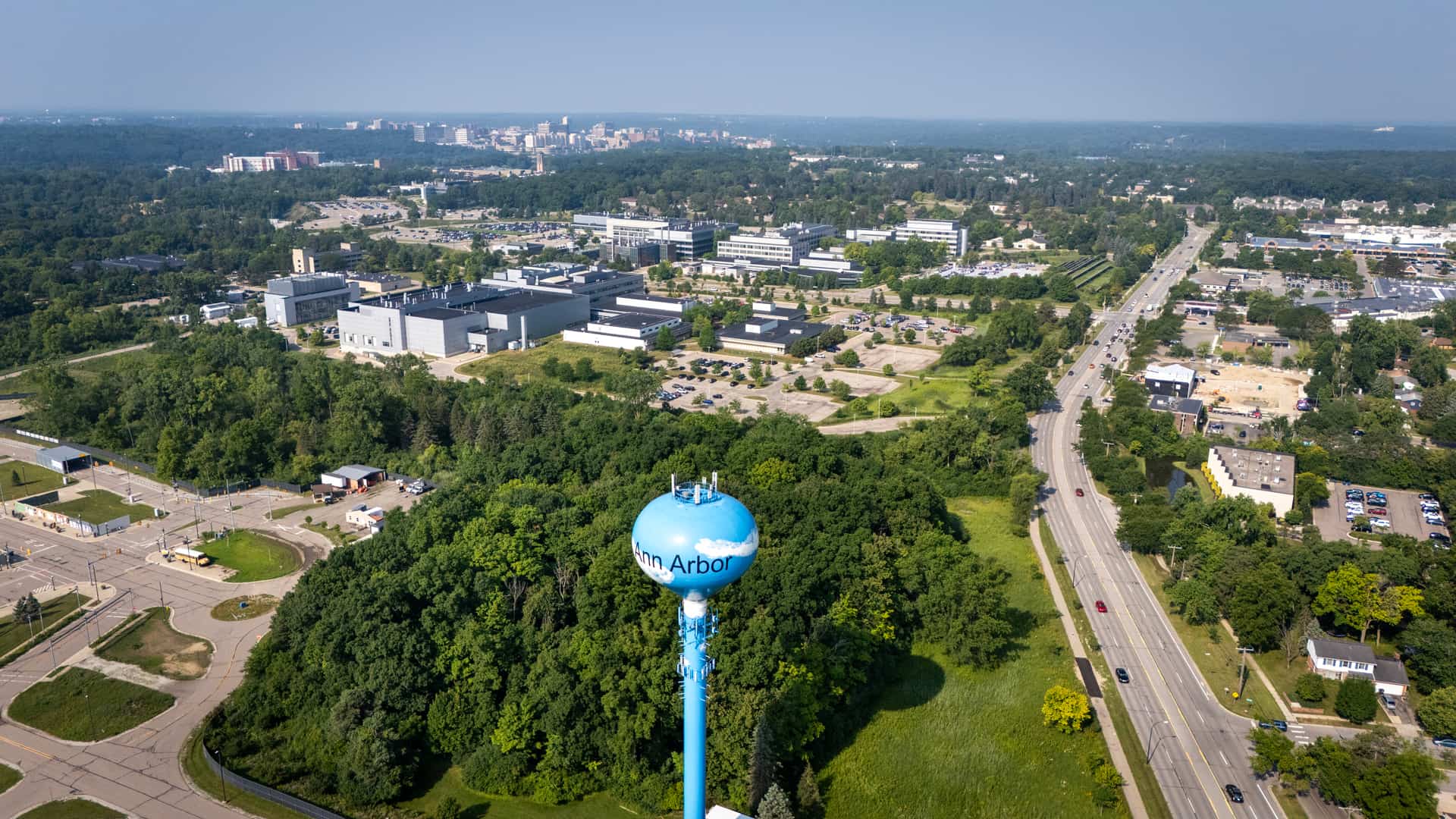
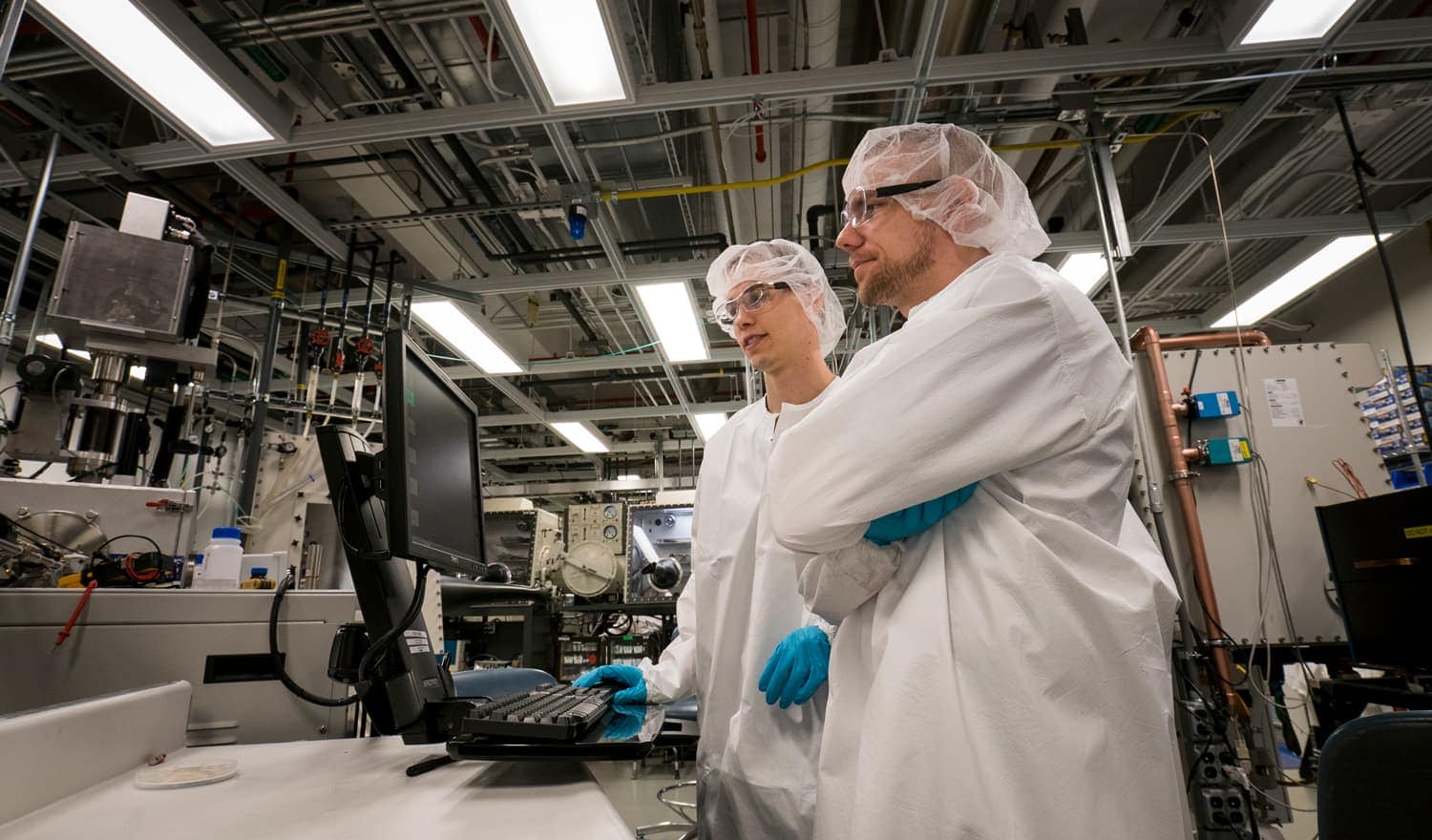
But while Forrest was busy turning his discovery into a working product, the world outside Bell Labs was changing fast. In 1984, AT&T relinquished its monopoly on telephone service and infrastructure as a result of an antitrust lawsuit. The terms included giving up sole control over Bell Labs.
Gone was the freewheeling spirit that had pervaded the labs for most of the 20th century. For many employees, including Forrest, the logical next step was academia, where one could retain the freedom to innovate. In 1985, he accepted a position at the University of Southern California.
During Forrest’s last days at Bell Labs, another researcher was at work at another behemoth of American innovation about an hour’s drive away in Princeton, New Jersey—RCA Labs. Forrest regarded Greg Olson, who was also working on indium gallium arsenide-based photodetectors, as a “friendly competitor.” But their paths were about to cross in a way that would change the course of both of their careers.
RCA Labs also had fallen on hard times due to changing market landscapes and new competition. RCA’s researchers too were beginning to look for other opportunities. Instead of academia, Olson had entrepreneurship in mind. He believed he could cheaply and efficiently manufacture optical detectors and receivers for the growing number of independent telecom companies. So in 1984, he left RCA to found the startup Epitaxx.
Olson approached Forrest to get involved, but he had already committed to USC. He agreed to consult—Olson remembers that the two worked together by “phone call, express package and weekend visit from California,” with Forrest often crashing on Olson’s couch.
From the beginning, Epitaxx had a potential catastrophe on its hands—customers were finding that moisture could creep into their sensors, causing them to fail in a matter of months. Forrest turned things around by designing a new manufacturing process.
It was Forrest’s first taste of entrepreneurship. And during his time with Olsen, he discovered a new side to his old rival, and to himself.
“I learned from Greg how important a company’s culture is, and it was profound,” Forrest said. “I learned that how you act is more important than what you say. By watching him put others before himself over and over, I learned that good travels far. Once you know that, you can apply it to your research group, or your own companies or just your life. And it’s important. I’m not always good at it, but I try.”
The team sold Epitaxx in 1990 for $12 million. Two years later, they parlayed the proceeds into the founding of Sensors Unlimited, a maker of infrared cameras for military applications like night-vision goggles and aircraft landing systems. Today, the company is a subsidiary of Raytheon.
Forrest moved east in 1992 for a professorship at Princeton and a role at Sensors Unlimited. And with one foot in industry and the other in academia, he began to envision how the two worlds, working together as a system, could create a better environment for on-the-ground innovation.
As the head of Princeton’s Photonics and Optical Electronics Materials Center, Forrest spearheaded the first agreement that enabled private-sector companies to work on Princeton’s campus. He was also a founding participant in Universal Display Corporation, working with Thompson to exploit materials and device technologies that would lead to the first practical, full-color OLED displays. Used in nearly every cellphone produced today, OLED displays are thinner than traditional liquid crystal displays (LCDs) and offer higher contrast, better color and a wider viewing angle than traditional LEDs.
“I learned that good travels far. Once you know that, you can apply it to your research group, or your own companies or just your life. “
“Working with industry is in my blood. It’s part of who I am,” he said. “But at that time, it was a bit countercultural to Princeton. We made some real progress, but it was always sort of a limited-scale effort.”
He imagined an entire ecosystem that connected universities, communities and the private sector.
“The whole purpose of engineering is to make people’s lives better,” he said. “You can do things at your desk and in the lab, and that’s cool, but if you actually turn it into something that gets into people’s hands and improves their lives? Then you’ve really completed the circle.”
In 2006, as Samsung was preparing to launch the first smartphone with a full-color OLED display, an ad landed on Forrest’s desk. It was a call for a vice president of research at the University of Michigan, reporting to President Mary Sue Coleman.
Forrest jumped at the opportunity to bring his vision to life, and so did President Coleman. “Michigan was entering what would become a major economic recession, and I felt fortunate to have been able to recruit Steve,” said Coleman, U-M president emerita, who served from 2002 to 2014. “We really needed his innovative ideas to help our state—both his technical expertise in optoelectronics and his ideas about how the University and the private sector could work together.”
“Mary Sue had the grimmest look on her face that you can imagine. Ashen.” Forrest recalls the day in 2008 when he walked into Coleman’s office and learned that pharmaceutical giant Pfizer planned to abandon its two-million-square-foot, 150-acre research complex just past the edge of North Campus.
The closure meant the loss of 2,100 jobs during a time of economic upheaval. Governor Jennifer Granholm had asked for the University’s help in finding a buyer. Coleman tapped Forrest as the point person.
Even under ideal conditions, the pool of potential buyers for a 30-building scientific research complex is limited. Forrest faced what seemed like an impossible task.
“I was sort of like a real estate agent for a while,” Forrest said. “I gave tour after tour of the complex and sometimes we seemed close. A company would say they wanted to do this or that. And then they would just vanish.”
After nearly a year of dead ends, Forrest returned to Coleman’s office with a different idea: What if the University bought it? The Great-Recession-era price tag of $108 million—about $54 per square foot—was a pittance, around 86% less than it would have cost to build a similar facility from scratch.
Michigan Medicine, which also had its eye on the complex, fronted the cash, and Pfizer handed over the keys the following year.
Ten years after U-M took over, the NCRC housed 3,700 employees—75% more than under Pfizer—in a mix of University and private-sector tenants.
Coleman then established Michigan Investment in New Technology Startups (MINTS) in 2011. The $25 million venture fund invests in startup companies that produce technology developed at and licensed by the University. To date, more than 30 companies have received investment from MINTS.
“This was the first time U-M had ever invested as a venture capital entity, and without Steve, I’m confident that it never would have happened,” Coleman said.
In what was perhaps a nod to his car-obsessed youth, Forrest was also the lead investor in MCity, the automotive testing facility on North Campus. Completed in 2015, Mcity is one of the world’s leading testing environments for connected and autonomous vehicle technology.
Forrest’s aim in bringing the private sector to campus was not so much to disrupt academic culture as to expand it.
“There are people who want to work more on the commercial, the development side, and people who don’t. And that doesn’t really have to be a contradiction. You just have to recognize the importance of both. And I felt that traditionally, people who wanted to work with industry were being left out. It wasn’t about making one space smaller, it was about making the other space bigger.
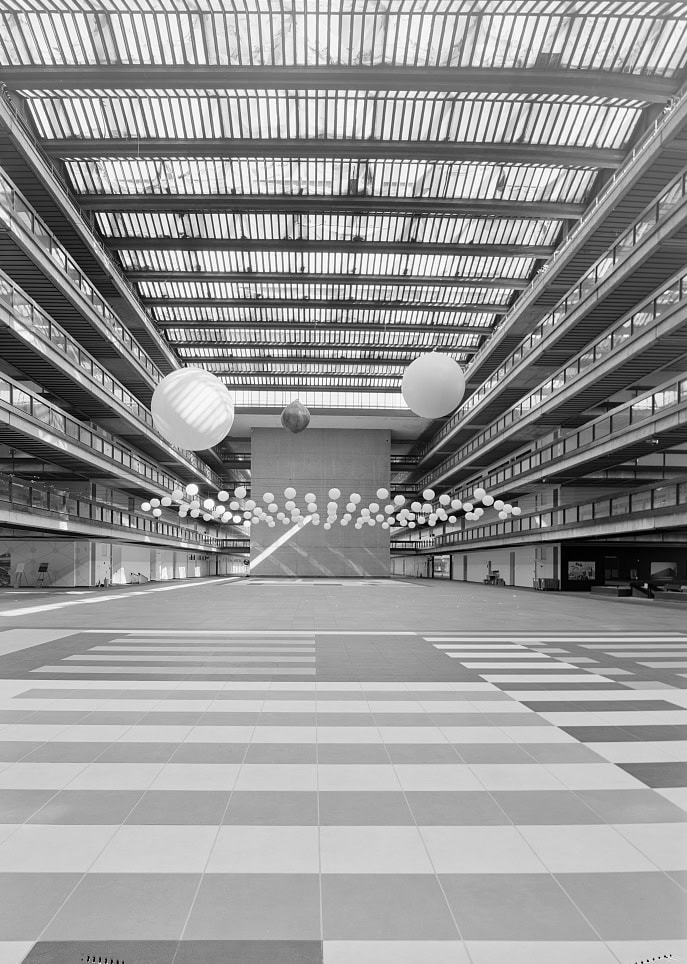
“And I could do that here because Michigan is a much more open culture. We’ve got 19 schools and colleges, and because we do everything here, there is an acceptance. You just have to break it open a little bit.”
Forrest also created U-M’s Business Engagement Center, known today as Corporate Research Alliances. The center connects businesses with U-M resources in research, technology, education, student talent and strategic giving. In 2010, the approach was adopted statewide with the creation of the Michigan Corporate Relations Network, which includes Michigan State University, Michigan Technological University, Wayne State University, and Western Michigan University.
Forrest stepped down as VP of research in 2014, moving to a Michigan Engineering professorship. That year, U-M’s combined research budget reached a new record of $1.33 billion, up from $750 million the year he took on the VP role. 2014 also saw 148 license agreements completed by U-M’s Innovation Partnerships, an increase of more than 50% compared to 2006, when Forrest joined the University. That pace has continued in the years since; with 273 agreements completed in 2024, U-M is a national leader in the creation of new startups.
It was a crimson red powder during his Bell Labs days that sparked many of Forrest’s inventions as a Michigan Engineering professor. Perylenetetracarboxylic dianhydride, mercifully abbreviated as PTCDA, is a synthetic organic compound that’s widely used in paint and textile dyes. Forrest remembers the day in 1982 when metallurgist Paul Schmidt and chemist Marty Kaplan brought a dollop of it, sandwiched between a silicon wafer and a metal contact, into his office.
Forrest asked, “What is this?” “Just measure it,” they said. And he did.
“I had expected it to be an insulator, but it wasn’t that at all—it made a diode with silicon. And that was a revelation to me,” Forrest said. It was the first organic semiconductor he had ever seen. That day marked the beginning of a new era in his research.
“We had a great collaboration, which was wonderful. We were onto something new, which was these organic-on-semiconductor devices. We wrote paper after paper, and oh my god was it fun.”
Organic semiconductors hold several advantages over their inorganic counterparts, like silicon. They can be processed more easily and inexpensively than inorganics, and can be made into thin, flexible films or even rolls. Phosphorescent Organic LEDs (PHOLEDs), which eventually grew out of his experimentation with organics, convert nearly 100% of energy applied to them to light. That compares with about 25% for traditional LEDs. The invention literally created today’s giant OLED display and lighting industry.
Forrest continued to work in the space at USC, but it was during his time at U-M that he made some of the biggest breakthroughs. Together with Thompson, he developed new flexible and transparent PHOLEDs, new manufacturing methods and new techniques for getting light out of the device and into viewers’ eyes, in addition to long-lasting blue PHOLEDs.
LG, the Korean electronics company that is one of the world’s largest manufacturers of display panels, has coined the term “dream OLED” to refer to a panel that achieves phosphorescence for all three primary colors.
“The successful commercialization of blue phosphorescence technology, which has been called the final piece of the ’dream OLED’ puzzle, will become an innovative milestone towards the next generation of OLED,” said Soo-young Yoon, CTO and Executive Vice President of LG Display in a May 2025 news release.
The new technology will improve efficiency and battery life in devices like cellphones, make tomorrow’s lighting technology even more efficient than today’s LEDs and enable new kinds of displays and lighting devices.
Another of Forrest’s most recent advances was the founding of Heat2Power in 2024. He has teamed up with Andrej Lenert, a U-M associate professor of chemical engineering and the company’s co-founder, to develop a thermophotovoltaic technology that can convert heat to electricity—essentially a solar cell that works with heat instead of light.
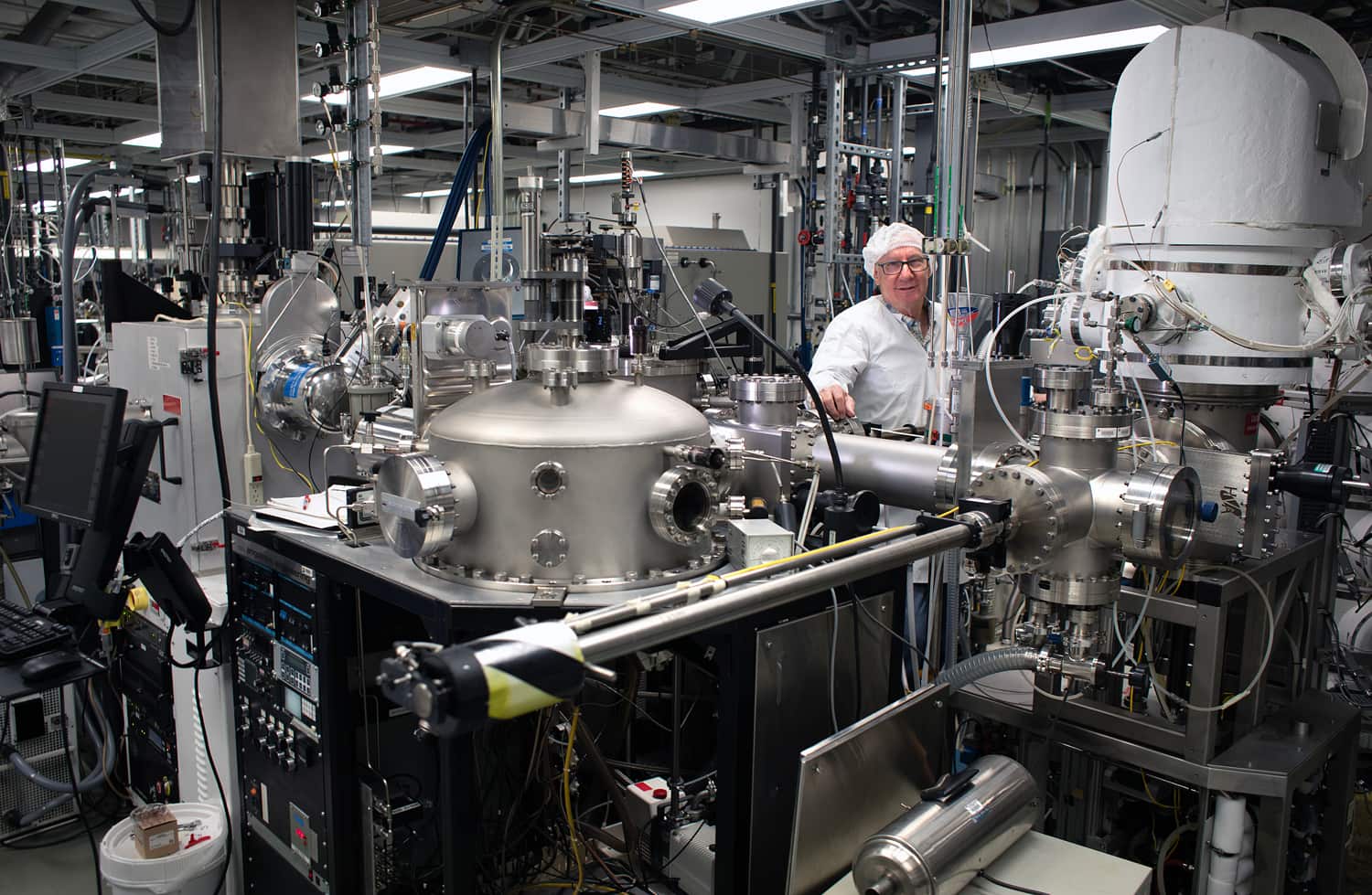
The technology could potentially store energy from renewable power sources like wind and solar. Power could be stored as heat in large banks of heat-absorbing materials like silica sand, graphite or ceramic blocks. The team’s thermophotovoltaic device converts that energy back into electricity when needed. Today, excess power from wind and solar can’t be easily stored and is mostly wasted; Forrest estimates that the solar energy wasted in California alone could power 300,000 homes.
“The efficiency enables us to store the same amount of energy in half the space [of other methods],” Lenert said. “That makes the economics much more attractive, and it also means that these cells could replace other forms of electricity generation, like the steam turbines in nuclear plants.”
Heat2Power is negotiating with potential customers and the team hopes to have its first commercial system up and running in 2026.
During his career as an academic, entrepreneur and scientist, Forrest has always returned to one thing: the light in the High Sierras that transfixed him as a boy. He hiked with his father and brother for decades, bringing his children and then his children’s children. But over the decades, he began to sense something else alongside the bright-white dynamism that had always inspired him: fragility. He realized that every year, the impact of humans became a little more evident in the landscape around him.
That realization has become a driving force in his research, which has increasingly focused on using technology to reduce humans’ environmental toll. In addition to developing more energy-efficient displays and lighting, he is incorporating organic semiconductors into new types of thin, flexible, transparent solar cells that could turn buildings and other existing infrastructure into generators of electricity. And with Heat2Power, he hopes to contribute to an energy grid that can provide abundant power with a smaller environmental footprint.
“I feel this incredible love, for the High Sierras and for other places as well,” Forrest said. “And I want to see a world for my grandchildren that’s every bit as spectacular as the one I grew up in. It’s the most important thing. So what else am I going to do?”