Harnessing climate investments to serve development goals
Analysis reveals how wealthy nations can unlock more non-climate benefits by fulfilling their declared climate plans than those with emerging and vulnerable economies.

Analysis reveals how wealthy nations can unlock more non-climate benefits by fulfilling their declared climate plans than those with emerging and vulnerable economies.
Climate pledges are designed to help countries reduce emissions and adapt to a changing climate, but the current iterations of these pledges place additional stresses on vulnerable nations, an international team of researchers co-led by University of Michigan Engineering and KTH Royal Institute of Technology, Sweden, has shown.
Pledges such as those laid out in the Paris Agreement and the 2030 Agenda, are increasingly shaping broader decisions about economic growth, public health, energy systems, food security and natural resource management. In nations with fewer resources, this can mean climate policy comes at the expense of other public goods like economic development and public health, whereas in industrialized countries, climate action can boost these other areas.
In a recent publication in Nature Communications, researchers coordinated by Ricardo Vinuesa, a U-M associate professor of aerospace engineering, examined how countries around the world are balancing climate goals with broader development priorities. In addition to first and corresponding author Francesca Larosa, Marie Sklodowska-Curie Postdoctoral Fellow at KTH and researcher at the Euro-Mediterranean Center on Climate Change, the international collaboration included experts from the Polytechnic University of Valencia and the University of Alicante in Spain.
The team analyzed 158 national climate pledges submitted under the Paris Agreement, using a large language model to identify patterns. The researchers reviewed and verified the results, developing connections between how countries intend to contribute to the global reduction in greenhouse gas emissions, known as Nationally Determined Contributions (NDCs), and broader goals, known as Sustainable Development Goals (SDGs), which cover health, food, water, energy, jobs and environmental protection.
They examined how climate plans support or conflict with these goals. Revealing the unfair burden of trade-offs experienced by less wealthy countries, the findings provide new insight into how climate policies may shape development pathways, global inequality, climate finance and international cooperation.
The research team combined expertise in climate policy, sustainable development, artificial intelligence, mathematics, engineering and systems analysis to develop and prove out the framework used in the study. Vinuesa and Larosa discuss the study, the role of artificial intelligence in analyzing complex policy documents, and what these findings could mean for the future of climate action and sustainable development.
Vinuesa: Our analysis of climate pledges revealed that nations are not all pursuing the same vision of a climate-friendly future. Using an AI-assisted framework, we found that high-income countries have the luxury of choosing climate investments that provide additional benefits, and lower-income countries often don’t.
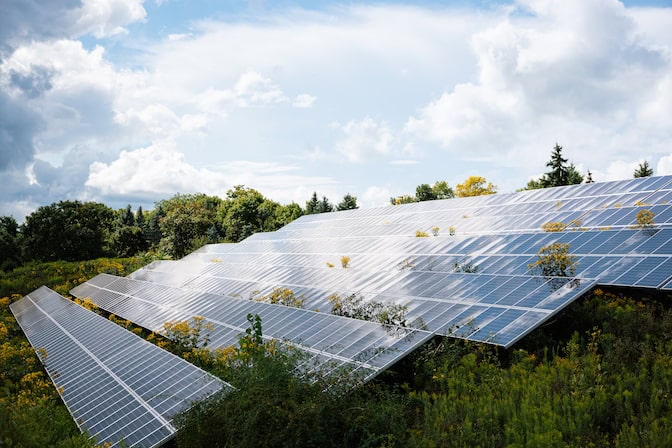
Investments in clean energy, efficient buildings and low-emission transportation can help reduce greenhouse gases while also improving air quality, public health, energy security and technological innovation. Wealthier countries are often better positioned to capture these benefits because they have greater access to financing, infrastructure and institutional resources such as technology development pipelines and policy experts who can link climate action with other public goods.
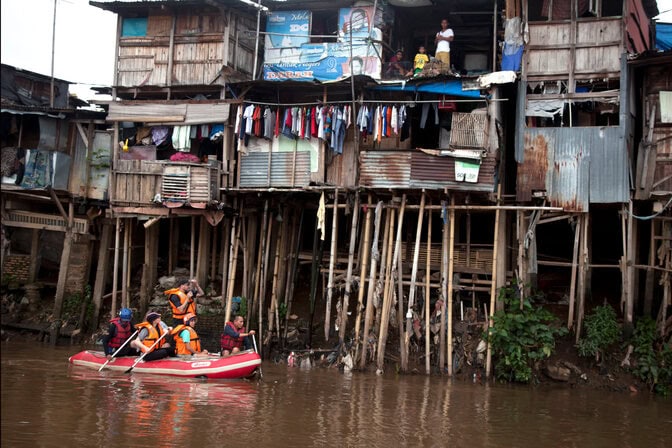
In contrast, low- and middle-income countries are working on the basics like producing enough clean water, energy and food, and building industries while also protecting the environment. Rather than making existing services more resilient to climate impacts and reducing emissions, they are expected to increase supply while simultaneously improving resilience and cutting emissions, with less affordable finance and greater debt pressures.
Vinuesa: Even in less wealthy countries, climate investments can be designed to deliver several benefits at once—advancing development goals such as jobs, food, water, healthcare and building resilience.
For example, renewable power can run clinics, water pumps and food-storage facilities, while clean transport and cooking improve health by reducing air pollution. Protecting forests, wetlands and soils can also store carbon while supporting water security, agriculture and protection from floods. When climate action is leveraged with these outcomes in mind, it isn’t just an expense.
Ensuring that climate action benefits communities with fewer resources, rather than becoming a cost imposed by wealthy nations, is part of what is known as a “just transition.” An important role for wealthy countries is helping low- and middle-income countries with financing and other support.
Many lower-income nations face significant debt burdens that can limit their ability to invest in climate adaptation and sustainable development. In addition to managing infrastructure build-out and emissions reduction simultaneously, they typically have to pay higher rates to borrow money.
Financial support could include grants, low-interest finance, disaster funding and debt relief, but it could also include aid in the form of technology transfer, workforce training and help developing viable climate projects. Another proposed tool is debt-for-nature swaps, which reduce or restructure a portion of a country’s debt in exchange for investments in conservation such as protecting forests, reefs or watersheds.
Vinuesa: We used artificial intelligence to analyze climate pledges and identify opportunities to better align climate action with sustainable development goals, including priorities, gaps, synergies and potential trade-offs. With such a large quantity of information, machines are often more thorough than humans at discovering connections.
However, the research did not rely on AI alone. A key part of our approach was human validation, where researchers reviewed and verified the AI-generated outputs to ensure the results were accurate. That combination of AI-assisted analysis and human validation gives us confidence in the findings.
The main drawback of our approach is that our analysis evaluates what countries say they plan to do in their climate pledges, not whether those commitments are ultimately implemented or successful.
Larosa: That concern is valid, and it is important to weigh those costs against the potential benefits. In this study, we do not train any new model, which significantly lowers the environmental footprint of the workflow. Furthermore, we use AI to advance climate action with a large-scale policy analysis, aiming to speed up decarbonization and adaptation by reshaping approaches to provide broader benefits.
Vinuesa: AI can rapidly analyze climate pledges across so many countries, helping us to identify solutions and inequalities that might otherwise remain hidden. At the same time, there is an ethical limit. AI must be proportionate, transparent, human-checked and not treated as the final judgment.
The other study authors are Lamyae A. Rhomrassi, Sergio Hoyas, J. Alberto Conejero of the Polytechnic University of Valencia; Javier Garcia-Martinez at the the University of Alicante, Spain; and Fermin Mallor and Francesco Fuso Nerini of the KTH Royal Institute of Technology.
The research was supported in part by the European Union, Digital Futures, Generalitat Valenciana and the Spanish Ministry of Science.