Student team brings irrigation to local farm in need
By practicing socially-engaged engineering, the BLUElab Metro team helps a local farmer spread the joy of gardening.
Story By:
PHOTOS BY: MARCIN SZCZEPANSKI
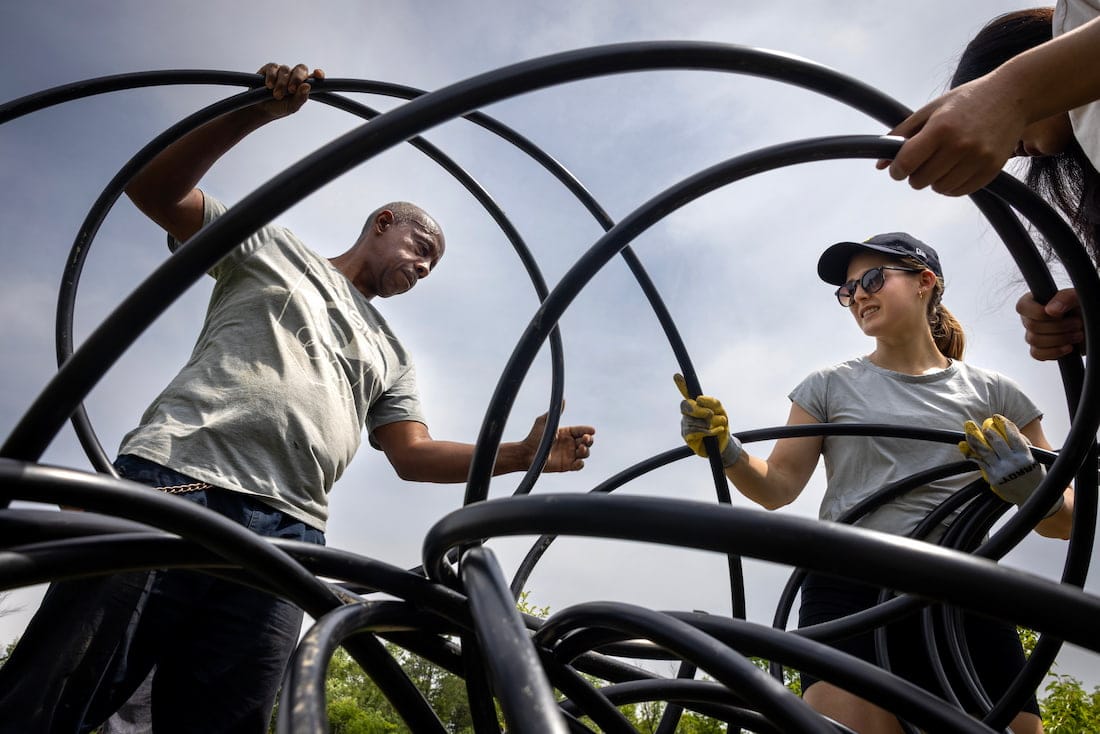
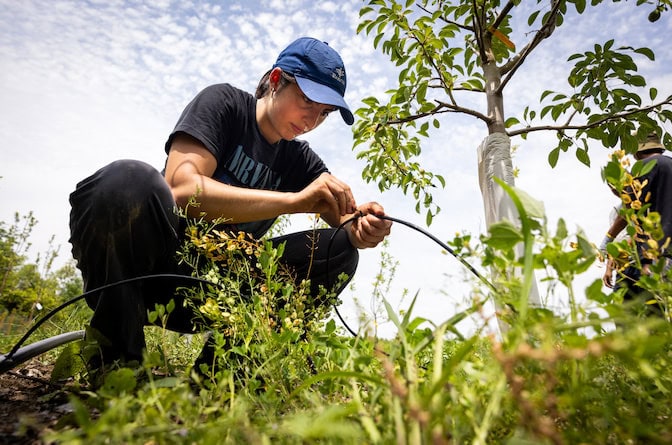
Sweat drips down the brow of Savin Dasanayaka, a junior in information analysis at U-M, as he pulls knee-high weeds to make room for irrigation tubing at the Clay Hill Community Farm in Ypsilanti, Mich. In the 90-degree heat, he cracks open a small bottle of water, immediately gulping down its contents.
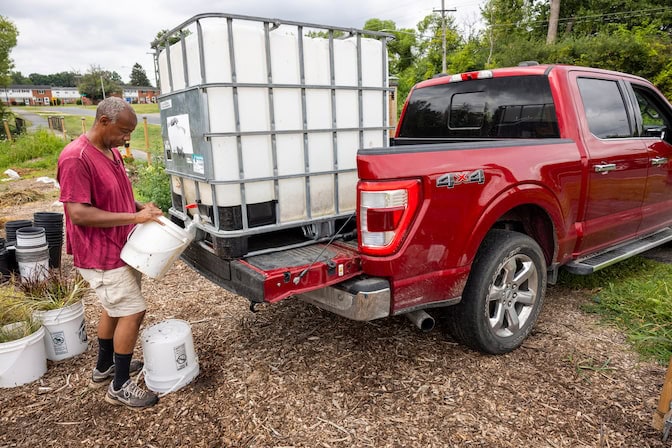
The farm’s crops are also parched. The owner, Takunia “TC” Collins, has struggled to get a reliable source of water at Clay Hill, on the corner of Harris Road and MacArthur Boulevard. He doesn’t have enough funds for the equipment needed to tap into the municipal water supply, and attempts to drill a well have been hampered by a contaminated site nearby. Collins says he has resorted to filling a 275-gallon tote with water off-site, bringing it to Clay Hill in the back of his pickup truck.
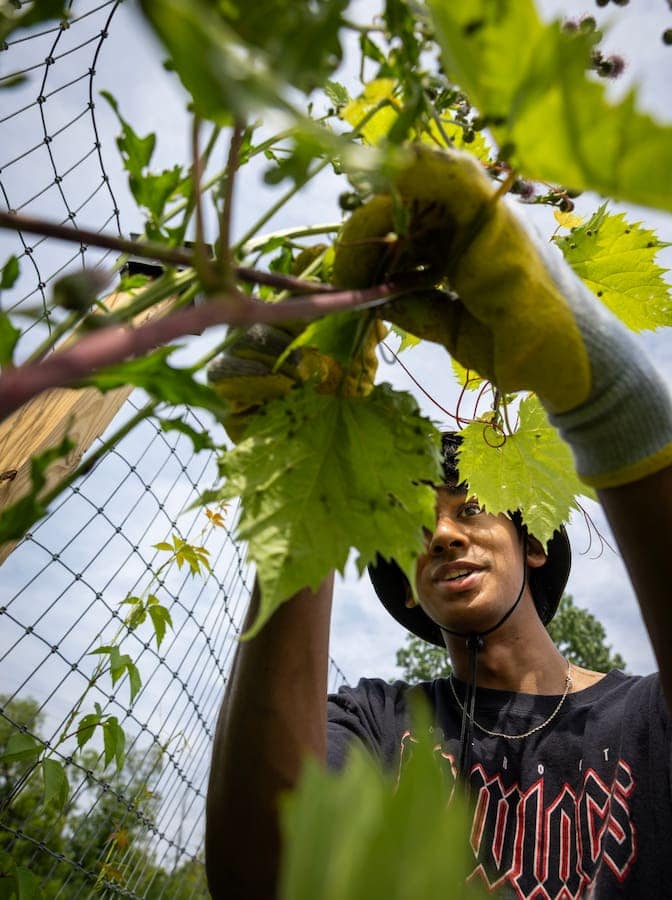
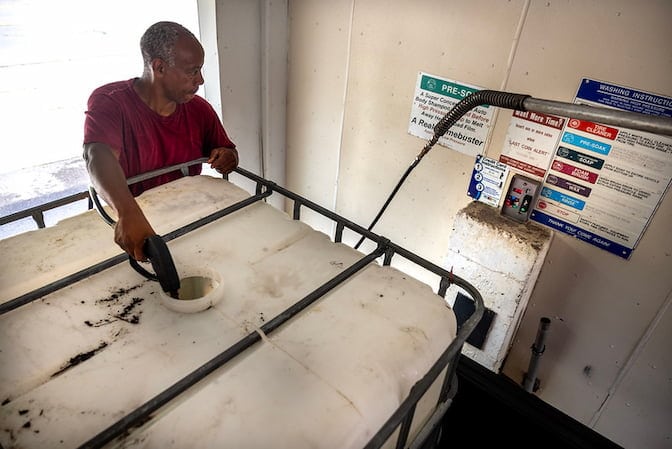
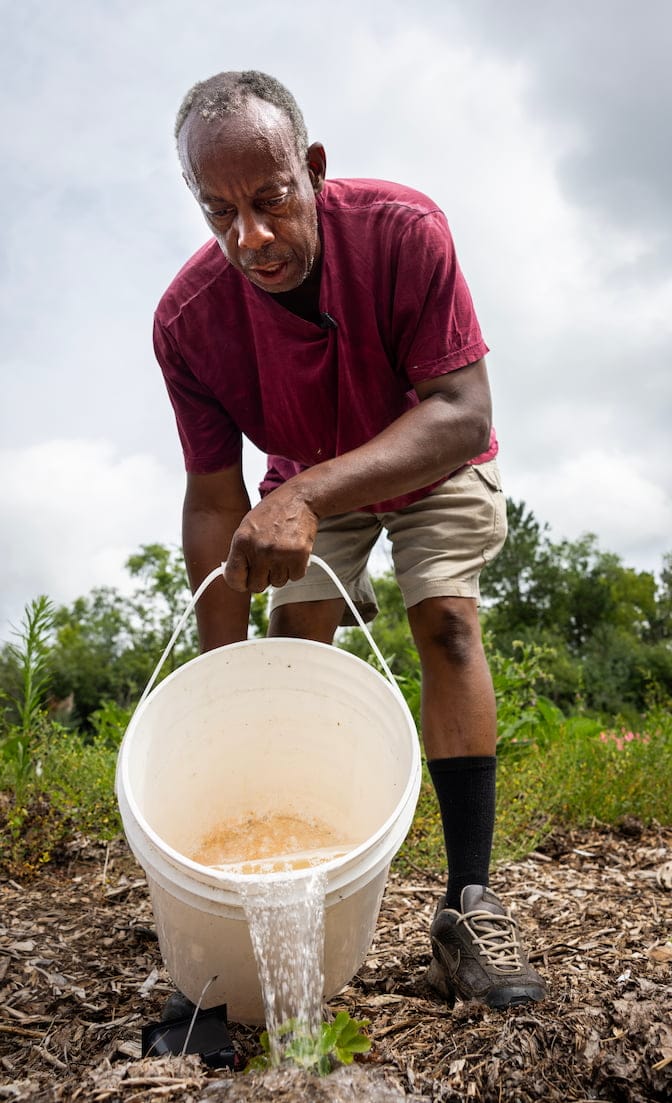
He describes carrying water from the tote to each plant in five-gallon buckets. That takes around three hours, he says, on top of the two hours it takes to fill up at another community farm he started in Ypsilanti’s Appleridge Park. When he wants water faster, he fills his tote at a car wash three miles from Clay Hill.

This method of watering is far from efficient, and dried-out plants around Clay Hill hint that some crops aren’t getting what they need to thrive. Dasanayaka and his colleagues in Michigan Engineering’s BLUElab Metro student project team want to make watering easier for Collins. They are designing and building an automated irrigation system at Clay Hill, with financial support from a $10,000 Davis Projects for Peace Grant and a $2,000 grant from the U-M Center for Socially Engaged Engineering & Design (C-SED). But they’ve learned that the starting line isn’t quite where they expected it to be.
The power of local change
The students are still in the very early stages of developing their automated system. The most sophisticated equipment at Clay Hill so far is a weather station that collects temperature, humidity and rainfall data. The students hope the data will allow an automated irrigation system to determine an ideal watering rate one day, when Clay Hill has a water source that doesn’t involve wheels. But Collins needs a solution faster.
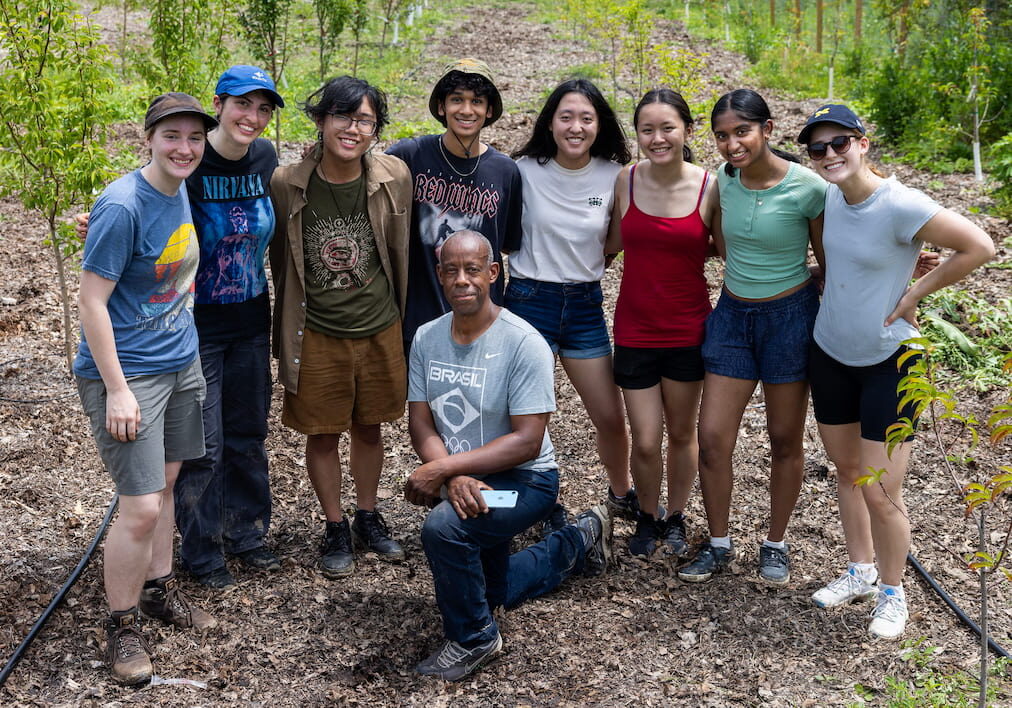
He started working with the students of BLUElab Metro in May 2024, after they were connected through U-M’s Edward Ginsberg Center. The team wanted a local partner, with whom they could develop a lasting relationship and collaborate to improve their community.
“I personally have a strong belief in the power of local change,” said Marina Campoy-Lovasco, a sophomore in civil engineering and one of the project leads. “By changing your local environment, you can incrementally change the world.”
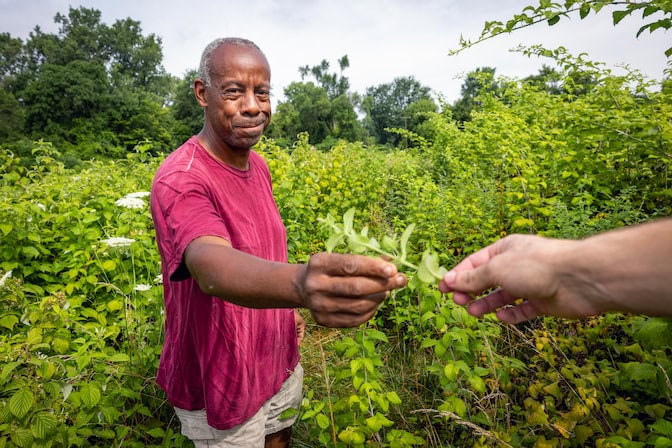
The team had several candidates, but they were drawn to Collins’s love of teaching his community about farming and gardening. He first got a taste when his neighbors in the Sycamore Meadows apartment complex followed his lead in planting small plots at the complex. Collins says he eventually had to leave because he was one dollar over the income limit for housing assistance there. But the experience drove him to start his own non-profit, called Willow Run Acres, to keep spreading the joy and value of farming in his old neighborhood—Sycamore Meadows is across the street from the Clay Hill Community Farm. That’s why he’s chosen this particular plot, regardless of its challenges.
“I’ve never wanted to be a merchant; I wanted to focus on being an educator,” Collins said. “I’d rather teach somebody than sell to somebody because they can cherish that forever. You can get that dollar today and spend it today, and then it’s gone tomorrow.”
Walking with Collins in the thriving garden at Appleridge Park, he’s quick to point out all the varieties of collard greens, the medicinal benefits of comfrey, as well as the invasive growth habits of horseradish. He’s eager to hand out raspberries and ground cherries while he explains how to expand the patch with stem cuttings.
“TC ended up being a perfect partner,” said Dasanayaka, who was a co-lead of BLUElab Metro in 2024 and is now a member of the BLUElab Executive Board. “Our values lined up really well. We wanted to lean more into education, and TC’s passion is pretty much unmatched in my eyes.”
Learning to focus on the need
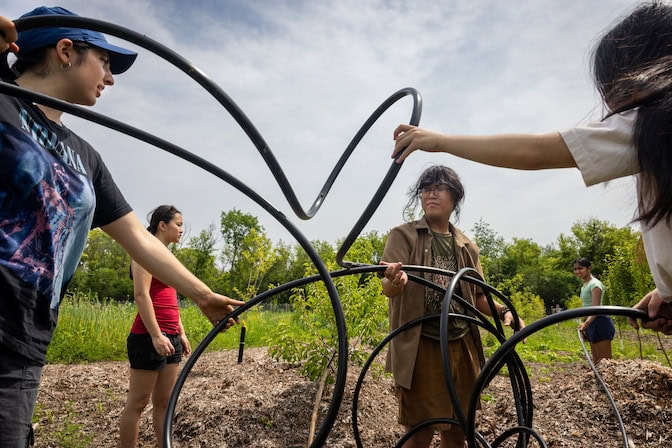
Finding a feasible solution came less quickly. The students had to learn to balance their ambition with Collins’s needs, their own capabilities and the community’s ability to maintain their solution in the future. Some initial designs were too grandiose, but programs from C-SED and regular meetings with Collins helped his team land on something that worked for everyone, Dasanayaka said.
“What makes BLUElab students stand out even further is that they don’t have a problem already defined,” said Steven Skerlos, a professor of mechanical engineering and civil and environmental engineering, who co-founded BLUElab and C-SED. “They have to partner to not just define the solution, but define the problem. There’s another level of initiative and leadership that allows these BLUElab students to really shine.”
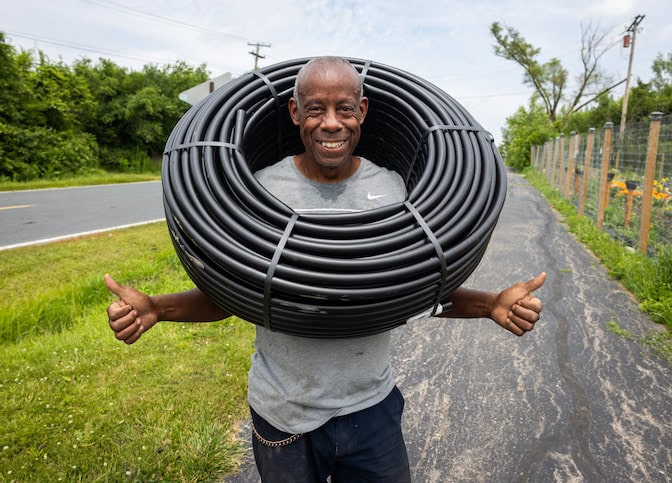
This summer, the team prioritized connecting a basic irrigation system to his tote. BLUElab has already laid 500 feet of irrigation tubing at Clay Hill to help Collins, securing it down the length of several herb and vegetable beds with landscaping staples. They also placed rings of irrigation tubing around the base of each fruit tree in the farm’s orchard—around 130 in total. Each ring and line is connected to larger hoses that lead to a battery-powered, submersible pump, which pushes water from the tote through the irrigation system.
“We want to have a basic prototype down and fully tested for irrigation,” said Dasanayaka. “That way we can just keep building on it, and TC can have something of use.”