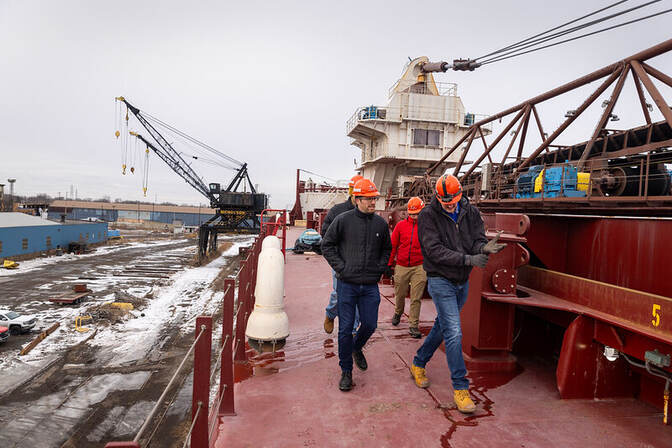
200+ Michiganders shaped U-M-led state maritime strategy
Participants across the state helped University of Michigan researchers create a state-wide roadmap to strengthen a central part of Michigan life.

Participants across the state helped University of Michigan researchers create a state-wide roadmap to strengthen a central part of Michigan life.
Experts

Associate Professor of Engineering Practice in Naval Architecture and Marine Engineering
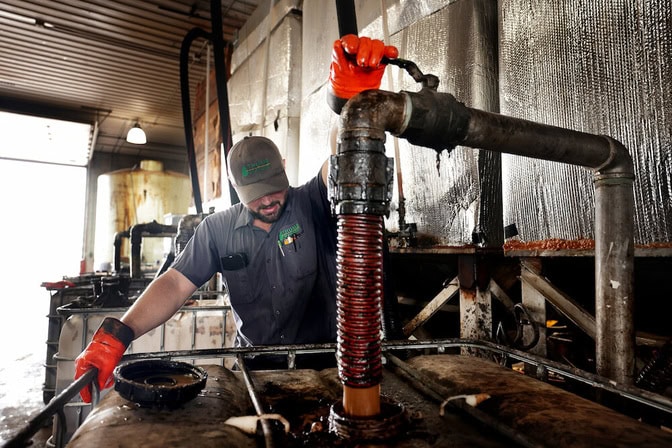
After talking with lake freighter engineers and shipping company CEOs, boating clubs and ferry captains, frying oil upcyclers and soybean farmers growing crops for biofuels, and many others, Thomas McKenney and his University of Michigan team found a common thread through Michigan’s maritime sector.
“While everyone had a unique perspective and viewpoints, all participants emphasized their strong belief that Michigan can do more and is well-positioned to become a national maritime leader,” said McKenney, an associate professor of practice of naval architecture and marine engineering.
McKenney led the development of the Michigan Maritime Strategy, a 10-year plan released today by Gov. Gretchen Whitmer. The strategy intersects with the state’s goals to transform its transportation system by 2045 and reach carbon neutrality by 2050.
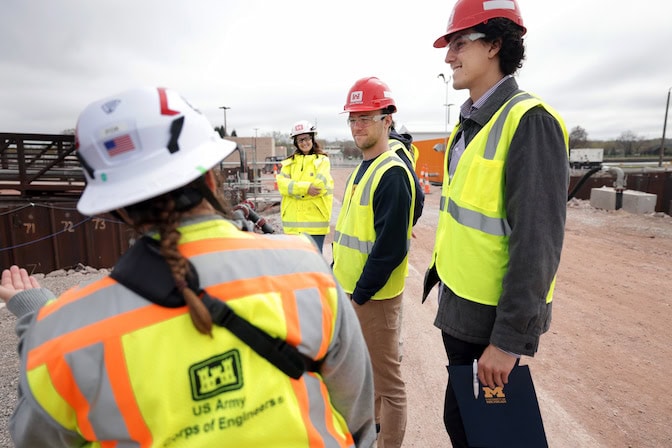
To develop the strategy, McKenney’s team consulted with over 200 stakeholders across the state, who represented environmental and health organizations, business and industry, community members and Tribal governments.
“Our holistic approach to maritime development beyond just shipping freight brought together groups that wouldn’t normally engage,” McKenney said. “That allowed us to develop a strategy grounded in the needs and opportunities identified by those most closely connected to Michigan’s maritime future.”
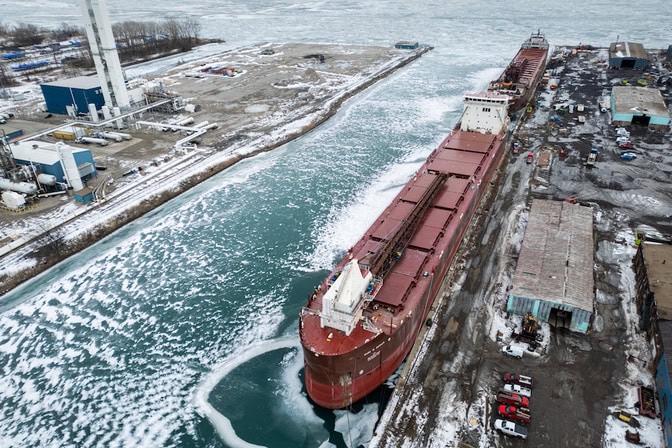
The maritime sector is a major contributor to Michigan’s economy. The state’s 33 active ports handled 57 million tons of cargo in 2023, adding $3.3 billion directly into the economy and supporting more than 17,000 jobs. Its 63 ferries provided an essential link between remote island communities and mainland Michigan.
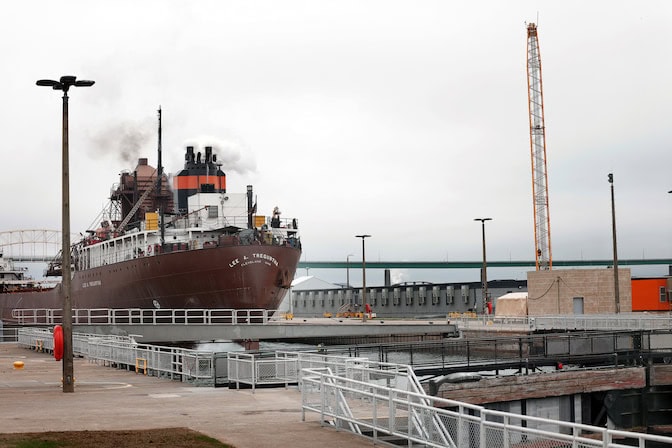
Michigan also maintains a critical shipping corridor—the Soo Locks, part of the Great Lakes-St. Lawrence Seaway system. The seaway serves as a major North American trade artery and links Lake Superior’s iron ore deposits—which fill around 85% of demand in the United States—to steel mills in the greater Detroit area, Chicago, Cleveland and Pennsylvania.
“This strategy will generate tremendous benefits from creating Michigan jobs to advancing clean energy transitions and climate action goals, as well as enhancing stewardship of the Great Lakes and ensuring Tribal rights,” said Greg Keoleian, the Peter M. Wege Endowed Professor of Sustainable Systems at U-M’s School for Environment and Sustainability, who contributed to developing the strategy.
The strategy centers on six goals for decision-making, policymaking and investment:
An interdepartmental team will implement the strategy over the next five years, including members from the following state departments: Transportation; Environment, Great Lakes, and Energy; Natural Resources; Agriculture and Rural Development, and Labor and Economic Opportunity. They will collaborate with the Michigan Economic Development Corp. to fully integrate the strategy into state decision-making processes, align state and national shipbuilding efforts, and establish processes to prioritize and evaluate projects.
The state’s announcement opens an opportunity for additional review and comments by interested parties before the strategy is formally adopted. The draft strategy can be viewed at Michigan.gov/maritime.

Explore more shipbuilding and maritime innovations from Michigan Engineering
Other members of the U-M team included Owen Baldwin, a master’s student in environmental engineering and sustainable systems; Logan Cox, a master’s student in naval architecture and marine engineering; Geoffrey Lewis, a research specialist lead in the U-M School for Environment and Sustainability’s Center for Sustainable Systems; and Shoshannah Lenski, former associate director of the Center for Sustainable Systems.
Keoleian is also a professor of civil and environmental engineering.