Improved Arctic-faring ships and shipbuilding from new international team
Supporting the research arm of an international pact, U-M co-leads a team working to improve the design and construction of ships that can navigate the thawing poles.

Supporting the research arm of an international pact, U-M co-leads a team working to improve the design and construction of ships that can navigate the thawing poles.
Experts

Professor of Naval Architecture and Marine Engineering, Director of Aaron Friedman Marine Hydrodynamics Lab
The United States could ramp up its production of Arctic-faring ships with the help of a new consortium of universities and national labs from the U.S., Canada and Finland.
Engineers from the University of Michigan are members of the consortium, called ICE-SHIELD, along with engineers from the U.S. Naval Surface Warfare Center’s Carderock Division, Memorial University in Canada, the National Research Council of Canada, as well as Aalto University and the VTT Technical Research Centre in Finland.

Explore more shipbuilding and maritime innovations from Michigan Engineering
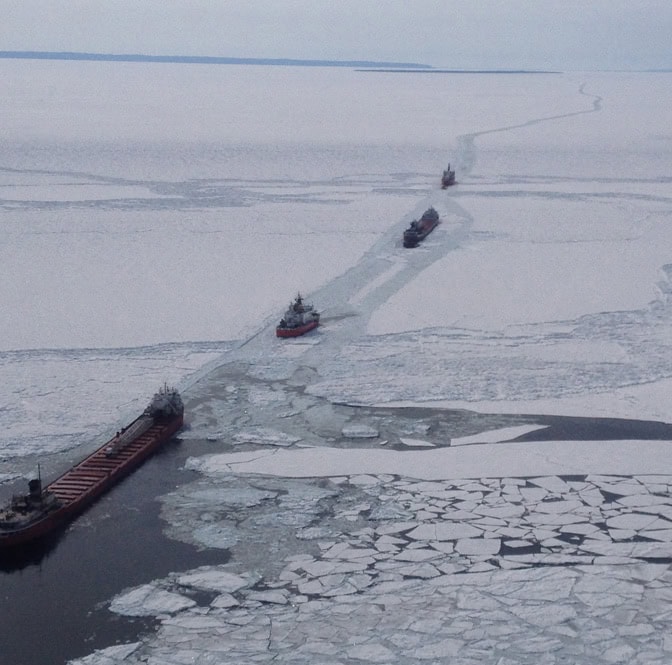
As Arctic sea ice melts and thins in a warming world, companies and governments are moving more cargo through the Arctic. The emerging seaways can save time and fuel, but the ice comes back whenever it’s cold, and most vessels aren’t built to handle it. Icebreaker ships lead commercial and naval vessels through icy water, clear ice from frozen ports and harbors, and rescue vessels trapped by thick sea ice.
“When it comes to collecting natural resources and navigating in the Arctic, you’re very limited in what you can do without icebreakers,” said Kevin Maki, U-M professor of naval architecture and marine engineering and the university’s lead representative in ICE-SHIELD.
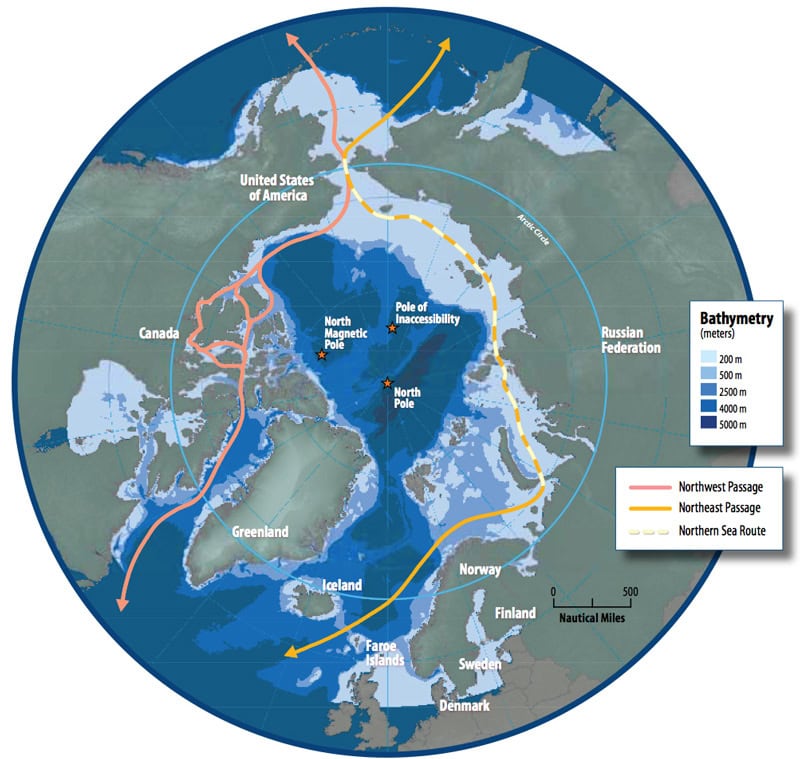
The U.S., Canada, and Finland signed the Icebreaker Collaboration Effort (ICE) Pact in 2024 to work together to compete with Russia, which has the world’s largest icebreaker fleet. More than 40 Russian icebreakers can escort commercial and naval vessels along the Northern Sea Route, which is around 40% shorter than the standard route connecting Europe and China.
In contrast, the U.S. owns three polar icebreakers. It commissioned three new ones from an American shipyard in 2019, but the first vessel is expected to be completed six years behind the original schedule.
To compete in the Arctic, the U.S. Coast Guard strategic plan calls for an increase in icebreaker construction. To do this, the United States is collaborating with its Arctic allies. Canada has the second most icebreakers and they plan to add two more polar icebreakers along with 30 other vessels with various icebreaking capabilities.Finland has a smaller fleet of 11 icebreakers, but their engineers have designed 80% of the world’s icebreakers, and their shipyards built 60%. The Helsinki shipyard built four icebreakers, ordered in 2014, in less than four years.
The ICE-SHIELD team aims to help ICE Pact not just catch up with Russia’s capabilities, but surpass them. They aim to develop technology and methods that could increase their nations’ shipbuilding capacities, including high-tech shipyard infrastructure, improved cost-production models and more efficient shipyard operations. They will also aim to improve the performance of commercial and naval vessels by designing and testing autonomous vessels, AI-powered tools and new hull forms.
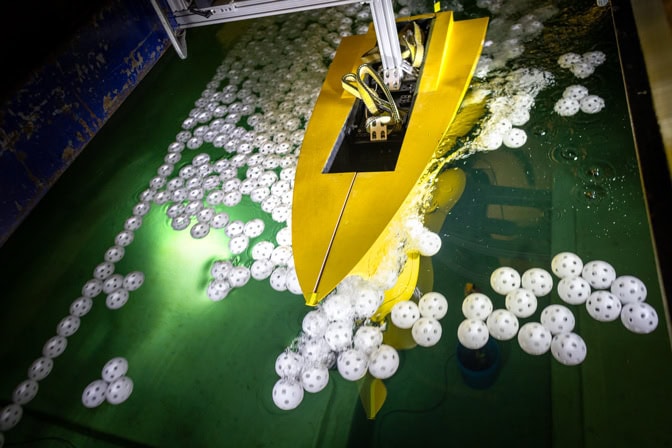
Such advances will be critical for both icebreakers and other ships venturing into a changing Arctic. Maki’s research, published in 2023, suggests that conventional vessels moving through channels in ice could face up to 50% more wave resistance. New icebreaker designs may need to prepare for more open water conditions than before, and commercial vessels venturing into emerging seaways may need to account for flanking sea ice.
“Most commercial ships are optimized for open water because that’s where they operate most often,” said Mikko Suominen, an ICE-SHIELD representative from Aalto University and an assistant professor specializing in polar naval architecture.
“So a lot of common hull types haven’t been thoroughly tested in icy conditions. We can research how conventional ships will perform in the Arctic, which could inform new hull designs and help find the most efficient shipping routes,” he said.
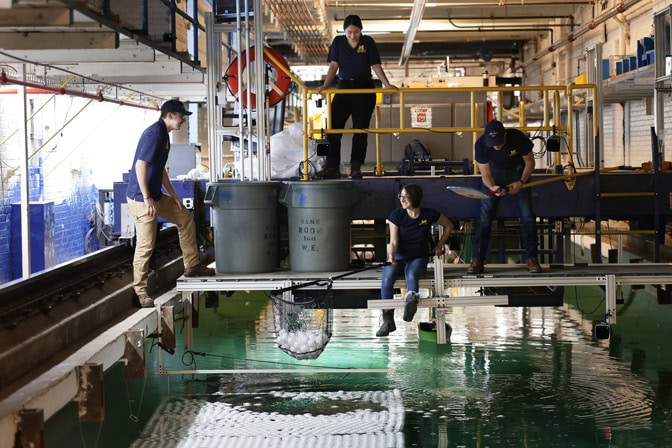
To meet the team’s goals, the University of Michigan offers the Aaron Friedman Marine Hydrodynamics Lab. It hosts the first university-affiliated towing tank in the U.S., still one of the largest in the nation. The lab helped develop the “bulbous bow” technology that makes nearly every large cargo ship around 25% more fuel efficient.
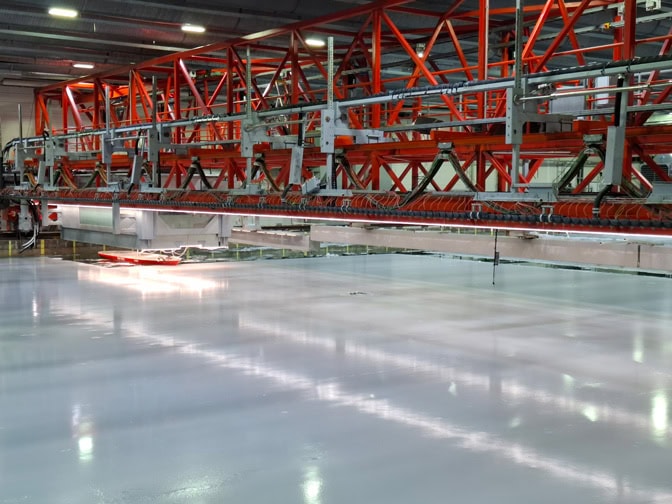
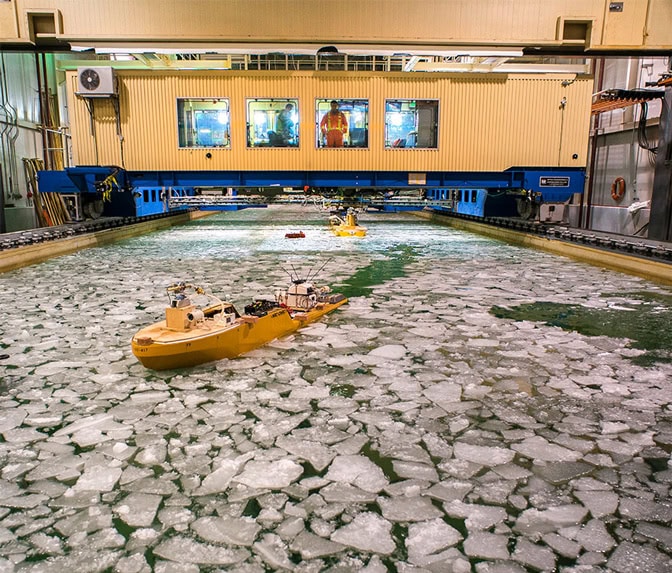
From Finland, Aalto University will provide their ice and wave tank, which is the world’s largest ice tank by surface area. Its 130-square-foot basin holds over one million gallons, and as the only wide ice tank with a wave maker, it uniquely allows researchers to evaluate how interactions between waves and sea ice impact a wider variety of ship maneuvers than is possible with a narrow towing tank.
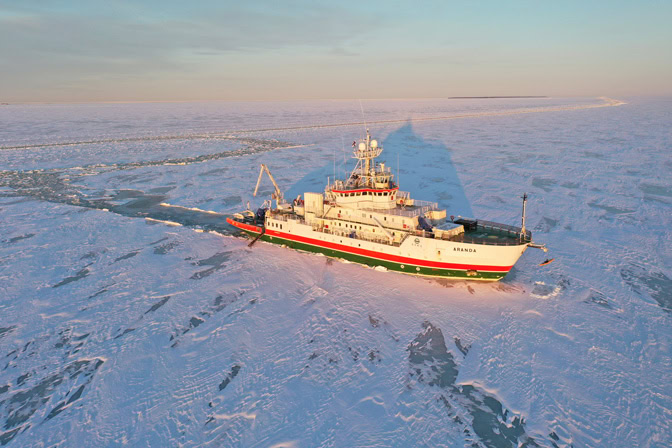
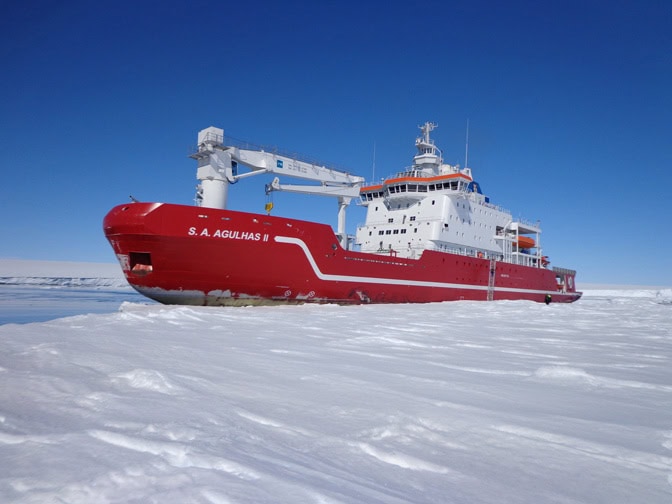
Meanwhile, VTT offers the research vessel Aranda, a tailorable, ice-faring ship for piloting maritime technology.
“Our full-scale validation capabilities ensure that the technologies we develop perform effectively in real-world Arctic environments,” said Teemu Manderbacka, an ICE-SHIELD representative and maritime research team leader from VTT and a professor of practice in energy and mechanical engineering at Aalto University.
From Canada, Memorial University leverages its Harsh Environment Research Facility, which provides large-scale, highly controlled lab conditions for researchers to test how ships and marine structures interact with lake ice, glacial ice, and sea ice. The facility also includes a cold-temperature, marine-icing wind tunnel with a wave basin, alongside facilities to determine how materials behave under cold temperatures.
The National Research Council of Canada’s Ocean, Coastal and River Engineering facilities will contribute one of the world’s largest ice tanks and advanced testing facilities, such as wave basins and tow tanks to simulate icebreaking, ship-ice interactions, wave dynamics, ship performance and offshore structures.
“Our facilities are unique in that we have three major basins for marine and arctic research, and we’ve tested the performance of most of the North American icebreakers, either as part of the procurement process or to understand how to improve the next design,” said Jungyong Wang, an ICE-SHIELD representative and senior research officer from the National Research Council of Canada.
By training students at their world-class facilities, the ICE-SHIELD members hope to not only enhance current capabilities, but future capabilities as well.
“We will create enriched training and exchange opportunities for our students and other team members to not only build our collective capacity but train the next generation of Arctic experts,” said Rocky Taylor, an ICE-SHIELD representative and a professor and associate dean of research of the Faculty of Engineering and Applied Science at Memorial University in Newfoundland, Canada.
“This will help ensure our countries remain global leaders in polar engineering for decades to come,” Taylor said.