Human exploration of Mars: National Academies give NASA their recommendations
A Michigan engineer who helped write the report explains the scientific community’s priorities for Mars exploration.

A Michigan engineer who helped write the report explains the scientific community’s priorities for Mars exploration.
Experts
NASA hired the National Academies of Science, Engineering and Medicine to identify the scientific community’s priority objectives for human study and exploration of Mars, as well as the types of measurements, samples and studies needed to complete the objectives. The Academies delivered their report to NASA on Monday, and it was made public yesterday.
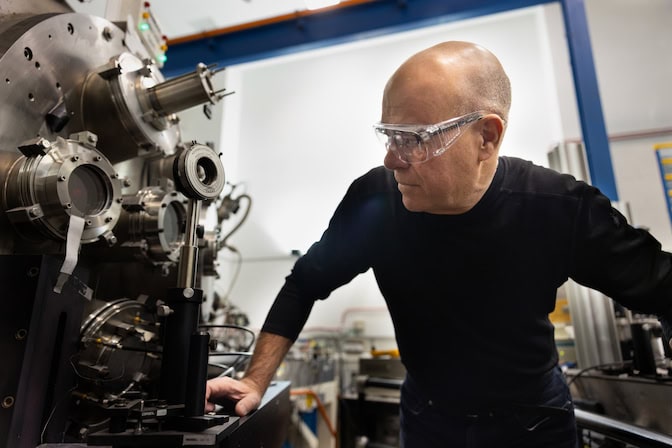
We discussed the Academies’ recommendations with Nilton Renno, a professor of climate and space sciences and engineering at the University of Michigan and a member of the committee that wrote the report. He was invited to contribute to the report because he was a member of the science team for the Phoenix lander mission—which collected water ice, watched snow fall and discovered evidence for liquid water brines on Mars. He has also been participating in the Curiosity rover mission—which found dried lakebeds that were likely habitable billions of years ago—and he has experience remotely detecting Martian dust storms.
The National Academy of Science recruited people within the scientific community to find out what the consensus is in terms of science priorities. Since NASA wants to send humans to Mars, we asked the question: what science should they do?
The report outlines the most important scientific questions that we think astronauts should try to answer. We also designed a series of campaigns to accomplish the objectives, and the committee voted to rank the proposed objectives and campaigns.
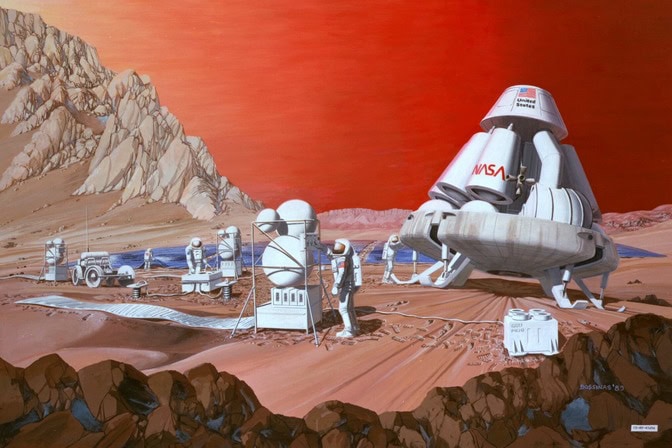
NASA’s tagline used to be “improve life on Earth, and search for life elsewhere.” That search has always been what drives our study of the universe, in my opinion, so the committee’s top priorities include looking for evidence of habitable zones on Mars, indigenous extant and extinct life, as well as chemistry that could lead to the formation of life.
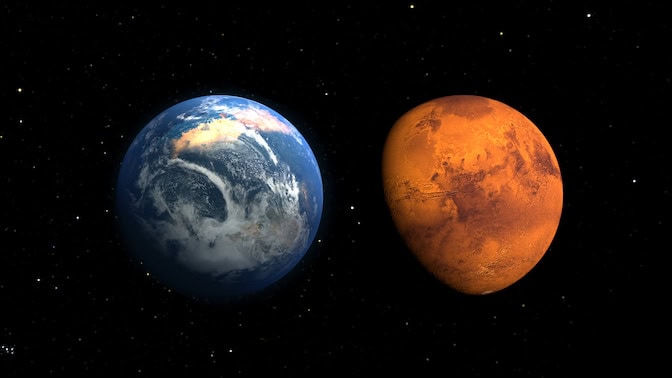
Mars offers the closest and most accessible means of exploring whether life can exist in a substantially different way than it does on Earth. It’s also a great place to understand how the habitability of a planet might change. Over the past four billion years, Mars’s climate has changed from warm and wet to dry and arid.
The committee also wants to collect data to better understand the current water cycle on Mars. That knowledge will help us know where and how much water is available for life, and how the reservoirs evolved. Human crews would also need to characterize the geology of exploration sites to find niche habitats and provide context on habitability.
As a scientist, I am interested in knowing how difficult it is for life to start on a planet. I think people are also generally interested in this research for philosophical reasons. We want to know whether we are alone in the universe.
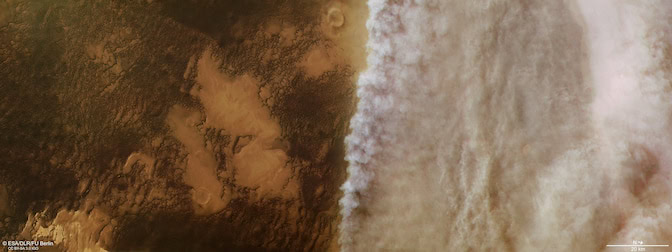
One of the highest ranking science objectives centered around Martian dust storms because of their implications on human-crewed missions. Mars can have global dust storms that make the surface completely dark, like midnight on Earth, for weeks or months. That could have huge impacts on the safety and psychology of astronauts, and we should understand the implications for human explorers before they go to Mars.
We have been studying Martian dust storms, but only from a few locations and not to the extent that humans could. So we don’t really know why they form or what controls their size. Some years, you don’t have any dust storms, and other years you have big global dust storms or smaller, regional storms. Understanding the triggers will help us make forecasts and warnings for astronauts to return to their base before dust storms develop. They could install meteorology towers that make measurements at the right locations to fully understand these storms.
It will also be important to understand the impacts of dust on equipment lifetime because dust gets in all the ball bearings and all the other equipment that moves. We already have indirectly studied the impacts of dust from previous missions to the Moon and Mars. The Apollo missions, for example, demonstrated that dust will pose serious problems to longer human missions. Human explorers could help better categorize the damage and explore solutions.
We will also need to find resources on Mars that can be used to sustain human life or make rocket fuel. This could make human missions to Mars more feasible because the astronauts wouldn’t have to carry all their supplies with them.
Our task was not to select landing sites, so we don’t focus on specific geographic locations. We did, however, discuss the types of sites that we recommend for exploration.
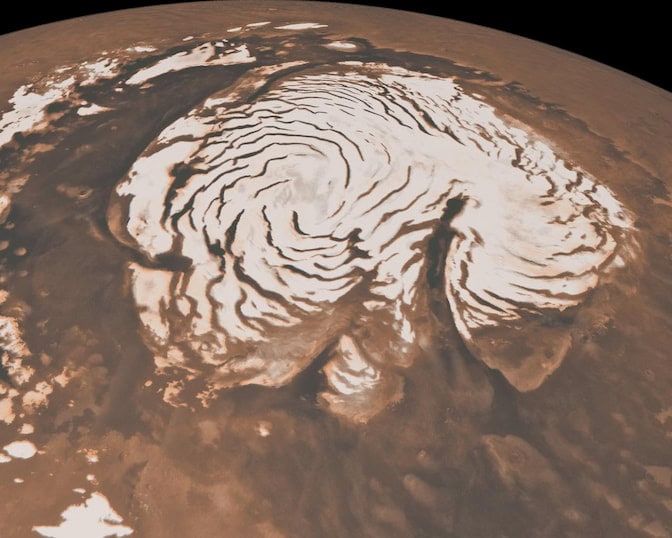
To look for life in other places, we should follow the water. Anytime we find water on Earth—it doesn’t matter how saline, how acidic, how cold, or how warm—we find life. On Mars, we can only have liquid water at the surface when it’s very salty, and the polar regions are where we are most likely to find reservoirs of salty, liquid water. But it’s possible to have liquid water with a low salinity tens of kilometers below the surface.
The question becomes, how should we prioritize these locations? Very high levels of salt are poisonous to most life on Earth, and exploring the polar regions will be difficult because of their cold temperatures. The surface of Mars also has high levels of solar and cosmic radiation that would make it hard for life to survive, so some members of the committee proposed drilling between three and six miles underground. The shallow subsurface or caves—which we can reach with current technology—could also be a good place to look for life.
I personally don’t think deep drilling is possible with the current space-faring technology, so we would have to develop the technology further to take that option.
The report does not consider human colonization of Mars. We were only tasked with outlining the science questions that should be answered by human explorers.
Personally, I’m not a big fan of the idea of colonizing Mars. I think it will be nearly impossible to make Mars habitable for humans. We cannot fool nature; Mars evolved the way it has because it’s the equilibrium state for the planet, and it’s likely that our attempts to terraform the planet wouldn’t last long. If we, for example, put lots of water into the Martian atmosphere to warm the planet up, it’s not going to last long because the UV radiation will destroy the water. The hydrogen will escape into space; the oxygen will oxidize things at the surface.
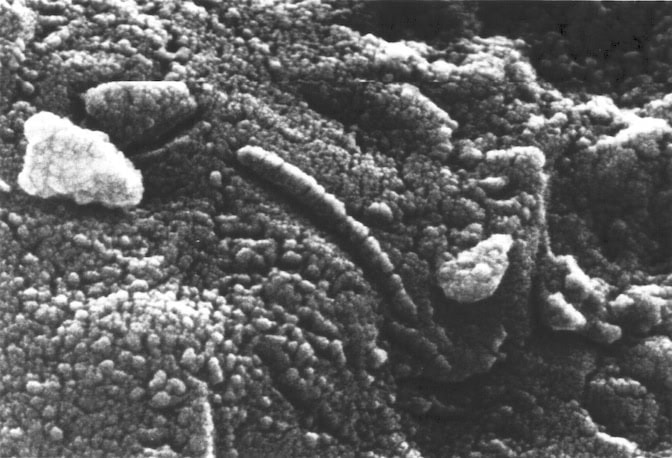
There is still value in exploring Mars, however. Finding evidence of life would be an exciting discovery because it would imply that life is present throughout the universe. I remember very well NASA’s now debunked discovery of life in a Mars meteorite in 1997. That announcement got a lot of attention from everyone. It was what originally got me interested in studying the climate of Mars.