U-Michigan’s new online engineering master’s program focuses on data and decision analytics
New master’s program can be done in-person or online with ‘no career breaks, no commute, no compromise.

New master’s program can be done in-person or online with ‘no career breaks, no commute, no compromise.
Numbers don’t lie, but there are layers to the answers they provide. A new master’s program, offered by the University of Michigan’s Industrial and Operations Engineering (IOE), offers a concentration in data and decision analytics designed to help unlock those layers for tomorrow’s engineering and business leaders.
The ability to dive deep beneath the surface with data leads to informed decision-making for better outcomes—a valued skillset in any area of the private sector. According to the U.S. Bureau of Labor Statistics, data analysts earn a median annual salary of $112,590. And the bureau predicted data analytics, as a field, will grow 34% between 2024 and 2034.
“As companies continue to integrate advanced analytics into their global operations, the demand for professionals that can bridge the gap between heavy data science and practical business execution has never been higher,” said Mike Miller, COO of international at Toast, a cloud-based management company for restaurants. “The University of Michigan’s new master’s, with its focus on data and decision analytics, tackles this workforce gap head-on with a highly-relevant, applied curriculum.
“I am thrilled to see the IOE department stepping up to develop the exact kind of analytical problem-solvers the industry needs to drive sustainable innovation.”
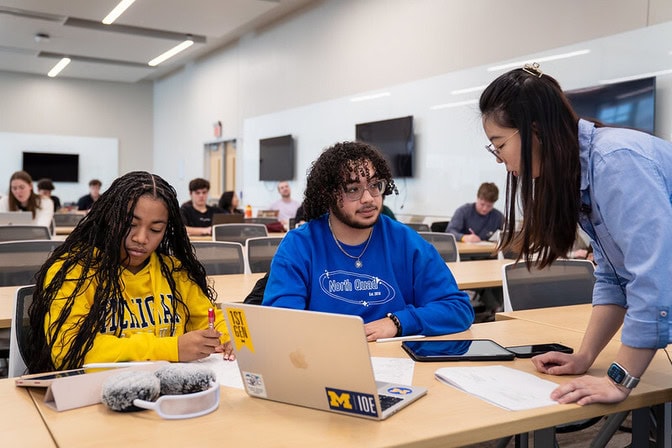
The depth of analyses industrial engineers are capable of has been enhanced by the proliferation of artificial intelligence (AI) and other tools.
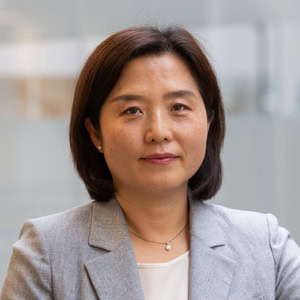
“This program is designed for students and professionals who want to combine strong engineering foundations with modern AI, machine learning and data analytics skills to solve complex, real-world problems,” said Eunshin Byon, a professor of industrial and operations engineering and IOE’s director of master’s programs. “Graduates will be well-positioned to lead data-informed innovation efforts, develop intelligent systems and contribute to the digital transformation occurring across manufacturing, healthcare, mobility, energy and other sectors.”
The 26-credit Master of Engineering (MEng) program with a concentration in data and decision analytics provides students a comprehensive understanding of predictive analytics, prescriptive analytics and their applications. Courses are offered in-person and online. Full-time students can complete it in two semesters and students have the flexibility to use up to five years to complete the degree.

“We’re filling in the gaps in skills that are in great demand in industrial engineering right now,” said Siqian Shen, a professor of industrial and operations engineering and the department’s upcoming associate chair for graduate education. “Nationally, there are a lot of engineering and business programs focused on data science and analytics—how to capture and analyze data to understand the market, and predict things like demand and supply.
“But we don’t necessarily see programs that take that further to answer questions like: How do you translate what you come up with into strategic decisions? How do you find your suppliers, design your supply chain, locate your facilities, and optimize operations using data-driven approaches?”
The core curriculum includes these courses:
Elective courses include:
The new master’s program with the focus on data and decision analytics expands on more than 70 years of education in the industrial and operations engineering space at U-M. After establishing the Department of Industrial Engineering in 1955, the program began offering its first master’s degree in 1957.
“We have a lot of alumni who went into the industry after earning their undergraduate degree, but have realized their job requires additional analytics skills,” Shen said. “For many, the solution has been going to business schools, but those curriculums include courses that aren’t necessary for engineering.”
“Designed with flexibility in mind, our new degree program also allows students to earn their degree entirely online — no career breaks, no commute, no compromise.”