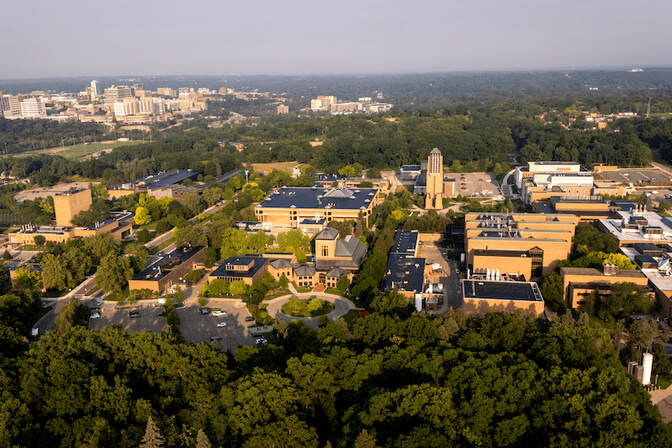
Ten early-career engineers earn NSF CAREER awards
The rising researchers will lead projects including smart bandages for monitoring wounds, improved air traffic management and real-time tumor tracking.

The rising researchers will lead projects including smart bandages for monitoring wounds, improved air traffic management and real-time tumor tracking.
Ten faculty members from University of Michigan Engineering received National Science Foundation CAREER awards—a prestigious award that supports early-career faculty identified as future leaders in their field—in the 2025 funding cycle.
The University of Michigan ranks one of the top nationally, with 15 CAREER awards university wide.
“These awards recognize visionary faculty members whose research holds great promise for advancing solutions to some of today’s most pressing challenges,” said Todd Allen, associate dean for research at U-M Engineering and the Chihiro Kikuchi Collegiate Professor of Nuclear Engineering and Radiological Sciences. “They also exemplify the breadth of the impacts engineering can have on society, from improving health, air traffic control and AI to uncovering foundational mathematical principles.”
The recipients are:
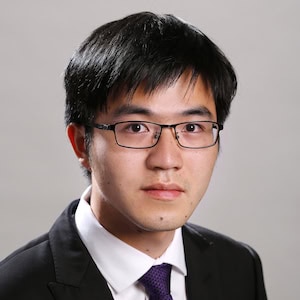
Changxiao Cai, an assistant professor of industrial and operations engineering, for the project titled, “Towards Theoretical and Algorithmic Foundations of Diffusion Models.” Cai’s research aims to make diffusion models—a foundational technology behind many emerging generative AI applications—more efficient, reliable and broadly applicable. Understanding the mathematical principles that determine how diffusion models behave can provide new insights into the computational and statistical behavior of generative AI models, supporting the development of future applications. Read more from IOE.
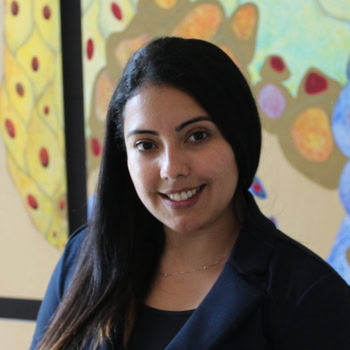
María Coronel, an assistant professor of biomedical engineering, for the project titled, “Decoding chronic wound trajectory through real-time biomaterial-mediated cytokine sensing.” Coronel’s project will develop a smart, biomaterial-based wound dressing to track cytokine activity inside wounds in real time. The data will contribute to the long-term goal of informing when and how to intervene to resolve chronic immune activation during wound healing. Read more from BME.
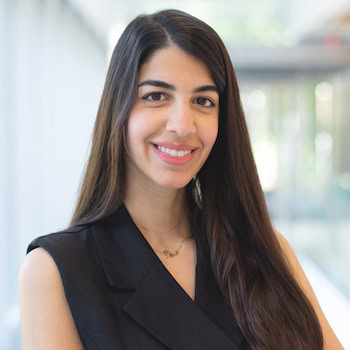
Aline Eid, an assistant professor of electrical and computer engineering, for the project titled, “Injectable transponder for precise radiotherapy tumor targeting and dosimetry.” Eid aims to develop a minimally invasive implantable device that can be powered by X-ray beams during radiotherapy cancer treatments. The device will provide real-time feedback of tumor location and radiation dose, improving treatment accuracy and patient safety. Read more from ECE.
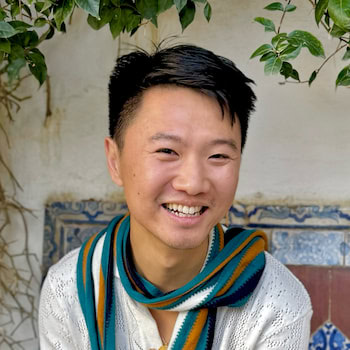
Max Li, an assistant professor of aerospace engineering, civil and environmental engineering and industrial and operations engineering, for the project titled,”Proactive and practical management of air traffic disruptions.” Li is working to improve how air traffic disruptions are anticipated and managed by developing more proactive training and practical decision support. The project will introduce new ways to apply advanced decision-making methods to data on rare and severe disruptions to identify effective response strategies under uncertainty. Read more from AERO.
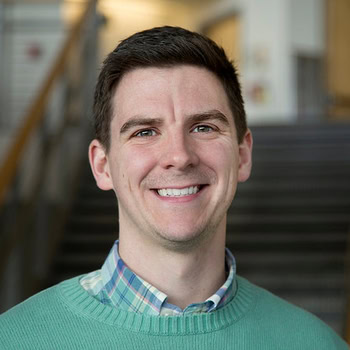
Aaron Morris, an assistant professor of biomedical engineering, for the project titled, “Deciphering T cell reprogramming – Toward biomanufacturing of regulatory T cells.” Morris will work to recreate key features of lymphoid tissues outside of the body to advance new strategies for immune cell therapies. These engineered tissues will help the research team uncover the formation of regulatory T cells, which mitigate runaway inflammation. These advances take a step towards harnessing regulatory T cells to treat diseases associated with chronic inflammation like diabetes, Alzheimer’s, asthma and heart disease. Read more from BME.
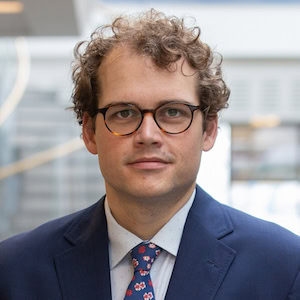
Max New, an assistant professor of computer science and engineering, for the project titled, “Foundations and verification of parsers and type checkers.” New’s goal is to develop mathematical foundations and tools to verify the correctness, safety and security of parsers and type checkers. These critical software components process inputs and determine whether programs are well formed. As more software is generated by AI systems, this mathematical tool will ensure code is secure while alleviating the burden of human manual review. Read more from CSE.
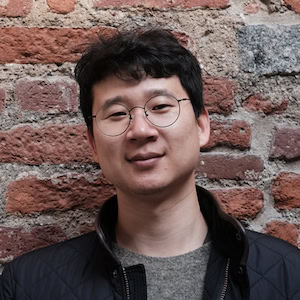
Jeong Joon Park, an assistant professor of computer science and engineering, for the project titled, “Generative 4D simulation with physical constraints.” Park is working to improve AI systems that predict how 3D environments change over time by increasing computational efficiency and ensuring they adhere to laws of physics. The project plans to apply advances to medical imaging, specifically to predict real-time tumor movements to support targeted therapy. Read more from CSE.
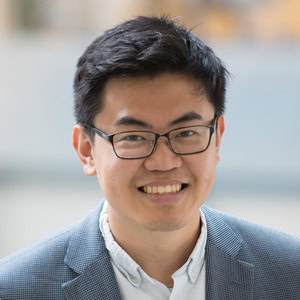
Wenhao Sun, an associate professor of materials science and engineering, for the project titled, “Predicting the synthesis and synthesizability of metastable epitaxial thin films.” Sun’s award will support theoretical and computational research to make thin films with desired properties. Thin films—used in computer chips, sensors, displays, solar cells, energy devices and more—gain properties based on which crystal structure forms during synthesis. The computational tools developed will help predict how to manage this complex process to yield thin films that remain stable during operation. Read more from MSE.
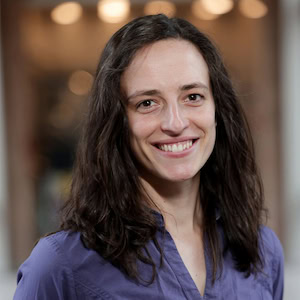
Nicole Wein, an assistant professor of computer science and engineering, for the project titled, “Paths in graphs: Structural primitives and algorithmic advances.” Wein will lay theoretical foundations of algorithmic problems involving paths in graphs, which can represent everything from transportation routes and chemical reaction pathways to information movement through a digital or social network. The project will aid future AI research through a better understanding of paths in graphs and the simplification and processing of large graphs that are common in modern applications. Read more from CSE.
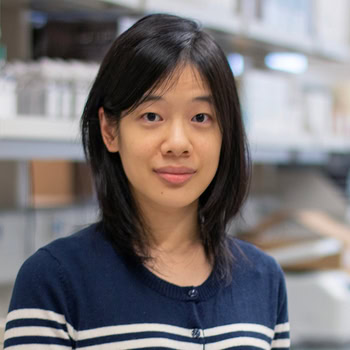
Connie Wu, an assistant professor of biomedical engineering and pharmaceutical sciences and a research assistant professor in the U-M Life Sciences Institute, for the project titled, “Expanding the dimensional and multiplexing frontiers of ultrasensitive single-molecule protein detection.” Wu will work to develop ultrasensitive tools to measure low abundance proteins and their activities. The new technologies will help researchers and clinicians to maximize the biological information gleaned from valuable samples, helping accelerate the discovery of key proteins involved in disease processes. Read more from BME.
For faculty members preparing NSF CAREER proposals for the next funding cycle’s July 28, 2027 deadline, the Office of the Associate Dean for Research’s Research Development Team is committed to supporting competitive proposals. From interactive workshops to tailored one-on-one proposal support, including proposal management, strategy and broader impacts consultations, editing, and graphics, the Research Development team encourages eligible Michigan Engineering faculty to take full advantage of their services. Contact the Research Development Team at [email protected] to learn more and schedule a consultation.