Making Michigan’s wildland firefighting trucks in Roscommon: Dave Stockoski
A University of Michigan Engineering alum is helping to protect forests from wildfire in Michigan and beyond.
STORY AND PHOTOS BY:
Summary
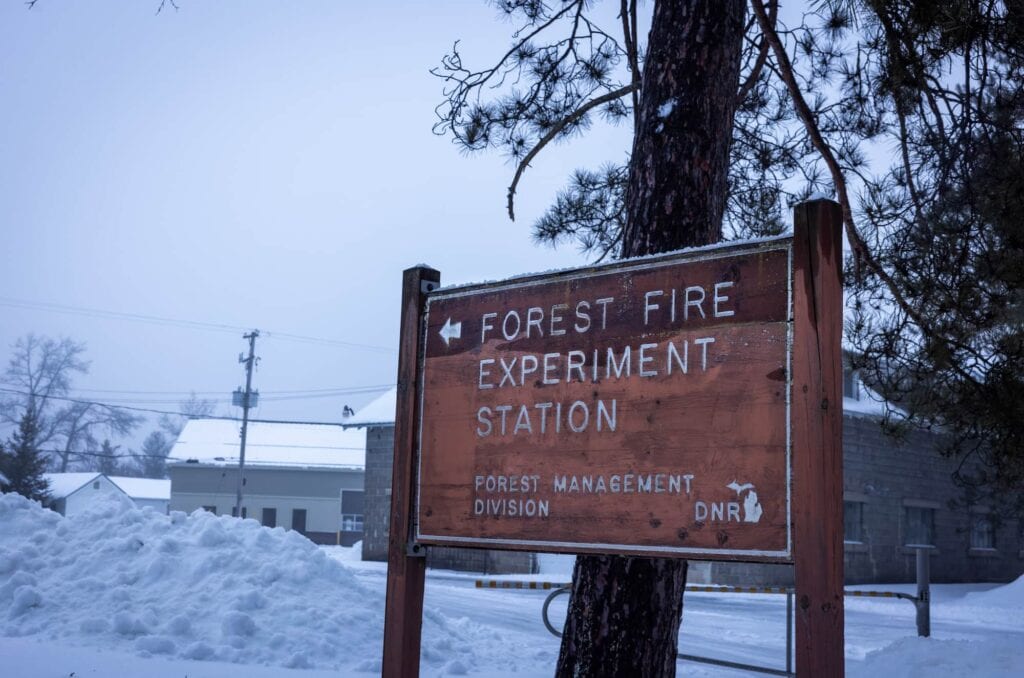
- Dave Stockoski is engineering manager at the Michigan Department of Natural Resources’ Forest Fire Experiment Station, established in 1929 as the first U.S. facility dedicated to fire control research and equipment development.
- Stockoski, who is also a volunteer firefighter, leads a team that customizes heavy-duty, off-road firefighting trucks used in Michigan and around the nation to get firefighters to hot spots deep in the woods.
- The team maintains a fleet of 100 wildland engines and other equipment that’s used in more than 300 fires a year in Michigan, helping to protect forests, homes, people, water and wildlife.
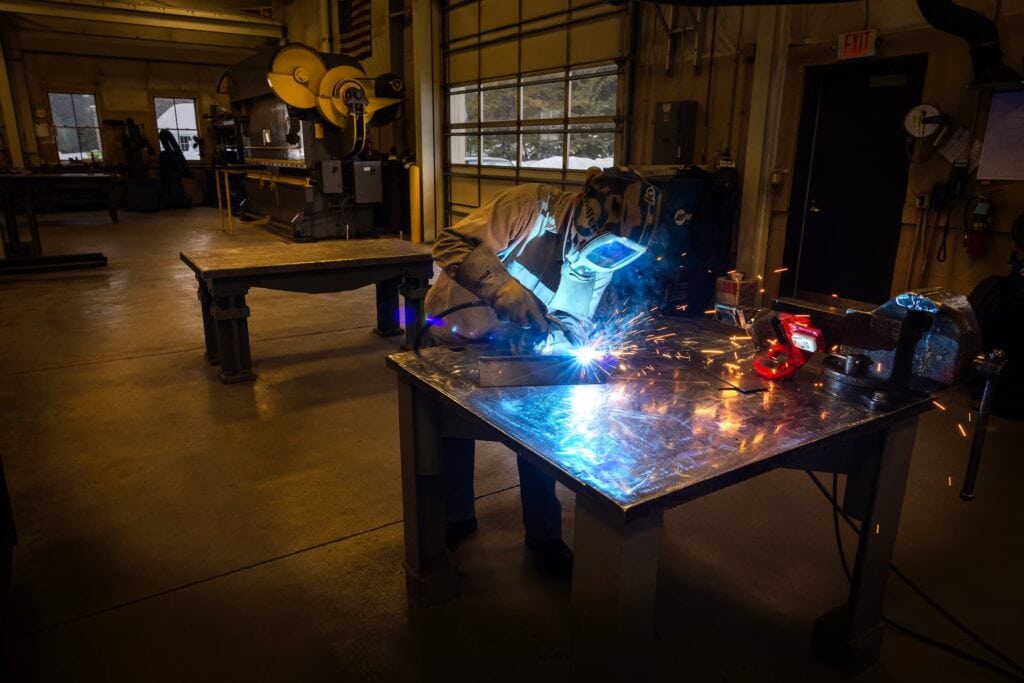
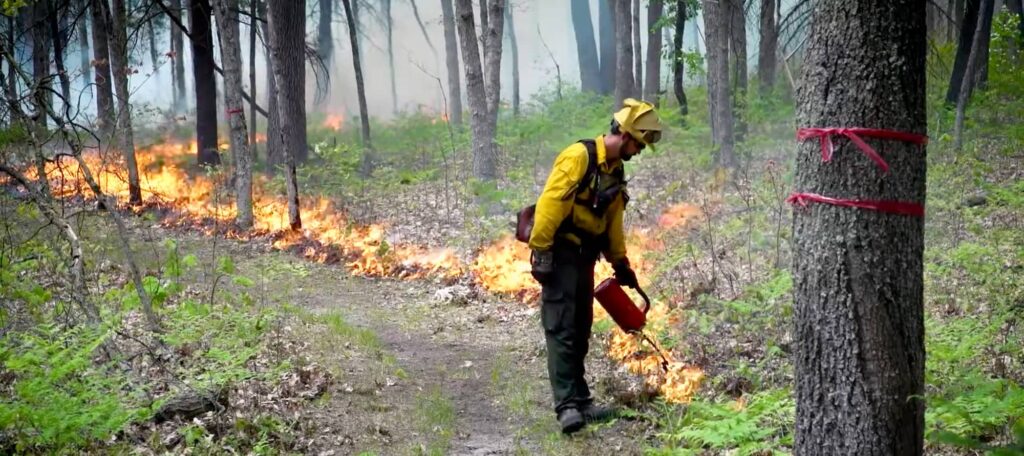
On Saturday, June 3, 2023, a small campfire on private property near Grayling, Michigan, erupted into a raging forest fire, carving a path of destruction across Crawford County. What began as a spark quickly grew into a 2,400-acre wildfire, forcing evacuations, shutting down stretches of I-75, and threatening dozens of homes—along with the pristine waters of the Au Sable River.
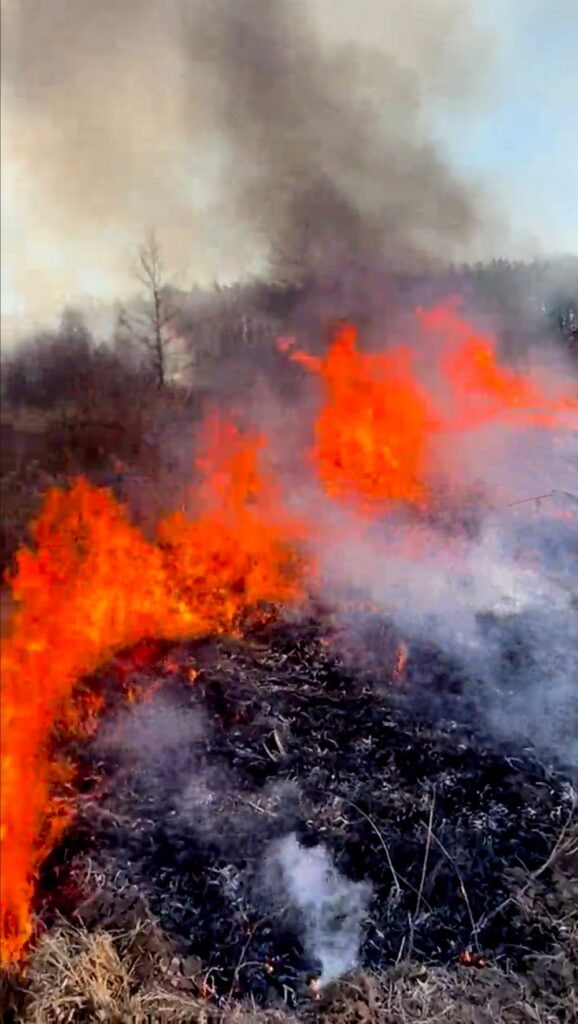
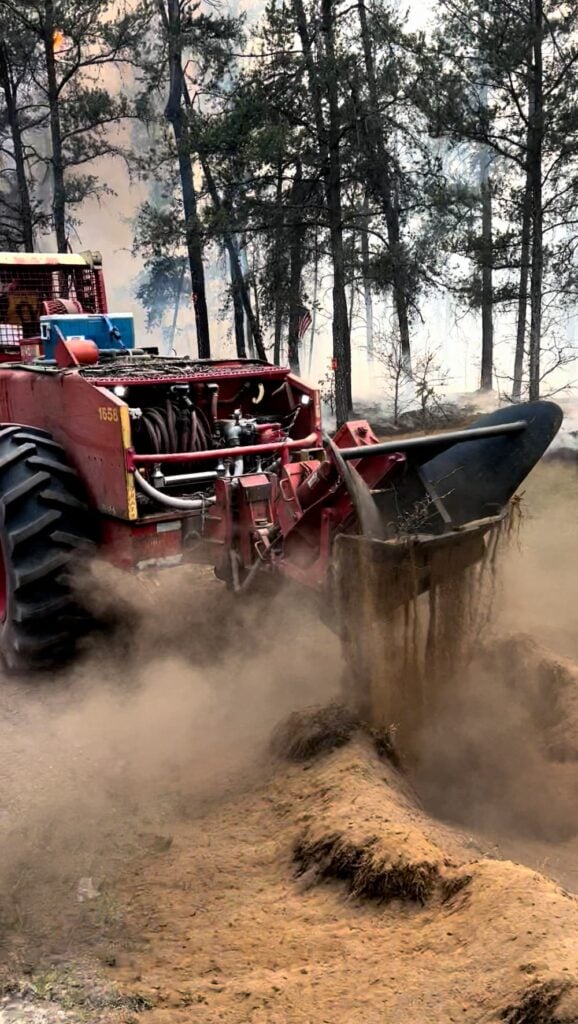
Michigan’s forests are more than scenery. They drive tourism, support wildlife habitats, provide lumber, sustain rural economies and define the character of the state. As wildfire risk increases due to changing climate conditions, rapid and effective response becomes essential.
Crews from the Michigan Department of Natural Resources (DNR) battled the Grayling blaze through the night before finally containing it. Many of the trucks used in the fight had been adapted just miles away at the DNR’s Forest Experiment Station in Roscommon.
That work is led by engineering manager and Michigan Engineering graduate Dave Stockoski (BS CHE ‘97).
Wildland engines fight 300 Michigan fires a year
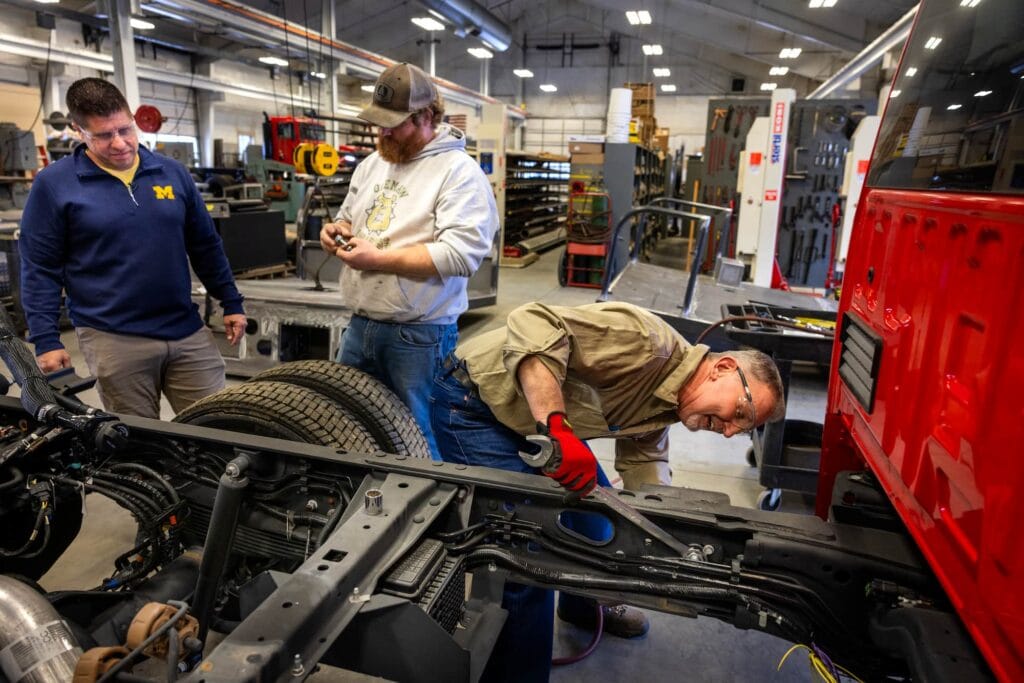
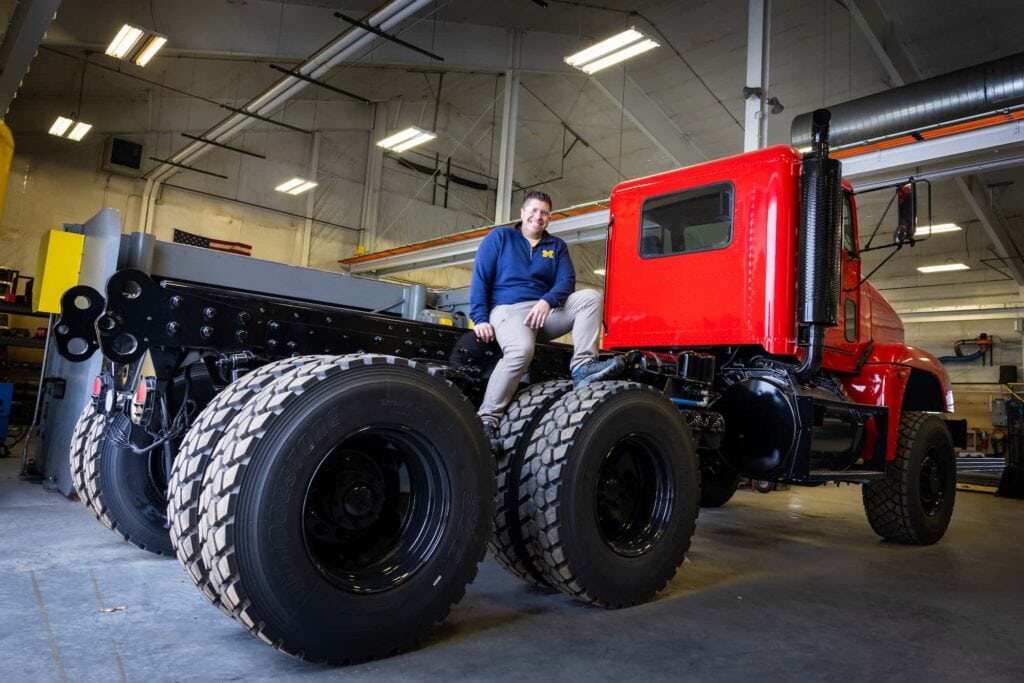
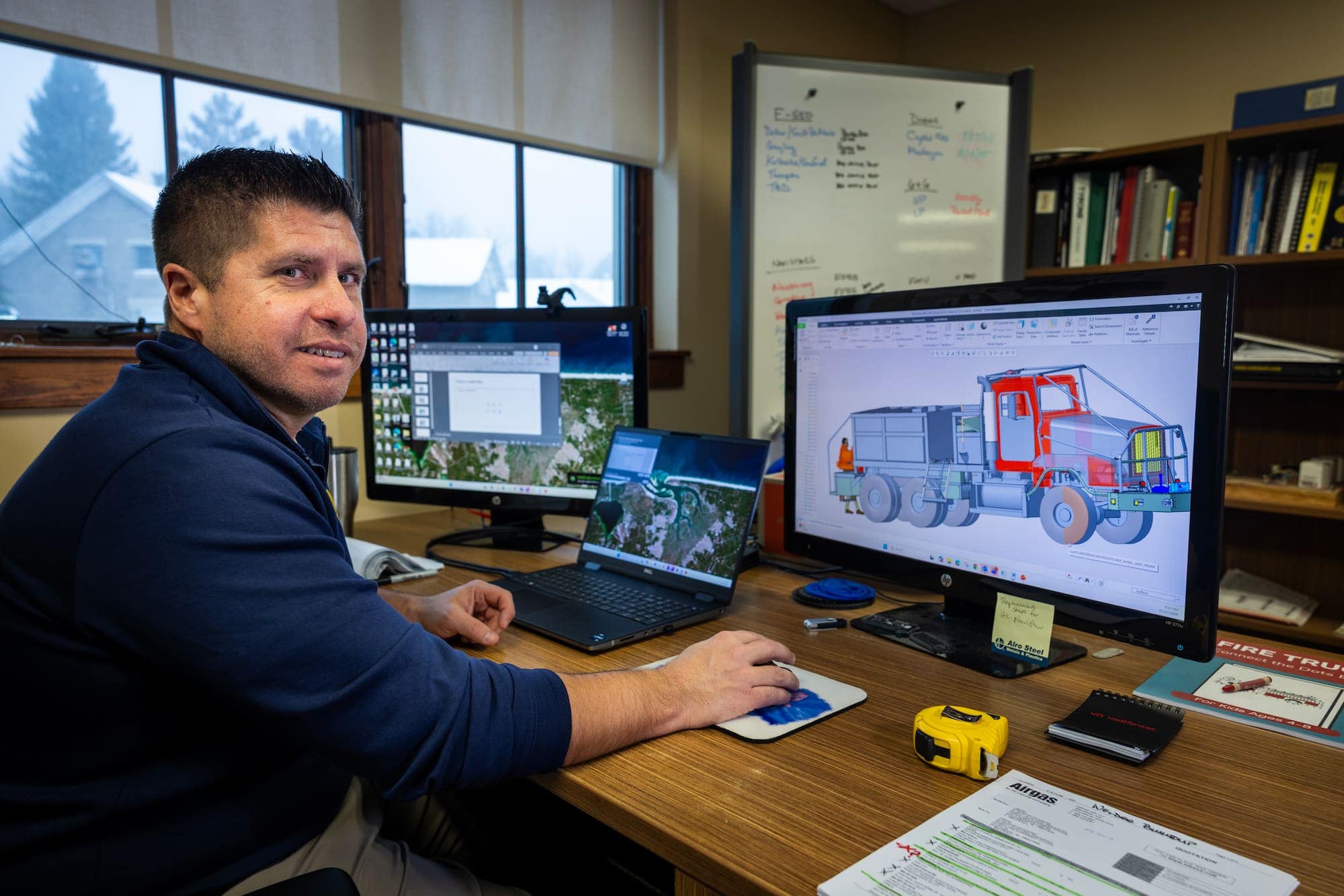
Stockoski, a U-M chemical engineering alum, heads a DNR team that designs, sources, adapts and manufactures the state’s 100-vehicle fleet of wildfire suppression equipment. It’s the first line of defense between Michigan’s forests and the growing threat of wildfire. The Roscommon wildland engines are used in more than 300 fires a year in Michigan, helping to protect forests, homes, people, water and wildlife.
In a typical year, the station builds an average of six new pieces of equipment and repairs 30–40 additional pieces, including trucks, tractors, and plows used by the Michigan Department of Natural Resources and the U.S. Forest Service. Many of the workers, including Stockoski, also work as volunteer wildfire fighters.
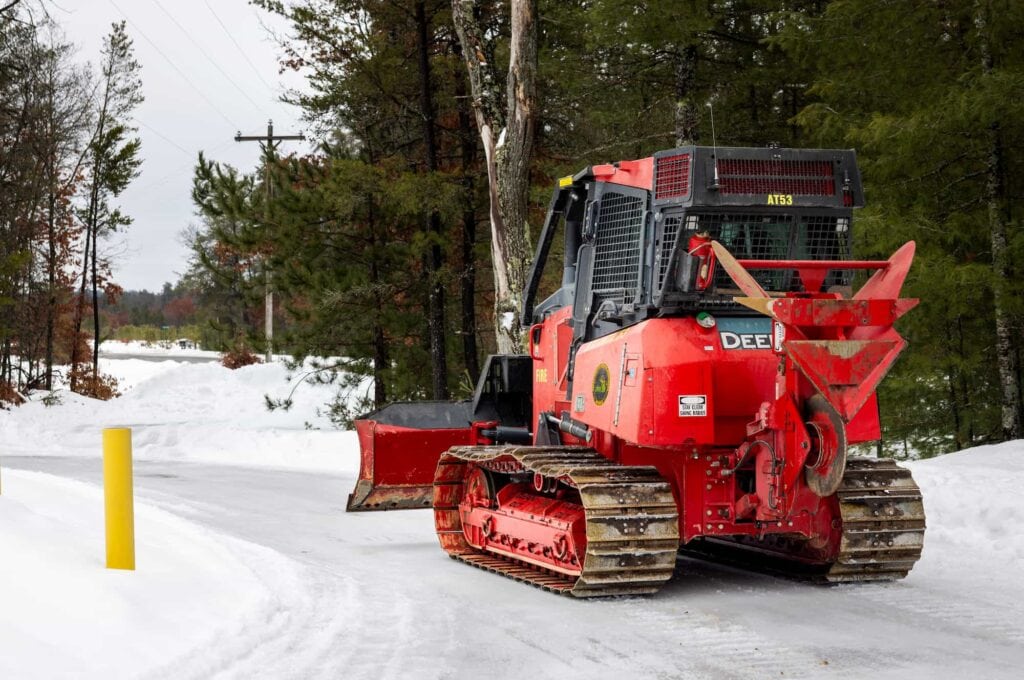
“Up here, if there’s a fire, you’ll probably see us,” Stockoski said. Each truck is purpose-built; unlike municipal fire engines, they must navigate sandy trails and dense forest carrying extensive equipment and hundreds of gallons of water.
“We have to get into the middle of the fire and put out the hot spots,” said Raymond Delaney, a DNR forest fire officer. “Regular trucks aren’t designed to go into the woods. Dave’s shop builds the equipment that lets us do that.”
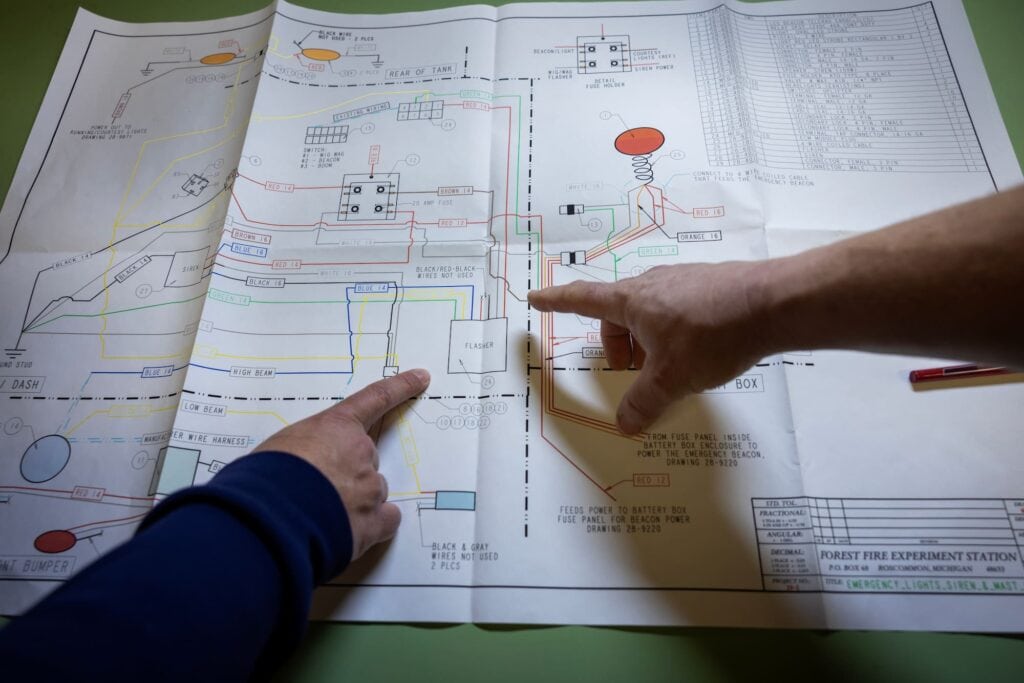
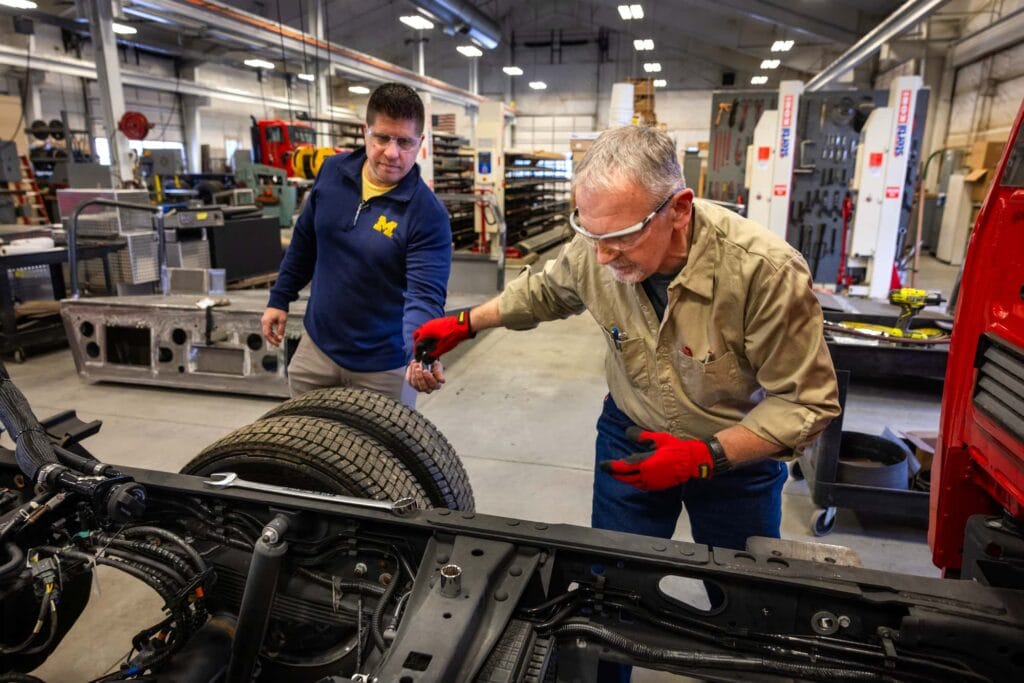
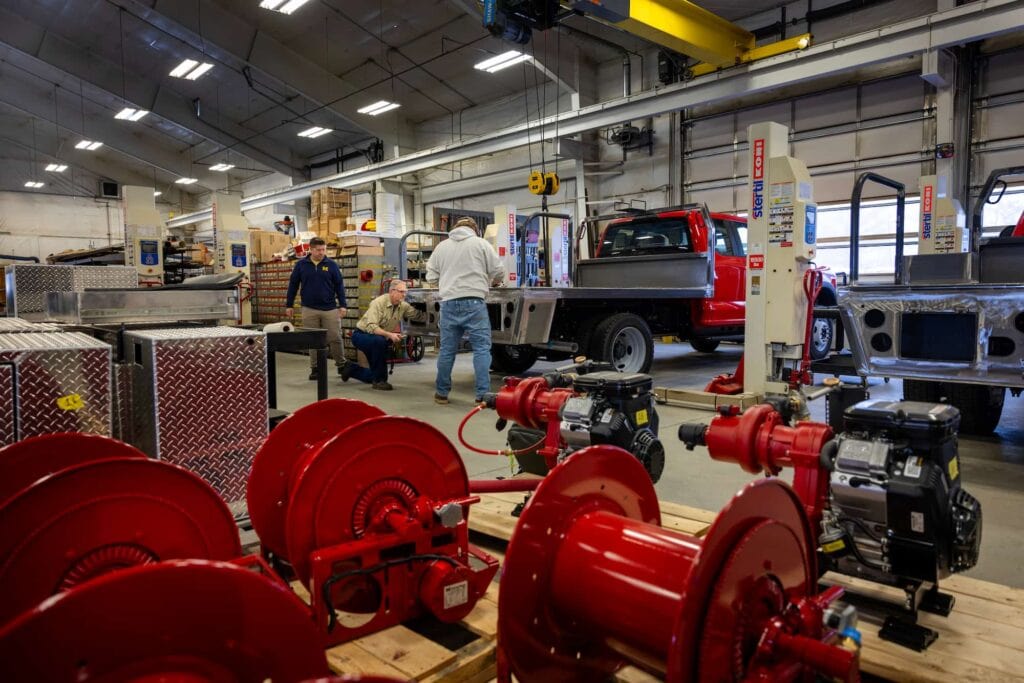
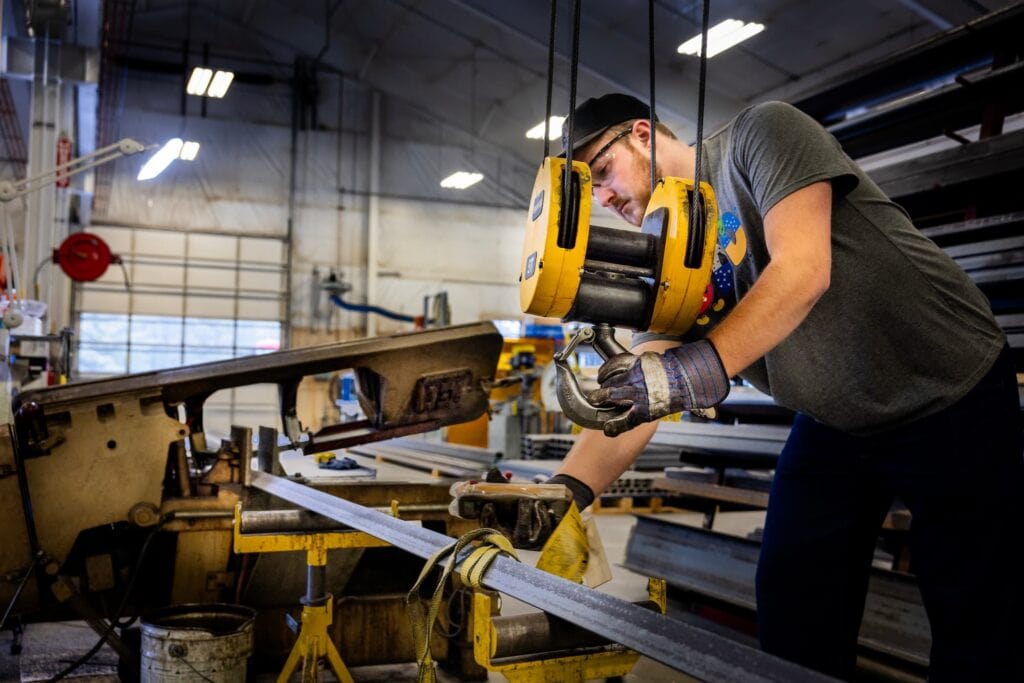
In the shop, every bracket, guard, and mounting system is considered carefully. How quickly can a firefighter access equipment? How will the truck handle uneven ground? How will it perform under stress?
These decisions influence real-world outcomes. And Stockoski is ultimately responsible for the design of the final products and the team that makes them.
“And besides, I get to work and live where people go on vacation,” he said.
First-of-its-kind fire station has impacts beyond Michigan
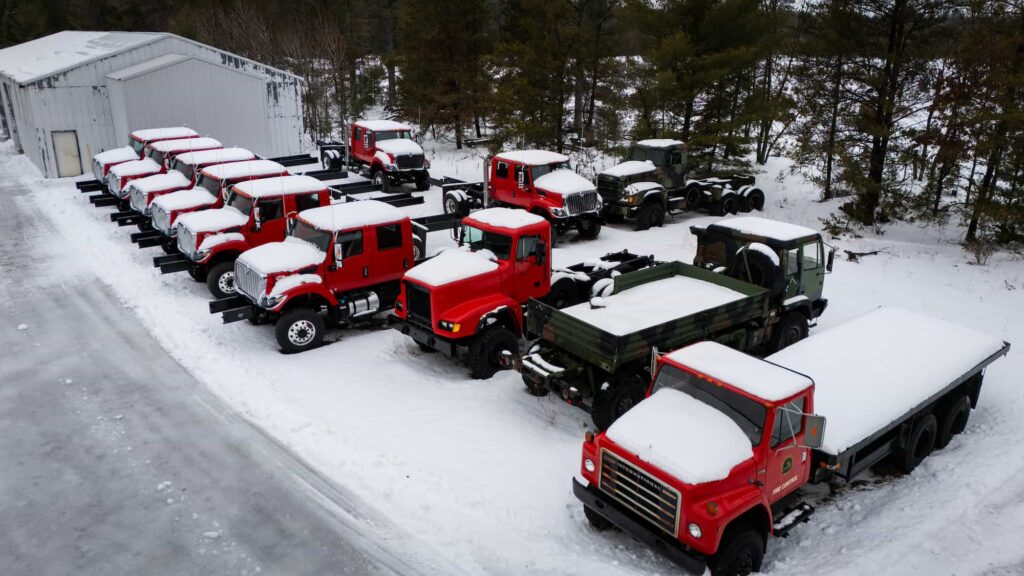
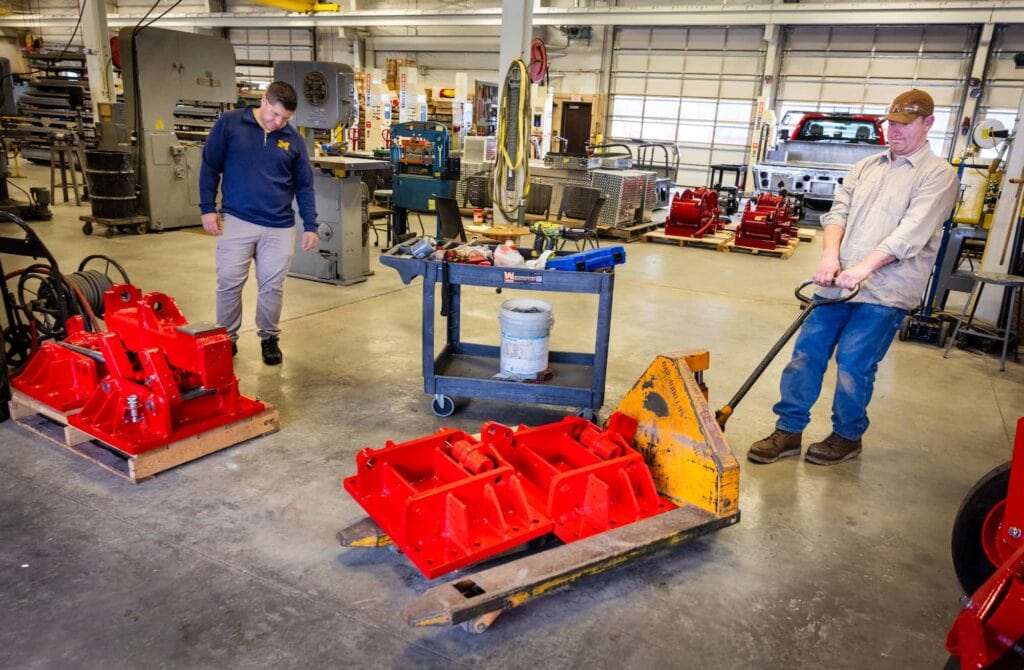
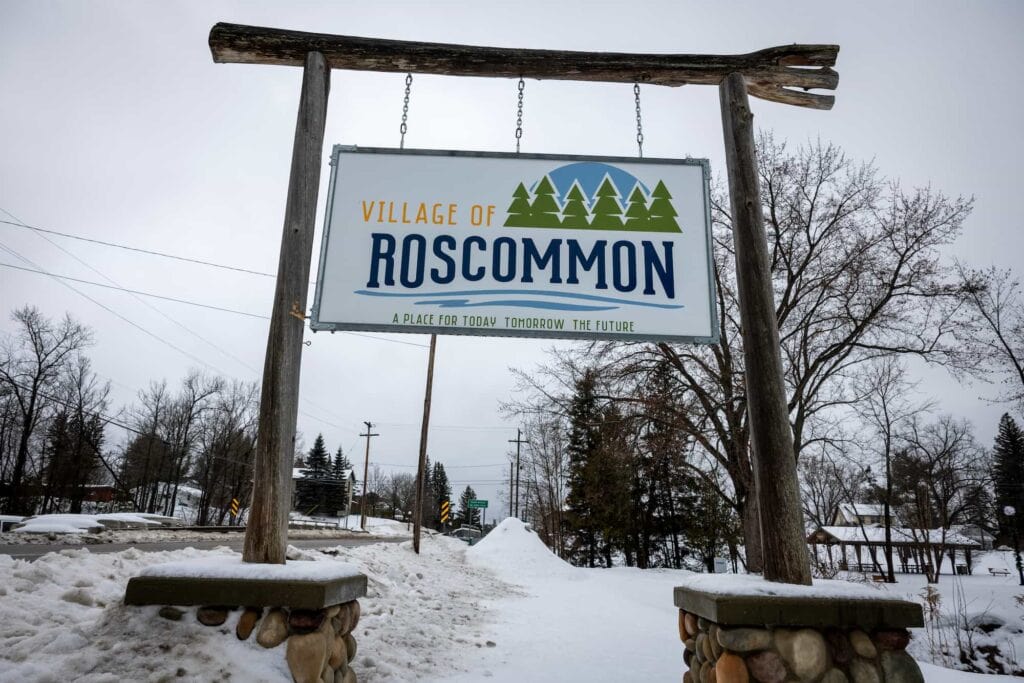
Established in 1929, the station was the nation’s first facility dedicated to fire control research and equipment development. It invented many of the tools that wildfire fighters around the country use today. One of its most significant contributions is the hydraulically operated fireline plow, which digs deep trenches around fires that flames can’t cross.
The station’s work directly supports the protection of local homes and Up North cabins, ecosystems, and livelihoods.
While most of the fleet stays in the state, ready to be deployed if needed, the station routinely sends equipment and personnel to other places for support. When smoke from fires in Minnesota and Ontario in mid-July gave Southeast Michigan the world’s worst air quality, four staffed engines were on assignment in Minnesota and five were out West, said Paul Rogers, DNR fire prevention specialist.
He uses his engineering education every day
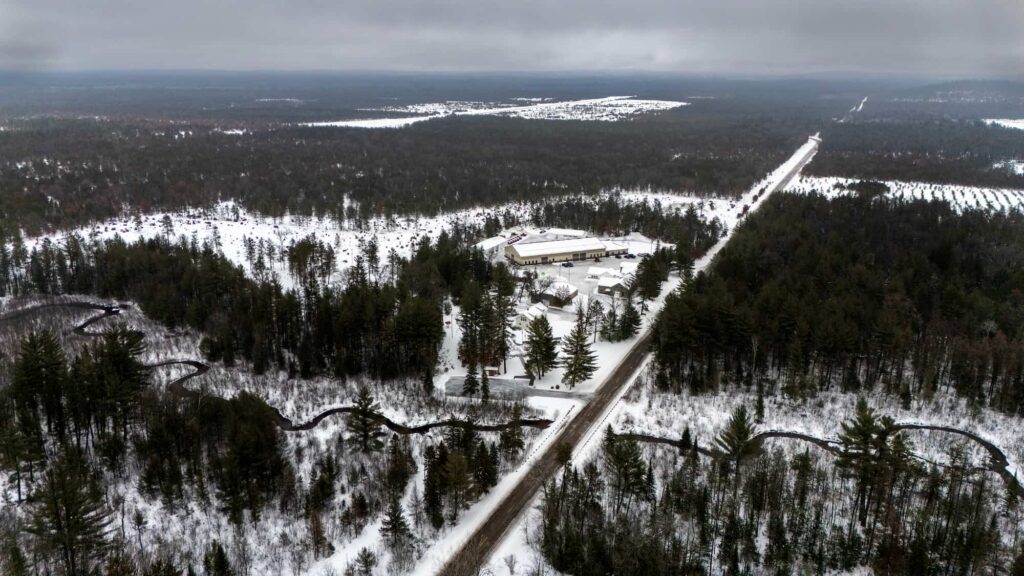
Stockoski draws on decades of engineering experience, including time in the nuclear services industry and nearly twenty years in automotive manufacturing.
At Michigan Engineering, he learned to break down complex systems, analyze variables and quantify risk. The rigor of the curriculum demanded precision, accountability, and resilience. Working with other engineering students gave him an appreciation of other peoples’ viewpoints. Those are skills he uses every day on the job.
“You’re doing a good thing when people are proud of what you’ve delivered,” Stockoski said. “For an engineer, that’s priceless.”
Michigan is home to the nation’s third-largest engineering workforce and second-highest concentration of engineers, according to the Bureau of Labor Statistics’ 2025 data. Only California and Texas employ more engineers. In Michigan, 29.5 out of every 1,000 jobs areheld by an engineer, nearly twice the national average. University of Michigan Engineering has played a major role in developing this talent, with at least one in five of the state’s 130,000 engineers holding Michigan Engineering degrees.