

Poll shows older drivers aren’t planning for post-driving futures
Resources are available to help older drivers and their families figure out mobility when driving becomes unsafe, but many people aren’t aware.
Video transcript
Renée St. Louis: Our poll shows that older Michiganders are highly confident behind the wheel, but haven’t taken the steps to prepare for how their driving needs may change over time.
Hi, I’m Renée St. Louis, and I’m an assistant research scientist and head of the Behavioral Sciences Group at the University of Michigan Transportation Research Institute. Along with my colleague, Dr. David Eby, we partnered with Michigan Medicine to conduct a poll for older adults related to transportation, health issues and planning for the road ahead.
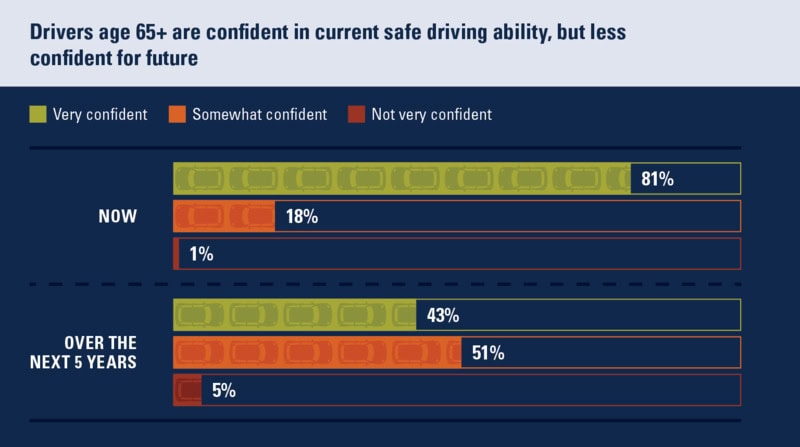
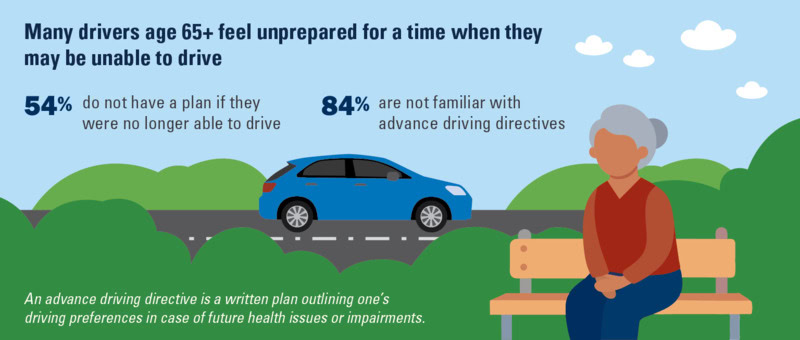
One of our major findings was that people report being pretty confident in their driving abilities. But then when we asked about if they had a plan for a time when they no longer may be able to drive or may not feel comfortable driving, far fewer people reported that they have a plan in place.
Why this is important to have a plan is because driving abilities can quickly change, could be due to a new medical condition or a diagnosis. It could be even due to medication. But planning in advance helps to make these transitions a lot smoother.
So by understanding the options available, including tools like advanced driving directives, older adults and their families can make thoughtful decisions before a crisis occurs.
So ultimately, our goal is really to help Michigan’s older drivers stay safe, independent and well supported on the road.
Among people age 65 and older, 84% drive at least once a week, and 62% drive most days, according to a new University of Michigan national poll. However, less than half of these older drivers have made a plan for when their physical and cognitive health make driving unsafe.
Even fewer know they could create a formal plan for stepping away from the driver’s seat when the time comes. And very few have talked with a health care provider about driving as it relates to their health.
The U-M National Poll on Healthy Aging surveyed thousands of adults between the ages of 50 to 97 on their driving habits and plans. The group also surveyed Michiganders to discover how our state compares to the rest of the country.
While Michiganders drive at similar rates—85% of older residents drive at least once a week—we are more confident. Nationally, 81% of older adults are very confident in their current driving ability, and it’s 90% in Michigan. Perhaps following from that, we’re less likely to have a plan for when to stop driving—39% versus 46% nationwide.
In Michigan and nationally, roughly 15% of older drivers have heard of “advance driving directives,” a document that helps a person indicate their driving preferences in case of future health issues, and identify a person to help with decisions about stopping driving. But once they were given this definition, 70% said it was very or somewhat important to have one.
“The freedom to drive where you want, when you want, is a critical part of independent living for older adults, and when it’s diminished for any reason it can have profound effects,” said Renée St. Louis, a researcher at the U-M Transportation Research Institute (UMTRI), who worked with the poll team and her colleague David W. Eby to develop the poll and its report.
“With most of the Baby Boom generation now in their mid-60s and above, we have millions of older drivers who will need guidance and alternatives as their health begins to affect their ability to drive safely,” she added.
That includes informal support from family and friends, and formal support from public transportation and community-based services, said Eby.
Already in the past six months, whether they currently drive or not, 44% of older adults have received rides from friends or family and 21% have used rideshare services including taxis and private vehicles hailed by apps such as Uber and Lyft. Just 14% used public transportation.
But 5% said ridesharing is not available where they live, and 9% said public transportation isn’t available. St. Louis and Eby note that the poll findings have implications for organizations that provide services to older adults, and for local, state and federal policymakers around the country.
Making community transportation services for older adults more available or accessible, and spreading awareness of services that already exist, could help more older adults maintain independence while choosing to leave the driving to someone else, they said.
UMTRI has teamed with the state of Michigan to create a website for older drivers, their families and the professionals who provide health care and other services to them. The site provides resources to support older driver safety and mobility, as well as guidance for families and professionals on transitioning away from driving.
Called Safe Drivers, Smart Options, it includes a downloadable guide for aging drivers and their families in English, Spanish and Arabic.