Cultivating Michigan’s cherry heritage in Traverse City: The Lyon family
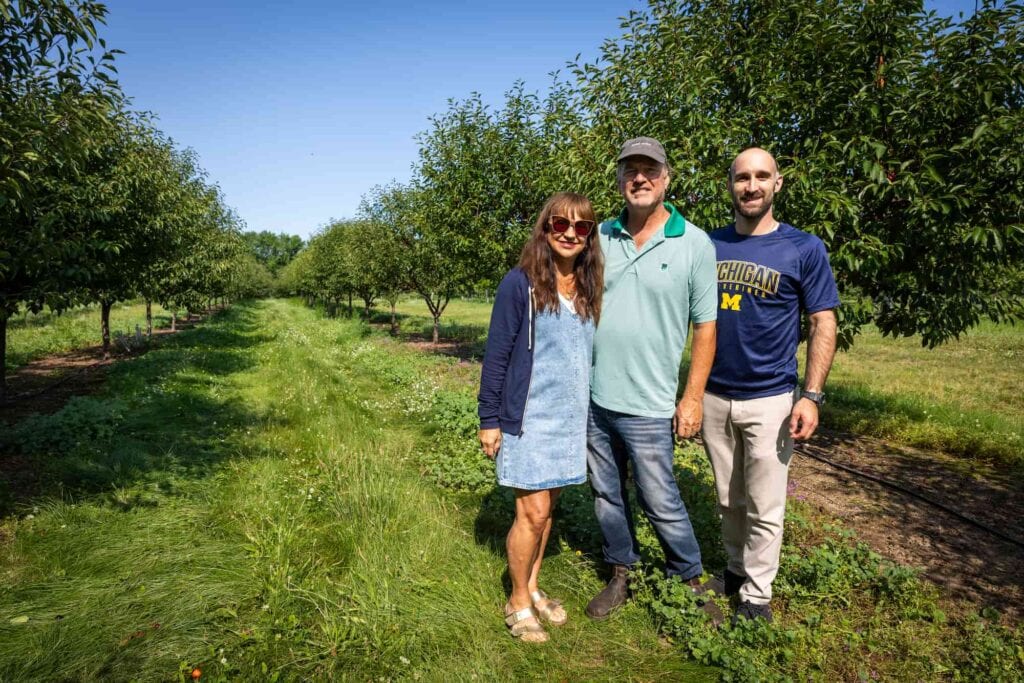
John, Gloria and Chris Lyon are University of Michigan Engineering alumni bringing an engineer’s mindset to a five-generation fruit farm.
STORY AND PHOTOS BY:
Summary
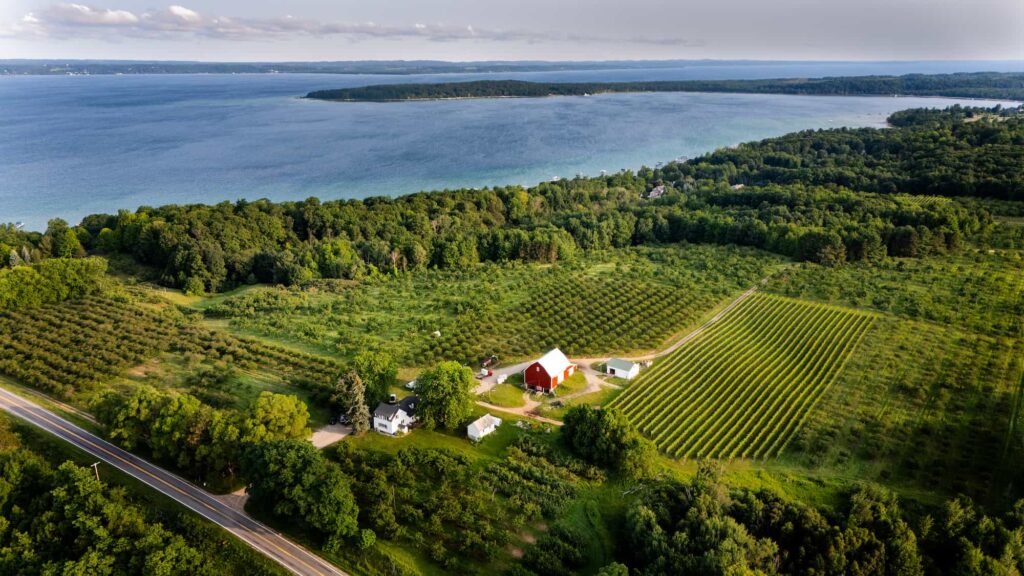
- John, Gloria and Chris Lyon are owners of Lyon Farm and Vineyards, a 100-acre cherry, apple and grape farm that’s one of the longest-running family-owned fruit farms on Old Mission Peninsula in Michigan’s Grand Traverse region, the birthplace and center of the nation’s tart cherry industry.
- They annually harvest around 500,000 pounds of fruit, much of which becomes Lucky Leaf cherry pie filling sold at grocery stores nationwide and cool-climate wines—aromatic whites and light reds—bottled at nearby Left Foot Charley winery.
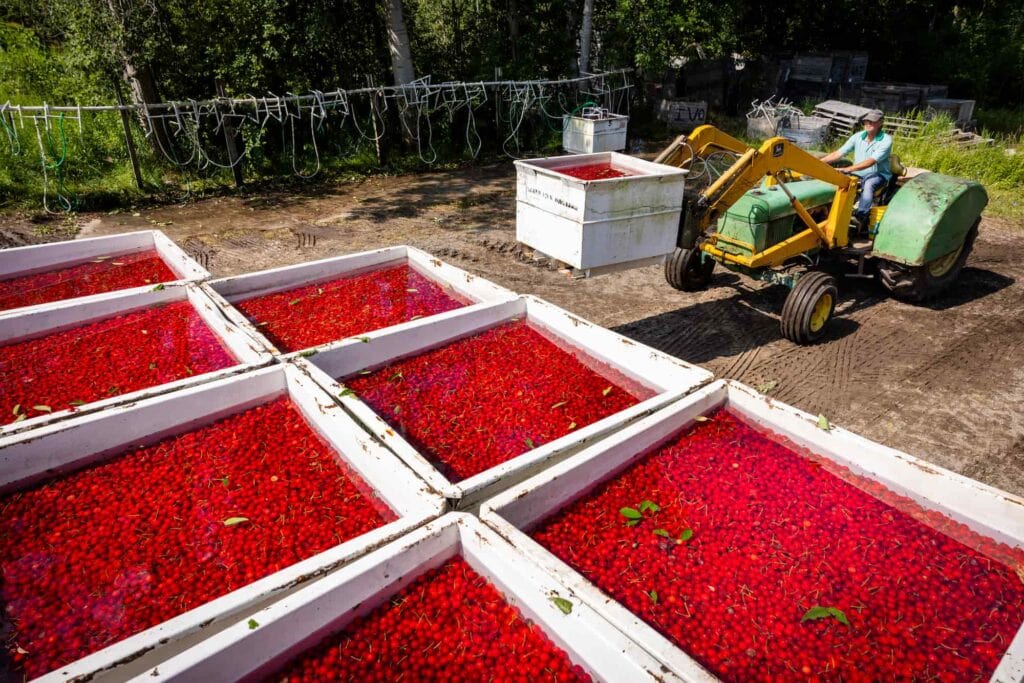
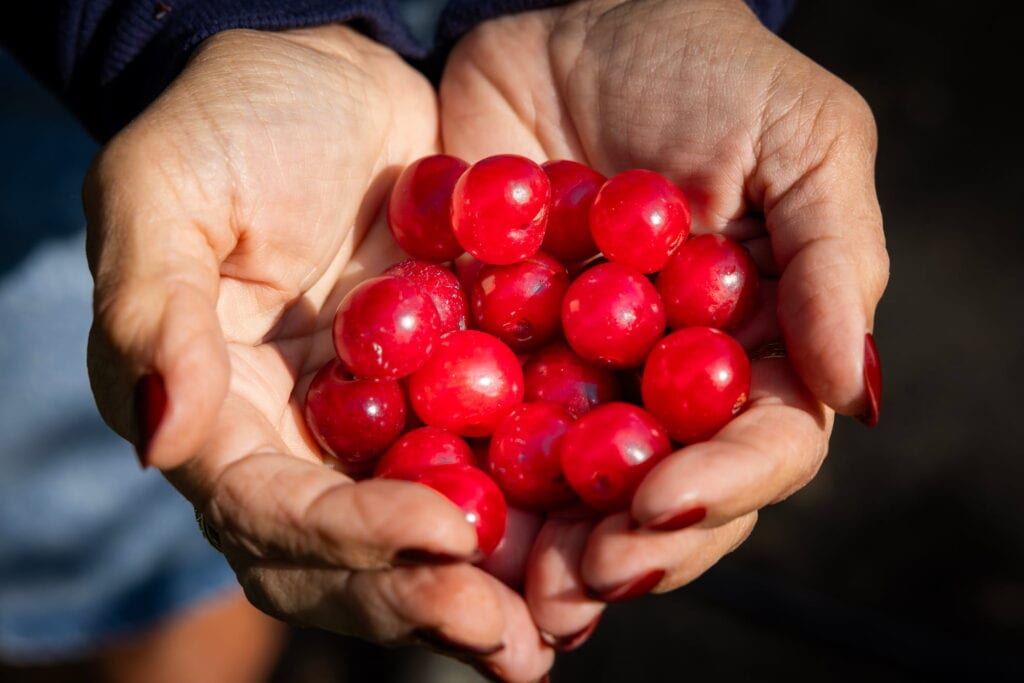
On the last day of the cherry harvest, John Lyon (BS CHE ’81) leans out of the cab of his John Deere front loader. He eases the tractor’s forks beneath a metal chill tank filled with water and freshly harvested tart cherries. The loader rises, the tank sways slightly, and Lyon guides it onto the bed of a 1971 flatbed truck. Once eight tanks fill the truck bed, he carefully drives the fruit to a receiving station, the first leg of its journey.
Eventually, those cherries will become pie filling—the kind that delivers that familiar rush of sweet, tart, intense fruit flavor with every bite.
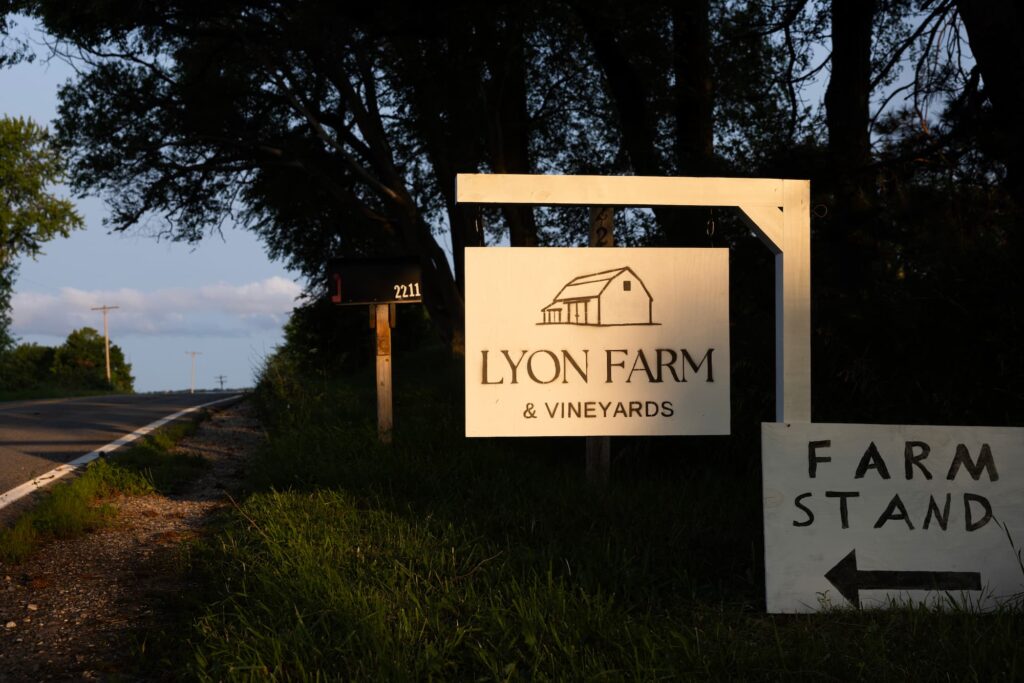
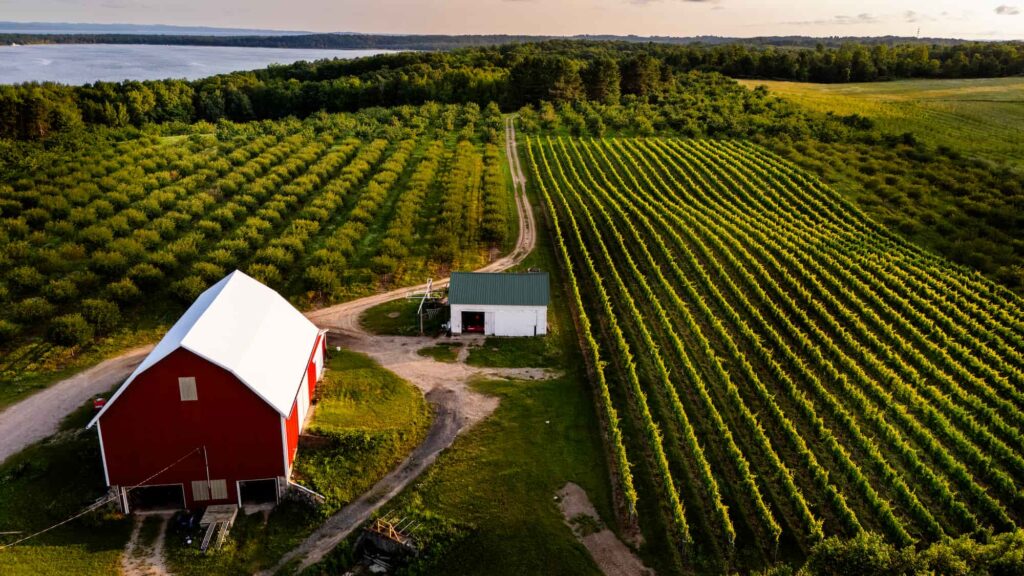
The Lyons have been growing cherries for five generations at Lyon Farm and Vineyards, a 100-acre farm north of Traverse City. Established in 1878, it is one of the longest-running family cherry farms on Old Mission Peninsula. Three Lyon family members working on the farm hold Michigan Engineering degrees.
They and their cherries are part of a much larger Michigan story.

Michigan is the center of the U.S. tart cherry industry. Roughly 70% of the nation’s annual crop is produced here, on about 30,000 acres concentrated in the northwest part of the state. In strong years, Michigan growers harvest more than 180 million pounds, generating hundreds of millions of dollars in economic activity. Michigan is also a major producer of sweet and dessert cherries.
All varieties are celebrated at the National Cherry Festival, which draws around 500,000 visitors every year to Traverse City, known as the Cherry Capital of the World. The crop is more than a commodity—it has a cultural value, sustaining multigenerational farms and seasonal community rituals and marking the region’s landscape with orchards, roadside fruit stands and U-pick farms.
But keeping a cherry farm alive today requires more than traditional skills. For John—a University of Michigan chemical engineering graduate who runs the farm with his brother Frank Lyon, wife Gloria Janik Lyon (BS CHE ’81) and their son Chris Lyon (BS CHE ’13)—it requires diversification, technical problem-solving, and constant adaptation.
The engineer on the farm

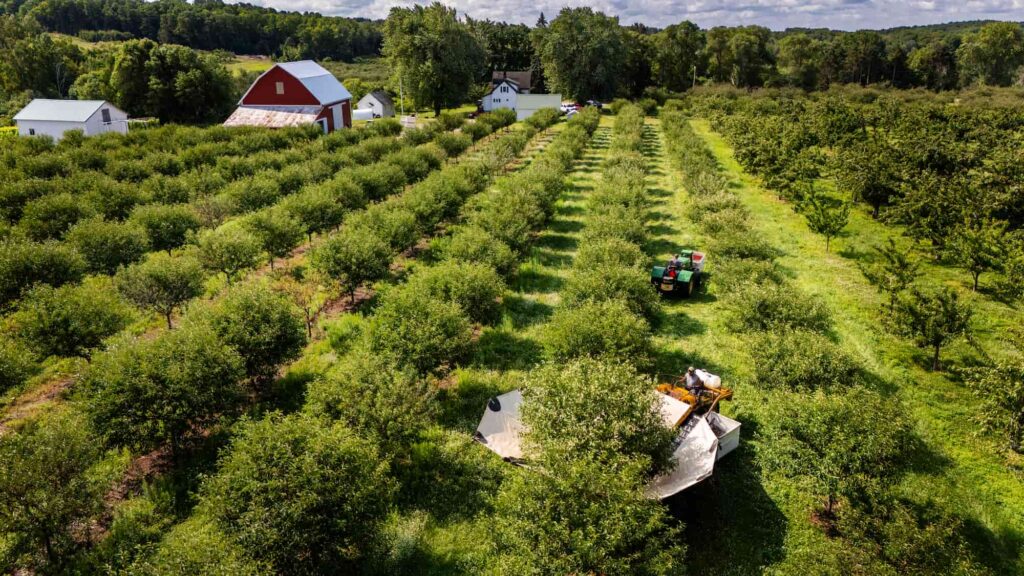
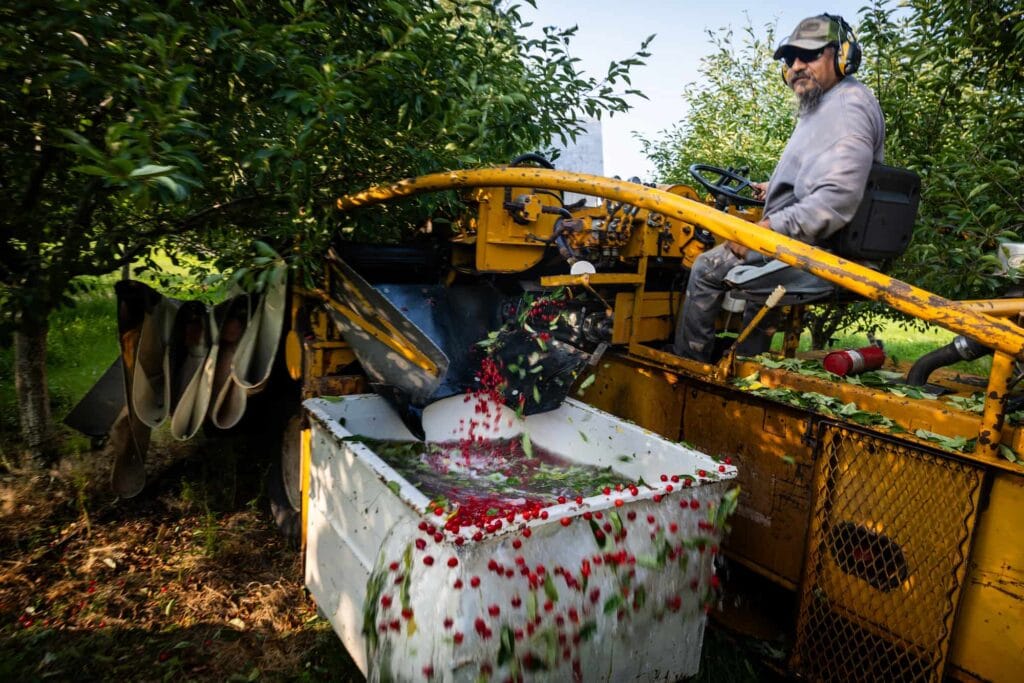
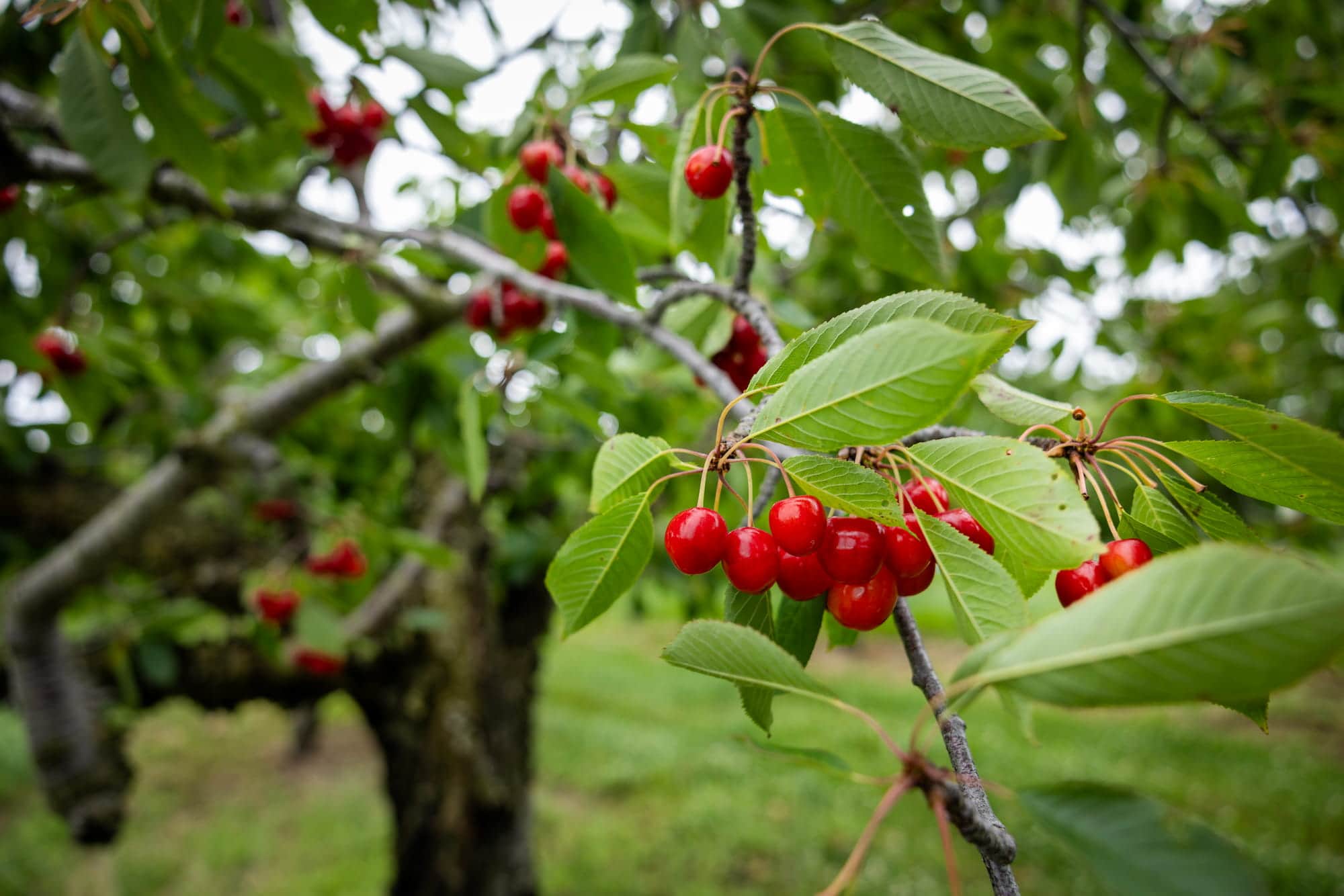
The harvest begins with a low rumble amid the rows of trees. A cherry shaker rolls into position beneath the canopy, its mechanical arm extending toward one of the trunks. The machine gently clamps and a white, 25-foot-wide fan extends around the tree like an upside down umbrella. For a few seconds everything is still—the leaves flutter in the summer breeze, clusters of deep-red cherries hang heavy from the branches.
Then the shaker starts.
The entire tree comes alive as the machine sends a rapid vibration through it. The trunk trembles. Branches quiver. In a matter of seconds, thousands of cherries shake loose into a crimson rain that cascades onto a catching frame below, bounces across the canvas and rolls on conveyor belts into a bin of cold water. Two minutes later, the machine moves to the next tree. An experienced operator can harvest hundreds of trees a day.
On a farm filled with complex machinery, fragile crops and narrow harvest windows, John’s engineering background is a survival skill. At the University of Michigan, he learned to solve problems with limited information and restricted time.
That lesson fits the daily reality of farming, where a broken cherry shaker, a failing hydraulic hose, a struggling grapevine, or a malfunctioning sprayer need a solution that works, even if it isn’t perfect.
“You have to diagnose what’s wrong,” he said, “figure out where the issue is, how to fix it, and how to keep going.”
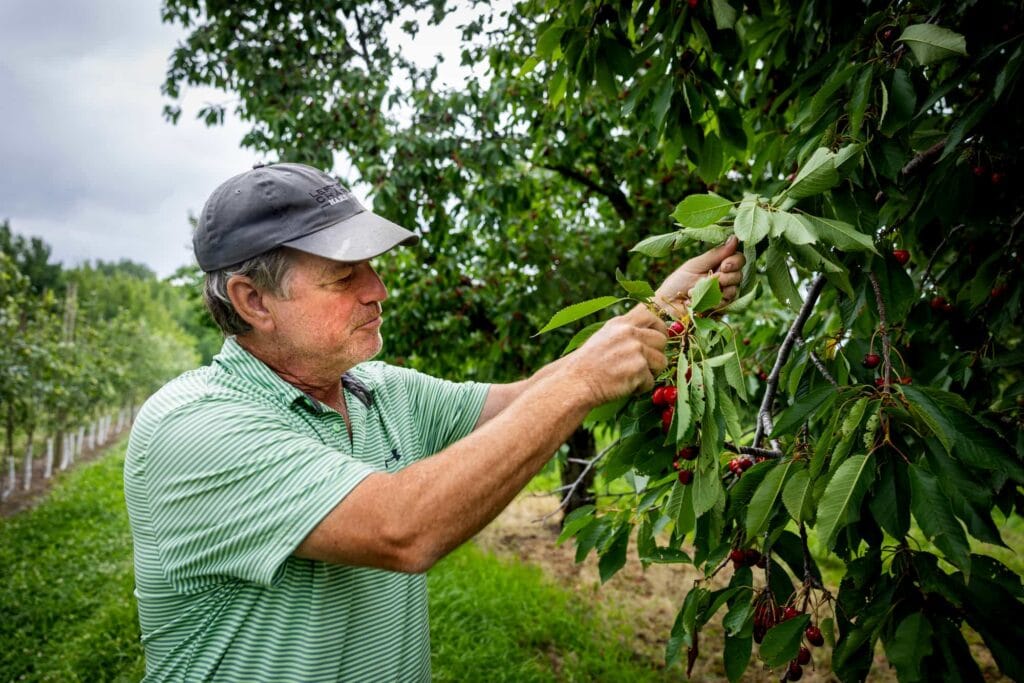
Today, Lyon Farm and Vineyards employs 15 to 20 part time and year-round workers. In addition to direct employees, it helps sustain an industry that supports processors, food manufacturers, local businesses, and the agricultural identity of northwest Michigan.
John and Gloria spent their careers at Dow Corning before retiring. Over 32 years, John worked his way from chemical engineer to C-suite executive. Gloria also started as a chemical engineer, working in product development, then quality systems and ultimately business management.
Utilizing her experience in industry, Gloria handles the farm’s administrative responsibilities like payroll, taxes and regulatory requirements. She explained how the farm has evolved since she and John bought it from his parents in 2012.
“At the time, the farm produced apples and cherries, and we knew it would be very difficult to make a living solely on apples and cherries,” Gloria said. “Adding the diversification of the grapes has been a significant income source.”
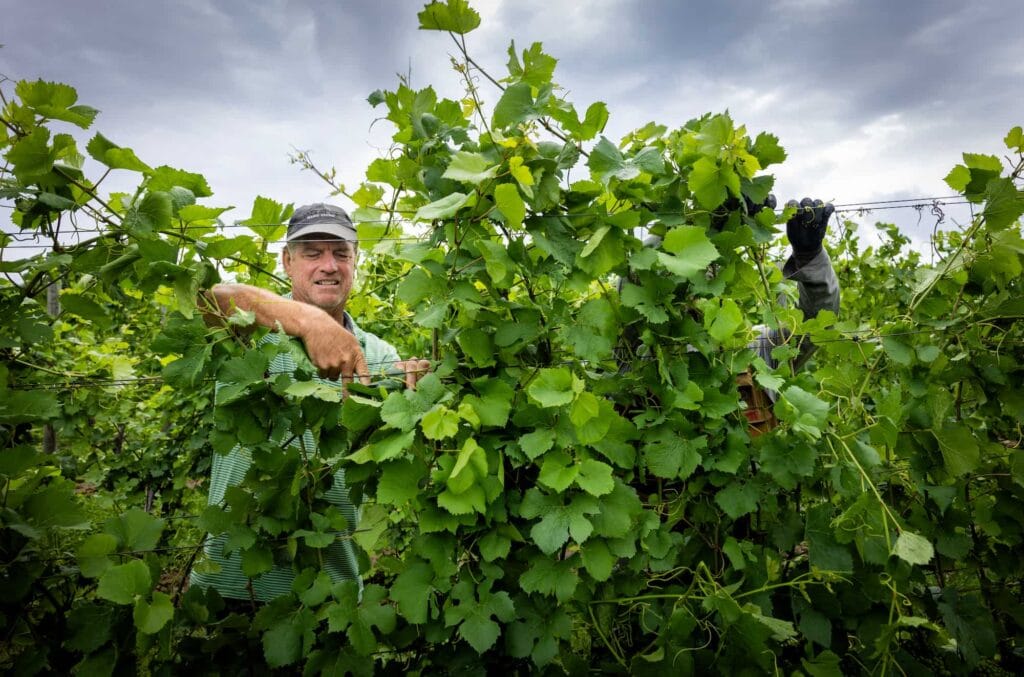
While Frank focused on the cherries, John transformed 12 acres into a vineyard, bringing an engineer’s mindset to soil, plant health and vine growth. He sees grapevines as systems that need careful calibration.
“They need to be trained, treated well, but not over-fed, because having too vigorous of a vineyard is just as bad as having a low-vigor vineyard,” he said.
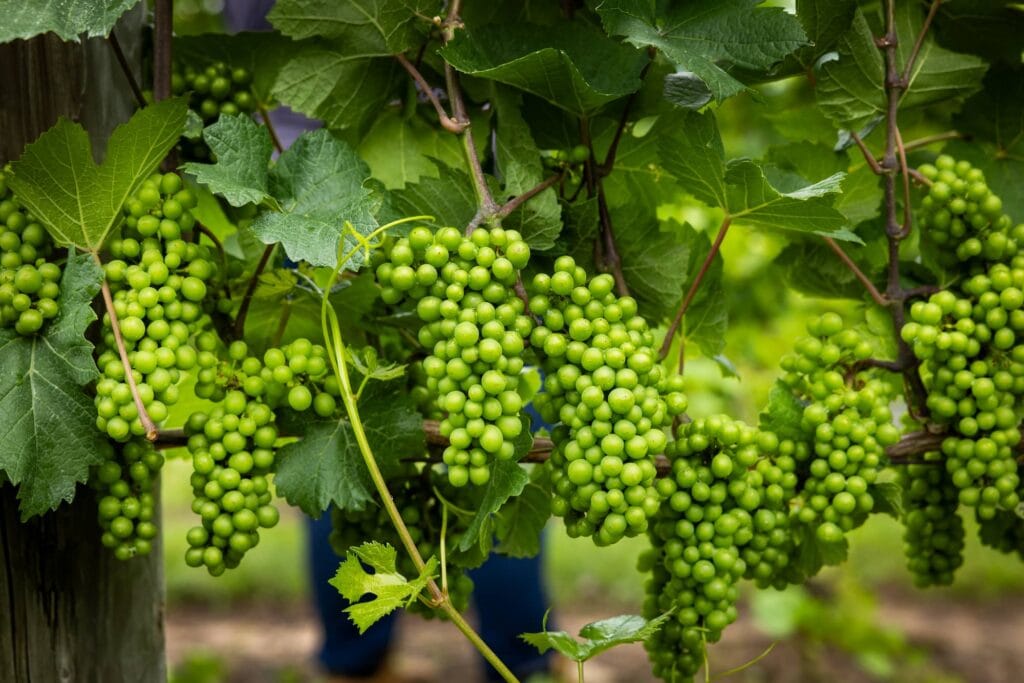
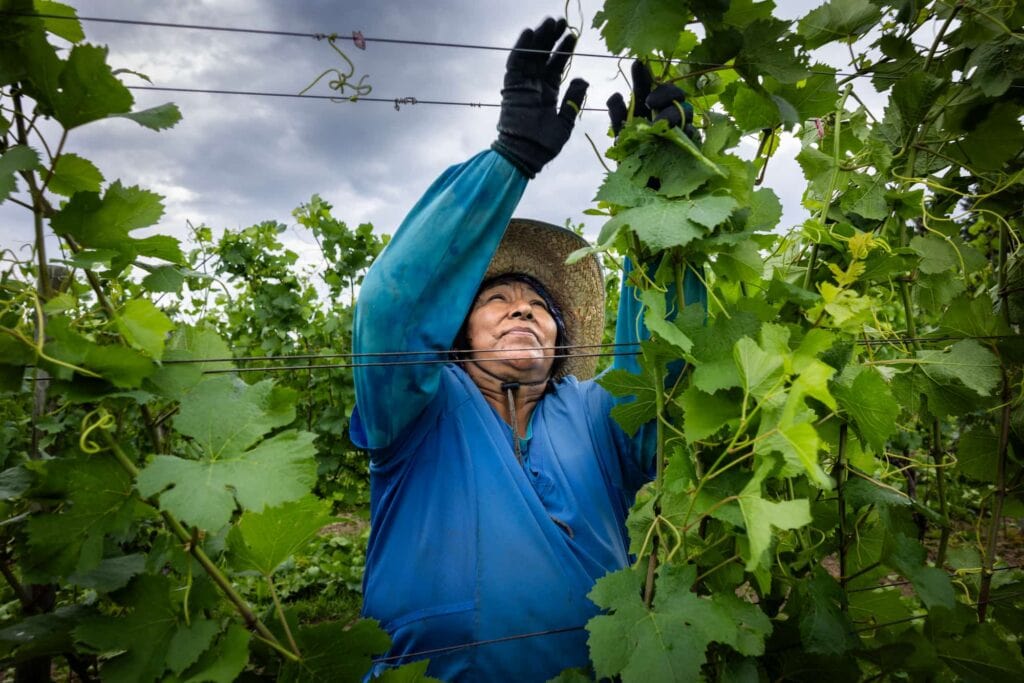
Getting insecticides right means more than just knowing what to spray. “You have to understand the chemistry. You have to know when the bugs are most likely to be present,” John said. “You’ve got to be careful because sometimes you spray the wrong stuff and they become immune to the insecticide.”
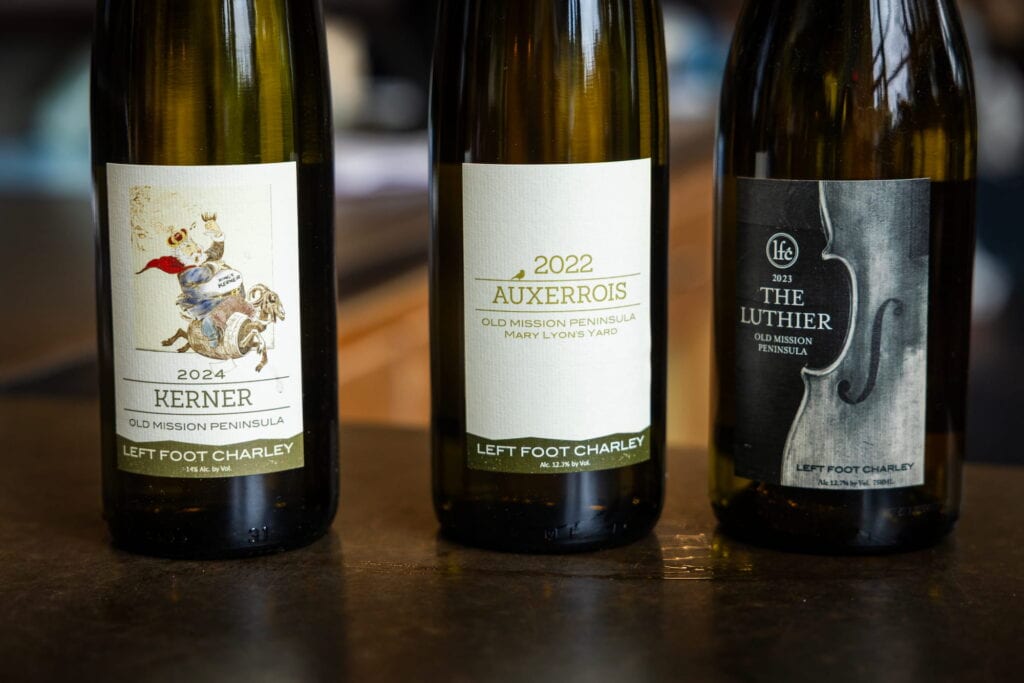
Over the years, his success has made him a bit of a mentor on Old Mission Peninsula. John’s grapes are bottled into wine at nearby Left Foot Charley winery. One bears the name of his mother, Mary Lyon—a fitting connection between the family’s past and future.
Following dreams, building community

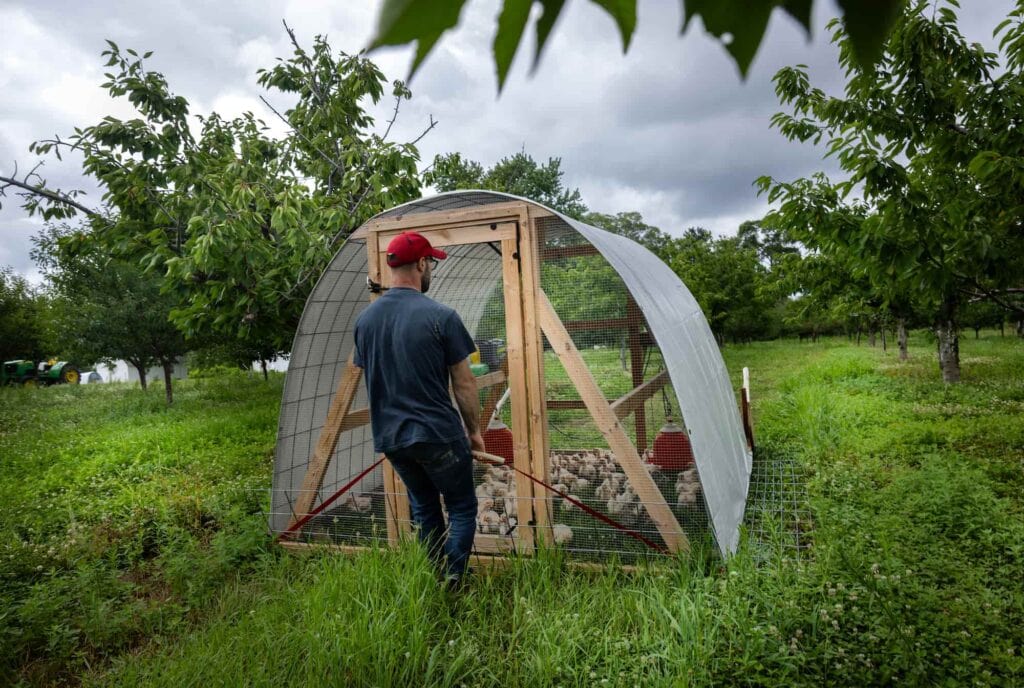
Chris is the fifth generation to farm at Lyon Farm and Vineyards. It’s not his full-time job, at least not yet. Before logging on for a day of remote work as a technical business manager at Evonik, a global specialty chemicals company, he pulls his boots on and heads to the orchard. There, he tends to a chicken tractor—a movable enclosure that lets dozens of chickens scratch and peck at fresh grass and insects, fertilizing the soil and controlling pests.
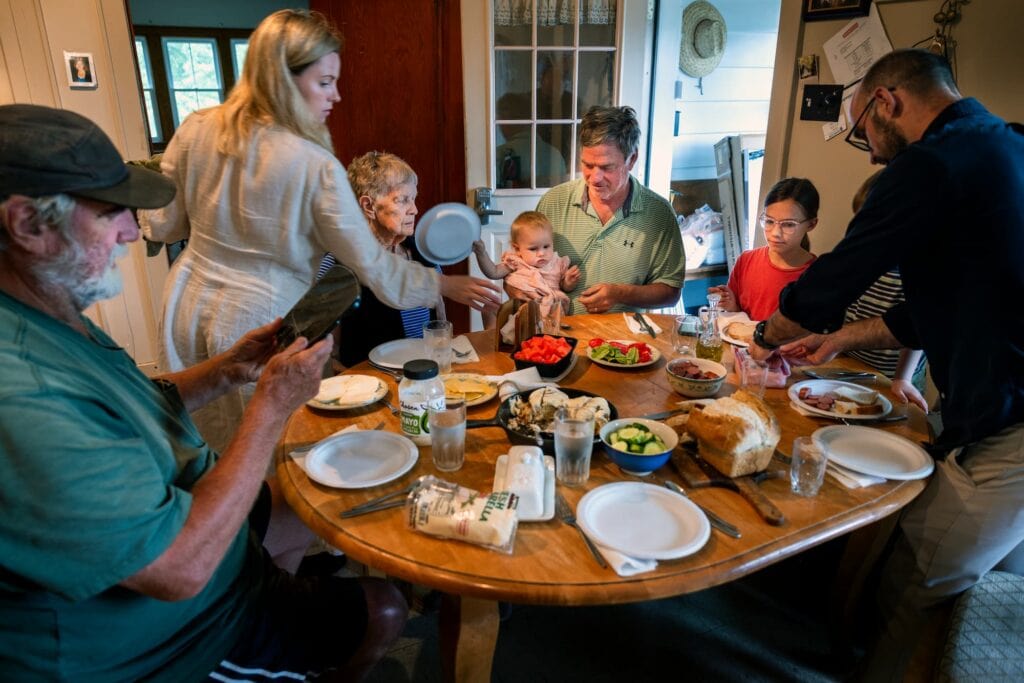
Chris, his wife Julianne and their children, Joseph and Veronica, moved north from metro Detroit a year ago. Julianne had always dreamed of raising a family on a farm.
“We wanted our kids to be outside, working hard, not sitting in front of a computer or TV,” she said.
They also envisioned a place like the ones her Irish family talked about, with natural beauty, close-knit ties and a connection to the land.
“I feel like this is old Ireland,” she said. “Not what Ireland is today, but the Ireland I grew up hearing about.”
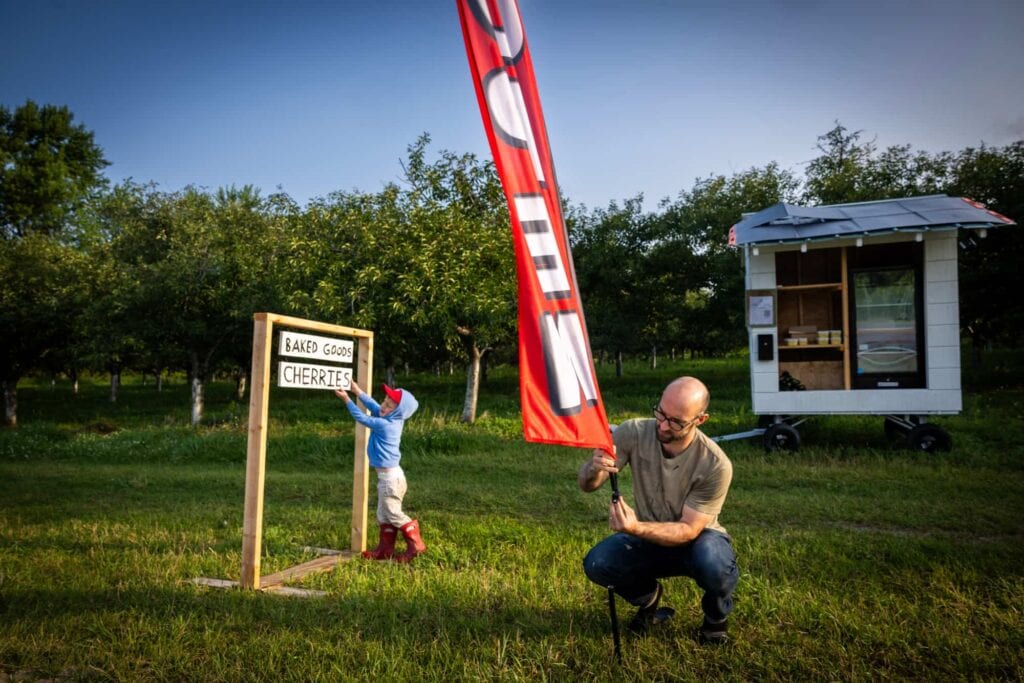
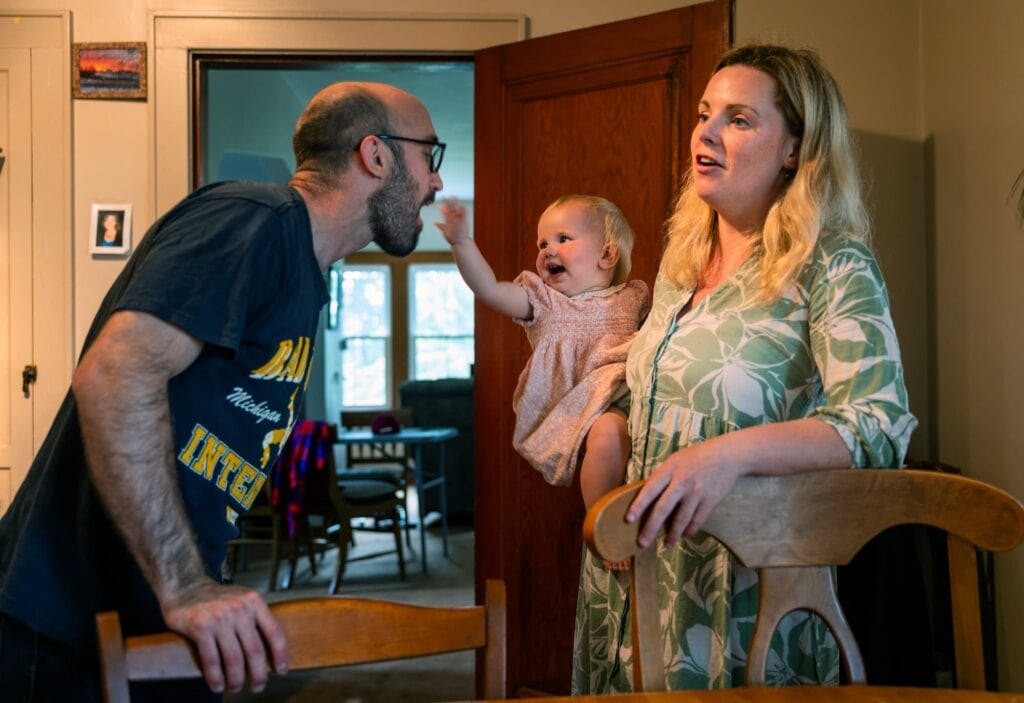
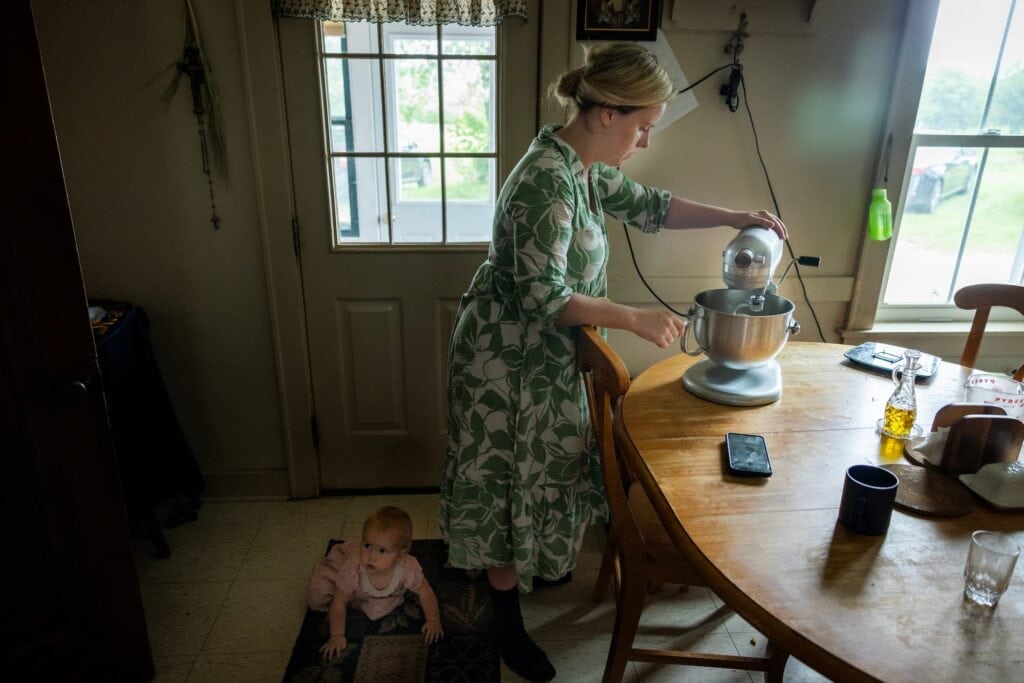
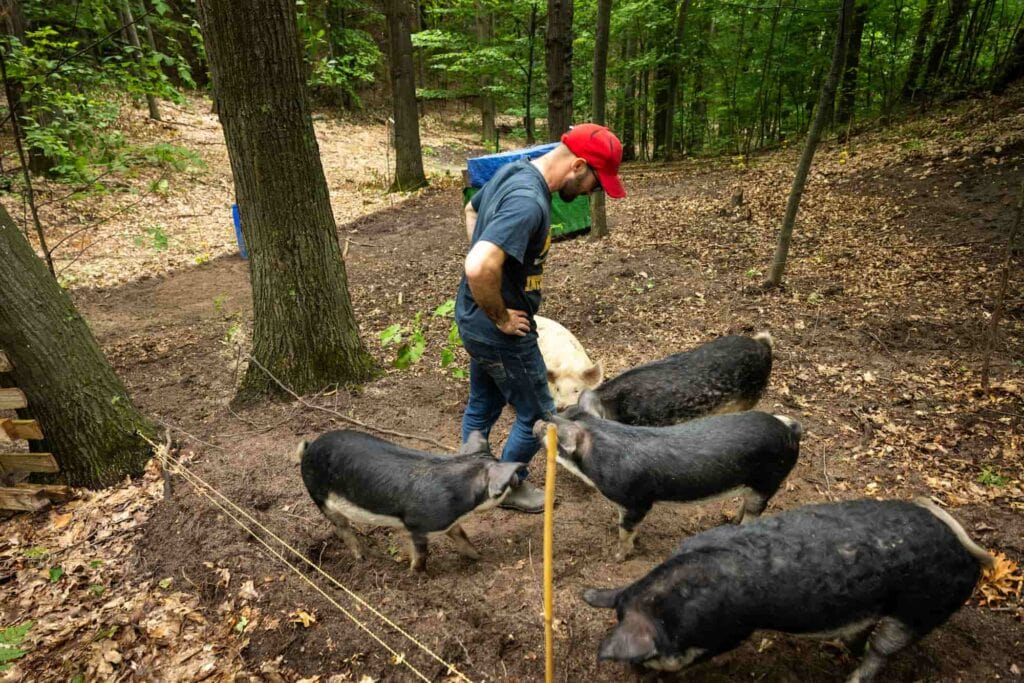
Together, she and Chris are writing the farm’s next chapter by further diversifying its operations. In the property’s forested ravines—areas that hadn’t been economically valueable—Chris is raising pigs. Among the cherry trees, they keep meat chickens. The couple planted a vegetable garden and built a farm stand where they sell cherry crumbles and other baked goods.
The farm stand has become one of Julianne’s favorite parts of farm life, connecting her with both people and place. “Sharing our food and getting to know the neighbors has been very special,” she said.
These additions help to create income sources that are less vulnerable to late frosts that can devastate cherry blossoms and grapevines. “I’m putting in infrastructure that I can pay for with my regular job income,” Chris said. “We’re also looking at processed and value-added products.”
Engineering opportunities
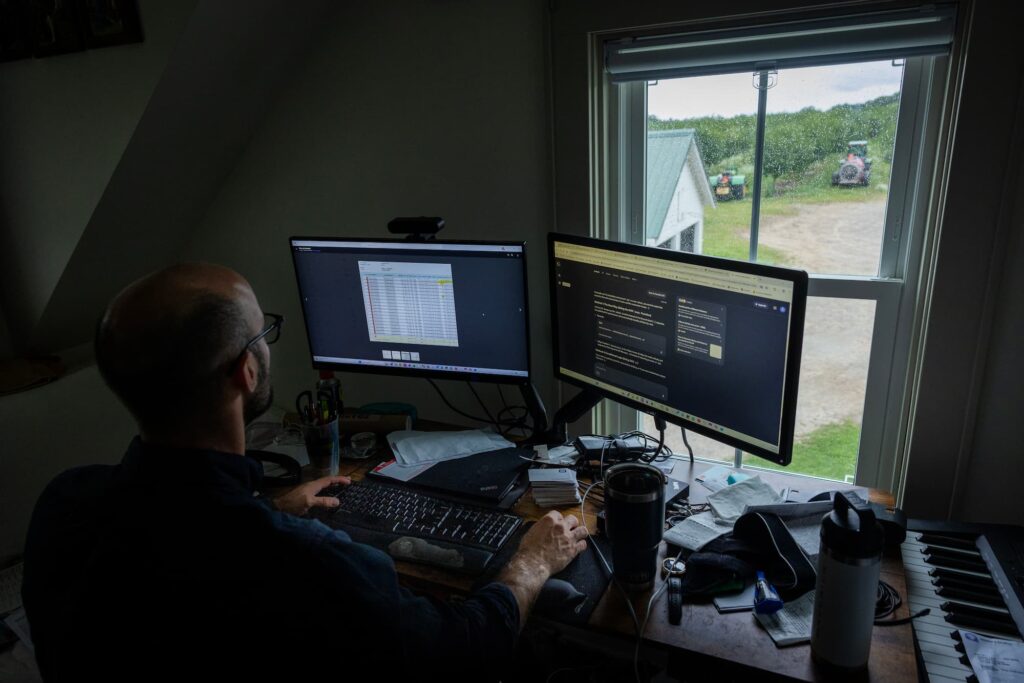
For John and Gloria, seeing the next generation return to the farm is proof it can evolve while remaining rooted in the values that sustained it for nearly 150 years. Perhaps it’s also evidence of the versatility of an engineering education. Farming, for the Lyons, has always been a cycle of observing, testing, adjusting and problem-solving.
It also speaks to the freedom their degrees enabled. John and Gloria’s careers took them from chemical engineering laboratories and production lines to cherry orchards and vineyards, providing the means to purchase the farm and expand it. Chris’s degree lets him work remotely while continuing to invest in the farm and the family’s sense of belonging.
Today, Michigan’s cherry farmers face increasingly difficult conditions: changing weather patterns, new pests, uncertain markets and development pressures. Through it all, the Lyons are keeping a piece of the state’s agricultural heritage alive like they always have—with their own version of design, build, test, adapt, season after season, generation after generation.