Restoring Michigan Central and many other high-profile Detroit landmarks: Larry Brinker Jr.
A University of Michigan Engineering alum is behind $2 billion of Detroit’s redevelopment over the past decade.
STORY AND PHOTOS BY:
Summary
- Larry Brinker Jr. is president and CEO of BRINKER Group, the nation’s largest Black-owned construction contractor, launched by his father in 1989 as a small Pontiac-based firm.
- BRINKER co-led Michigan Central Station’s $1B renovation, which involved pumping 2.5 million gallons of water from the basement and 3D-printing historic stone details.
- BRINKER’s portfolio of Detroit redevelopment projects includes major landmarks Ford Field, Book Tower, Comerica Park, Little Caesars Arena and The Motown Museum expansion.


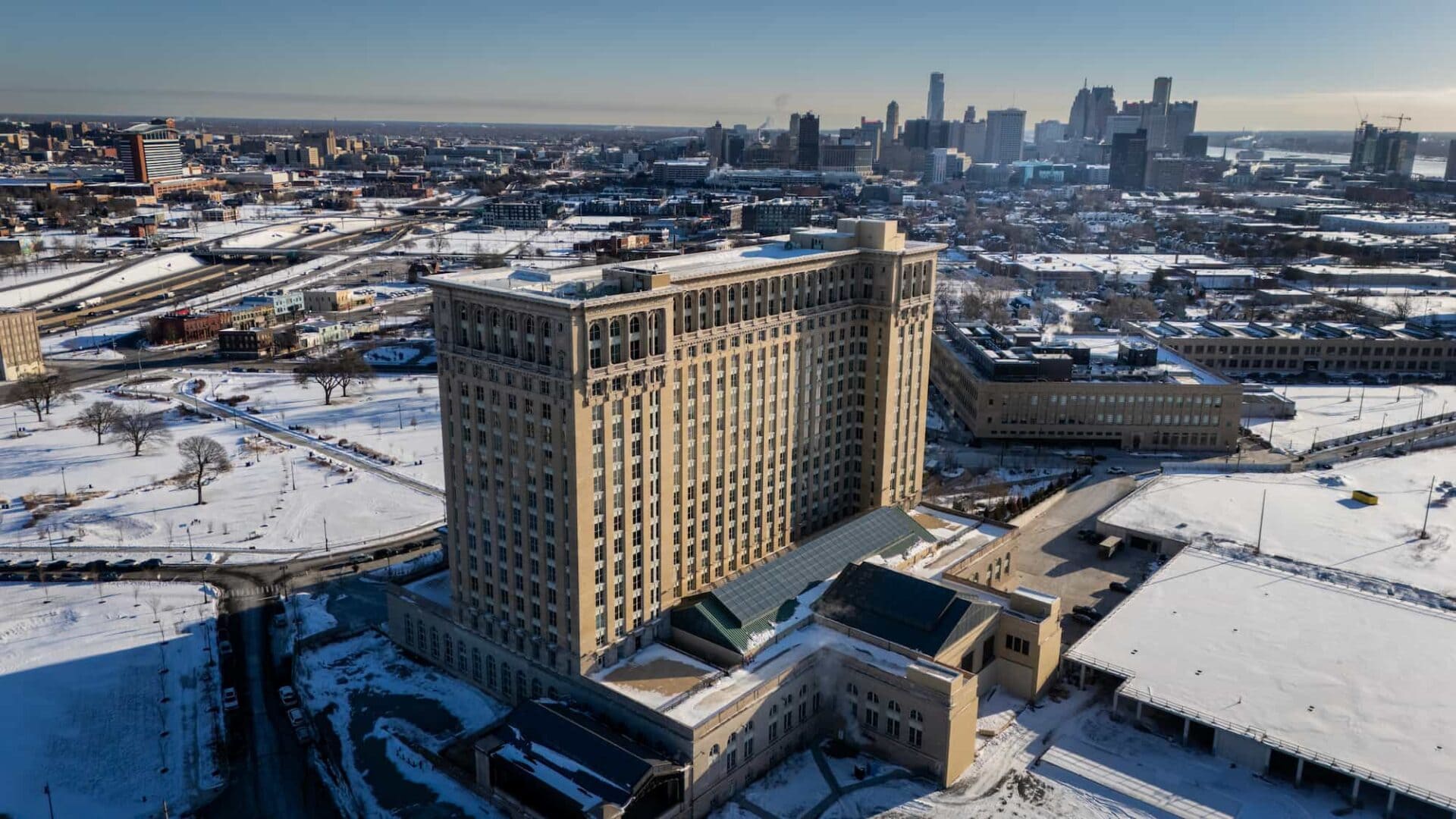
The renovated Michigan Central Station building.
Brinker drives by Detroit’s Little Caesars Arena.

When Larry Brinker Jr. (BS CEE ‘01) drives through Detroit, he passes buildings that tell the story of his life.
Ford Field. Book Tower. Comerica Park. Little Caesars Arena. The Motown Museum expansion. These landmarks shape the city’s identity—and in each of them, Brinker’s company left its mark in the glass, steel and structure that brought the projects to life.
“To see them being reimagined and renovated was incredibly meaningful for me and our company,” he said.
Brinker is a U-M civil and environmental engineering alum and president and CEO of the BRINKER group of companies. The company was founded by Larry Brinker Sr. in 1989 as a small construction firm in Pontiac, Mich. Today, it has grown into the largest Black-owned construction contractor in the United States, a network of companies specializing in construction management, drywall, glass and glazing, flooring and electrical work.
Brinker drives by the One Campus Martius building in Detroit. During the 2019 expansion of the building, the Brinker group provided targeted construction and contracting services.

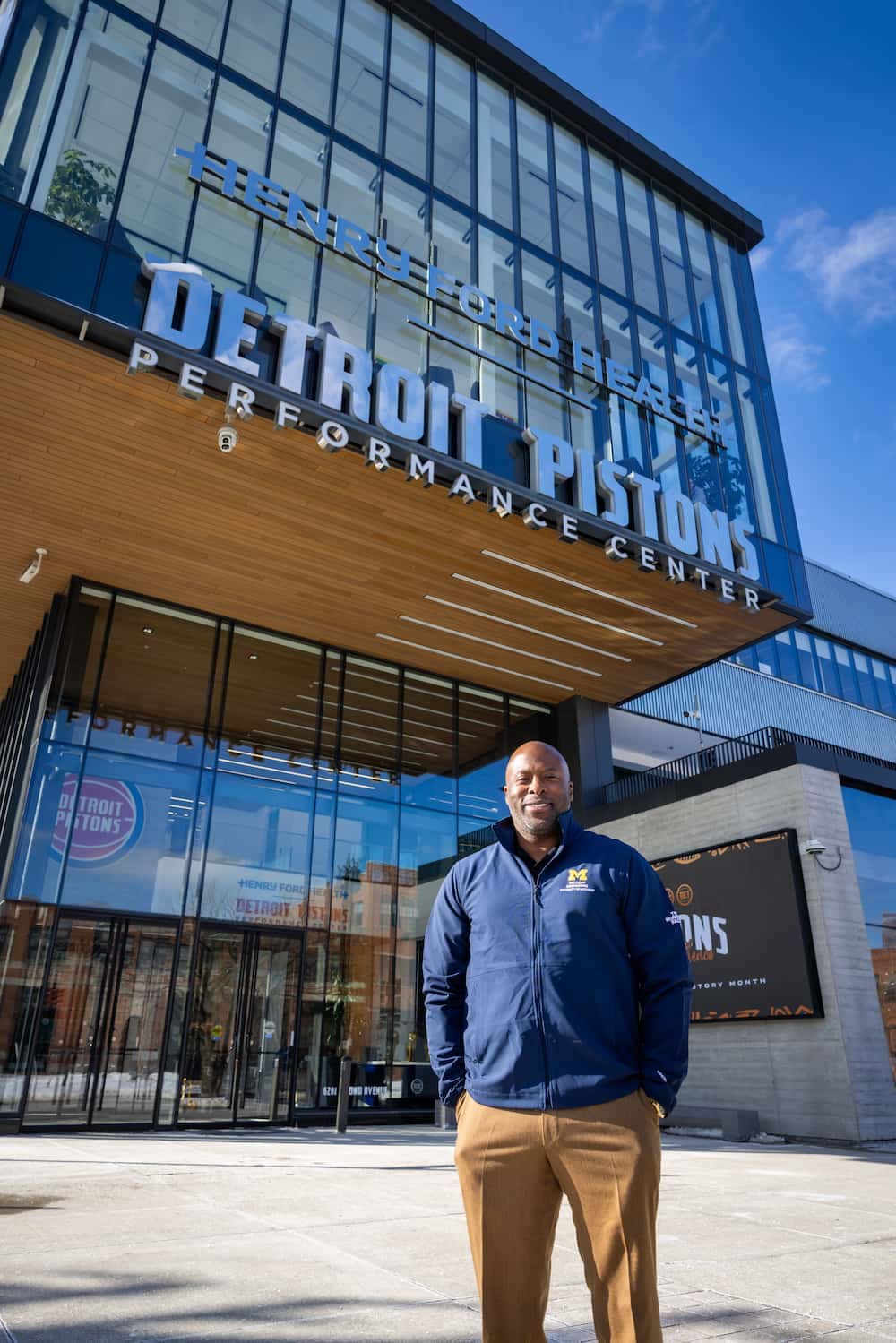
Brinker stands in front of Detroit’s Henry Ford Detroit Pistons Performance Center. The Brinker group helped construct the state-of-the-art performance training and athletic medicine center.
Brinker estimates that, over the past decade, his company has been involved in more than 90% of the major redevelopment projects across Detroit. They have been responsible for over $4.5 billion worth of work in Detroit over its 38 years in business, and approximately $2 billion in the last 10 years.
One project stands apart: Michigan Central Station.
Restoring Michigan Central

For more than 20 years, Brinker drove past the abandoned Beaux-Arts landmark in Corktown—its windows broken, its basement flooded, its once-grand lobby crumbling.
“It represented the downturn of Detroit,” he said.
When Ford Motor Company committed to restoring the Michigan Central Station as a mobility innovation hub, BRINKER joined the Christman Company to lead the massive $1 billion renovation.

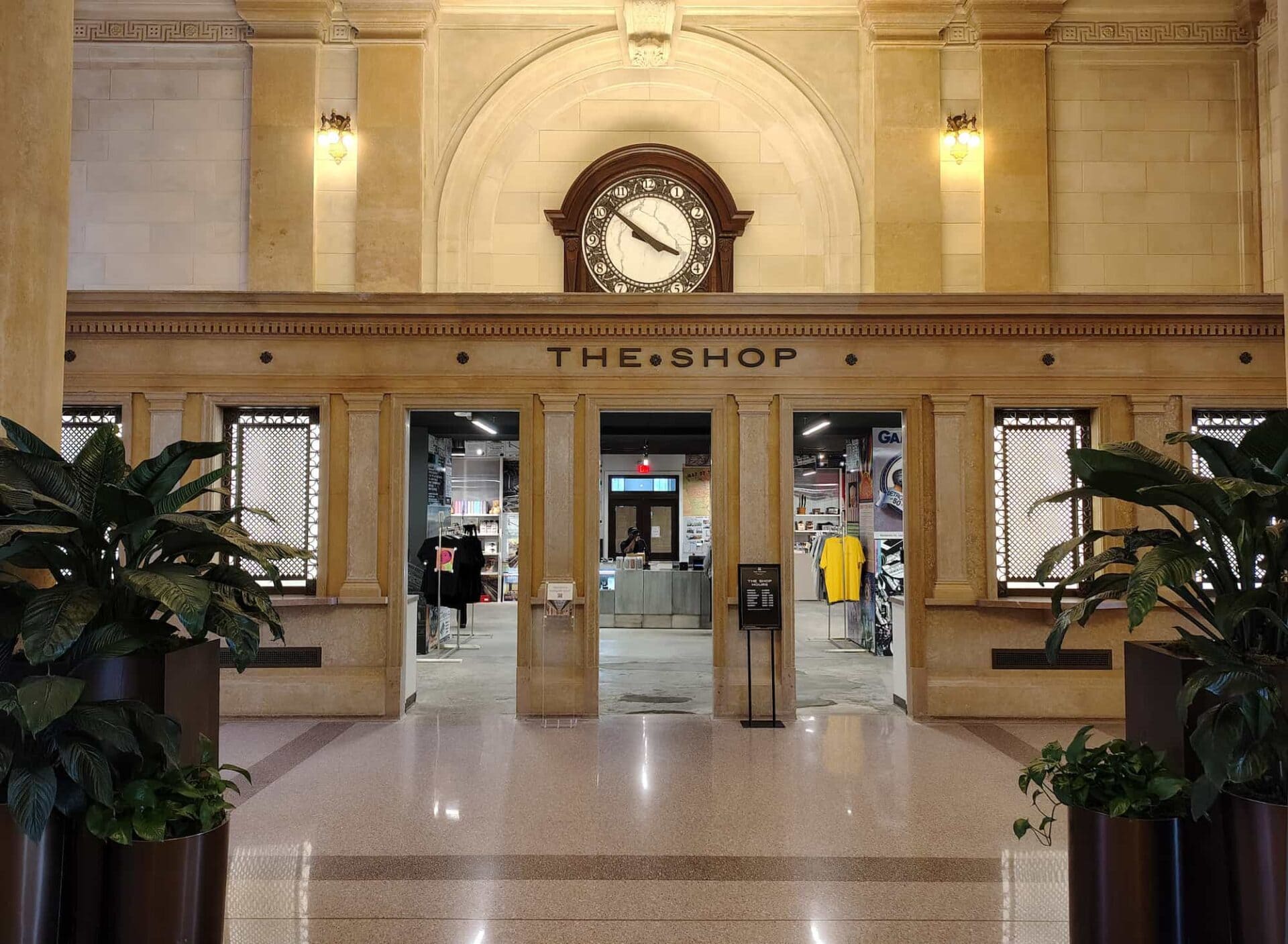
The Grand Hall at Michigan Central Station.

The interior of Michigan Central Station includes an original station clock.
Crews pumped 2.5 million gallons of water from the basement. A hidden 60,000 square-foot sub-basement required hundreds of truckloads of concrete to fill. Ice buried deep inside the walls took nearly a year to thaw. The team leveraged 3D scanning and printing to restore historic architecture, recreating intricate stone details in plastic. They produced precise molds from scanned cast-iron windows and decorative trim to replicate original plaster and iron elements.
“It was our toughest project,” Brinker said, “but also the most rewarding.”
When the station reopened, it became more than a construction milestone. It became a symbol of Detroit’s comeback.
Michigan roots

Brinker’s connection to Metro Detroit runs deep. He was born and raised in Pontiac, Mich. in a blue-collar family shaped by the automotive industry. His grandparents migrated from Tupelo, Miss. seeking factory work and opportunity. His father began as a carpenter before launching his own construction business. Larry grew up on job sites, hauling materials and taking on the tasks no one else wanted.
At U-M, Brinker majored in civil and environmental engineering with a concentration in construction management. In classrooms filled with top students from around the country, he quickly learned that talent alone was not enough. “There’s always someone who will push you to step your game up,” he said. “Don’t be intimidated by it. Welcome it.”
That mindset—disciplined, analytical and relentlessly focused on improvement — became foundational when he eventually returned to the family business. He insisted on starting at the bottom as a project engineer and working his way through estimating, field supervision, project management and business development.
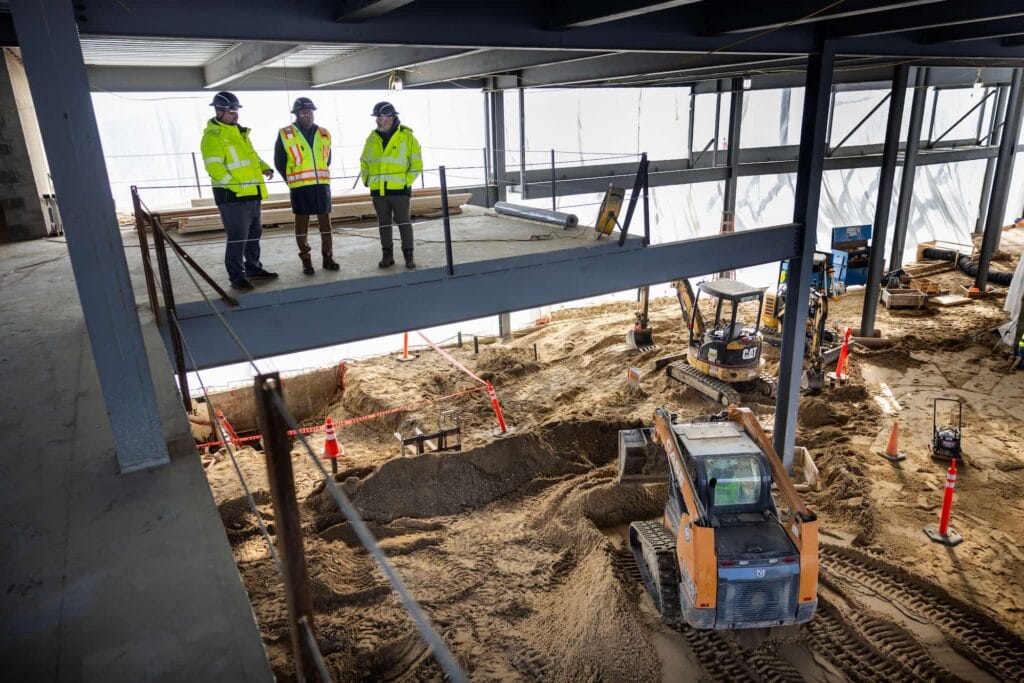
Jason Starnes from Brencal consults blueprints at the Motown Museum construction site.

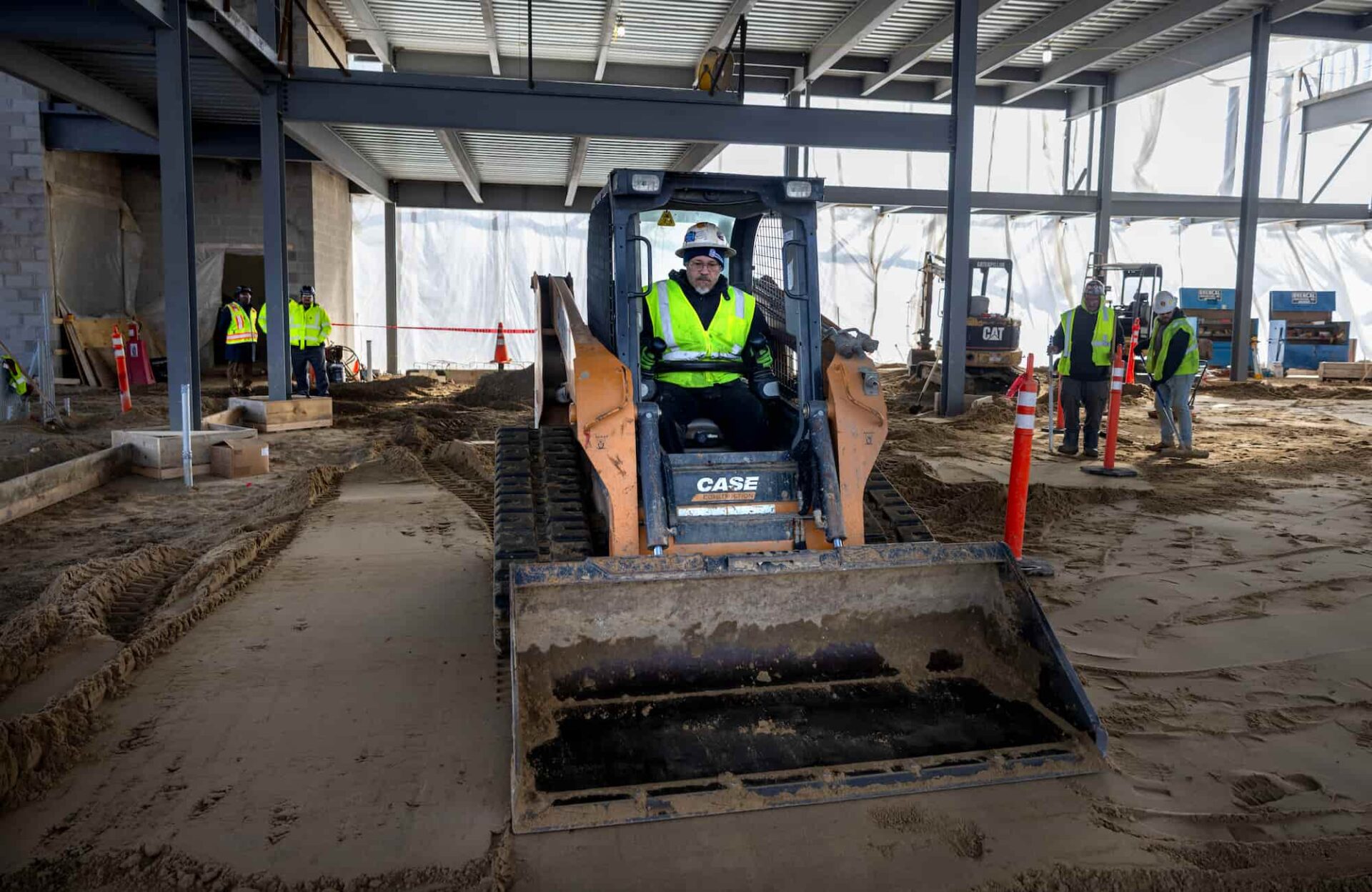
Motown Museum expansion construction site with men in hard hats driving heavy equipment.
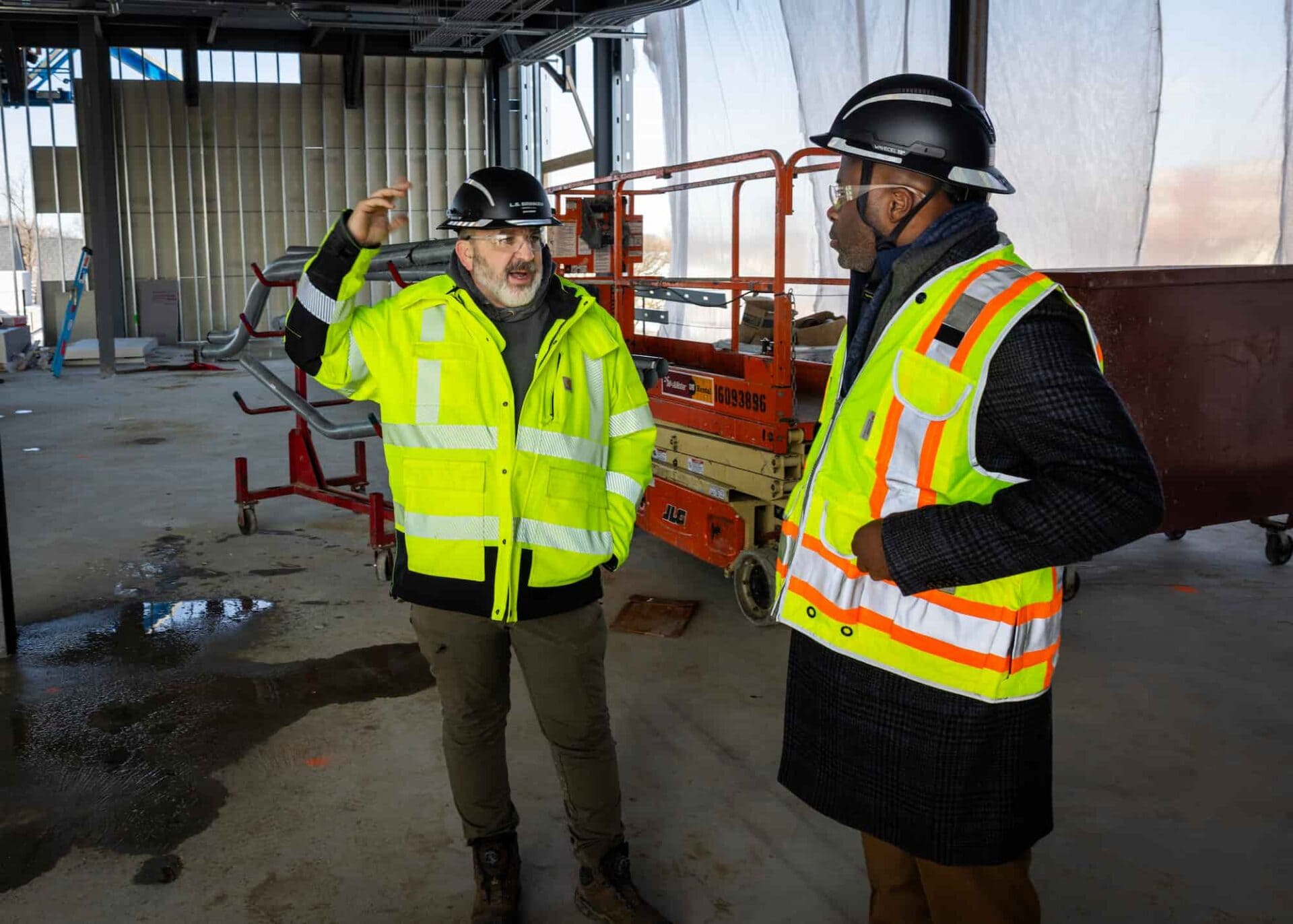
Larry Brinker Jr. (right) talks to Dan Posner, construction superintendent at L.S. Brinker, while visiting the Motown Museum expansion project in Detroit.
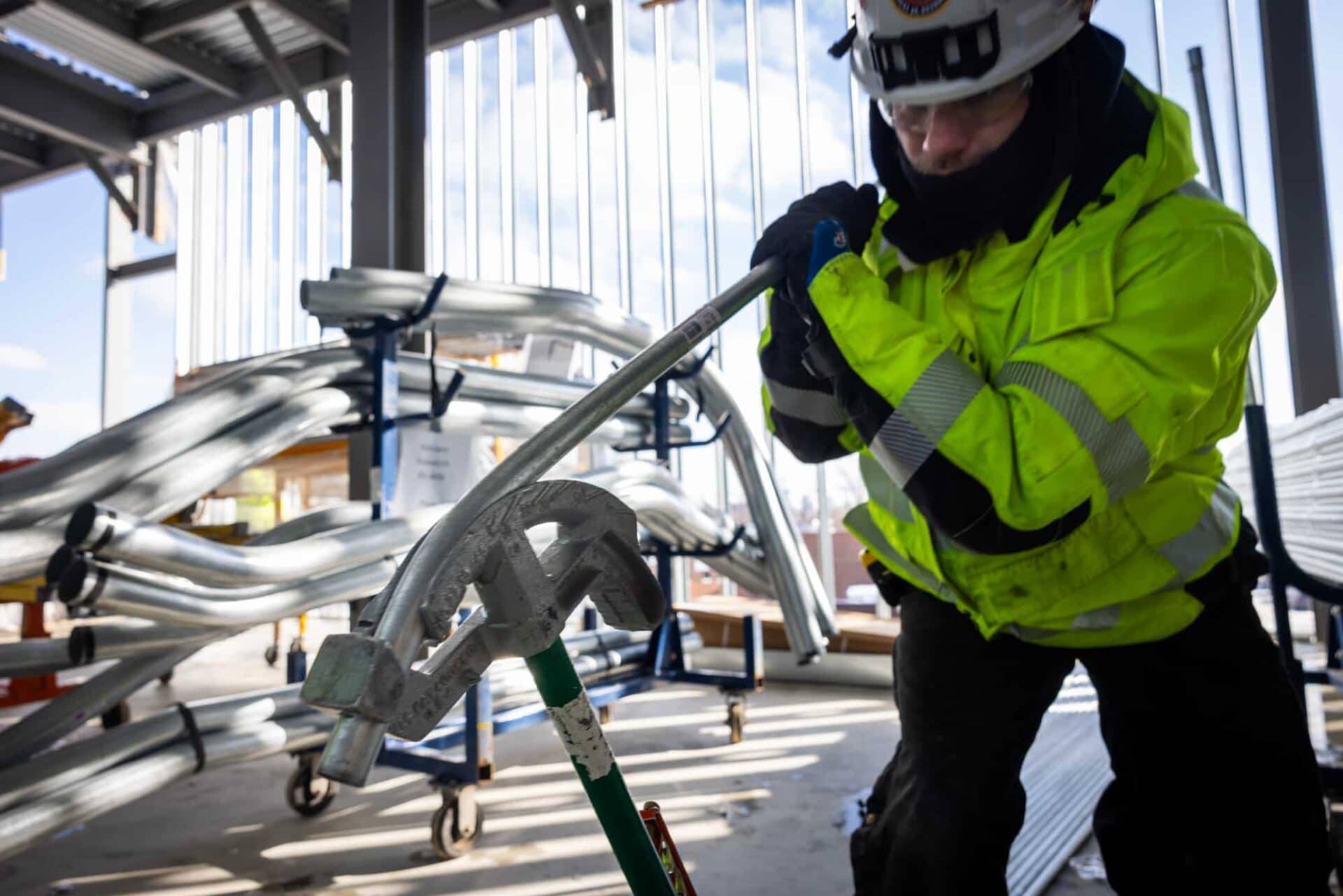
Colton Baronowski from Triangle Electric bends an aluminum pipe on the site of the Motown Museum’s expansion project.
By the time Brinker assumed the role of president, he was ready.
Under his leadership, the company grew by 350% and now employs over 300 people. Today, BRINKER crews work on commercial projects from Ann Arbor to Pittsburgh to College Park, Maryland.
Underpinning Detroit’s revival are thousands of construction jobs—electricians, carpenters, drywall installers and glaziers—along with the suppliers, logistics firms and small businesses that support them throughout Southeast Michigan. As construction activity grows, local families and communities benefit alongside it.
Brinker is one of the 30,000 University of Michigan Engineering alumni who help make the state of Michigan home to the nation’s third-largest engineering workforce and second-highest concentration of engineers, according to the Bureau of Labor Statistics’ 2025 data. Only California and Texas employ more engineers. In Michigan, 29.5 out of every 1,000 jobs are held by an engineer, nearly twice the national average. University of Michigan Engineering has played a major role in developing this talent, with an estimated one in five of the state’s 130,000 engineers holding Michigan Engineering degrees.